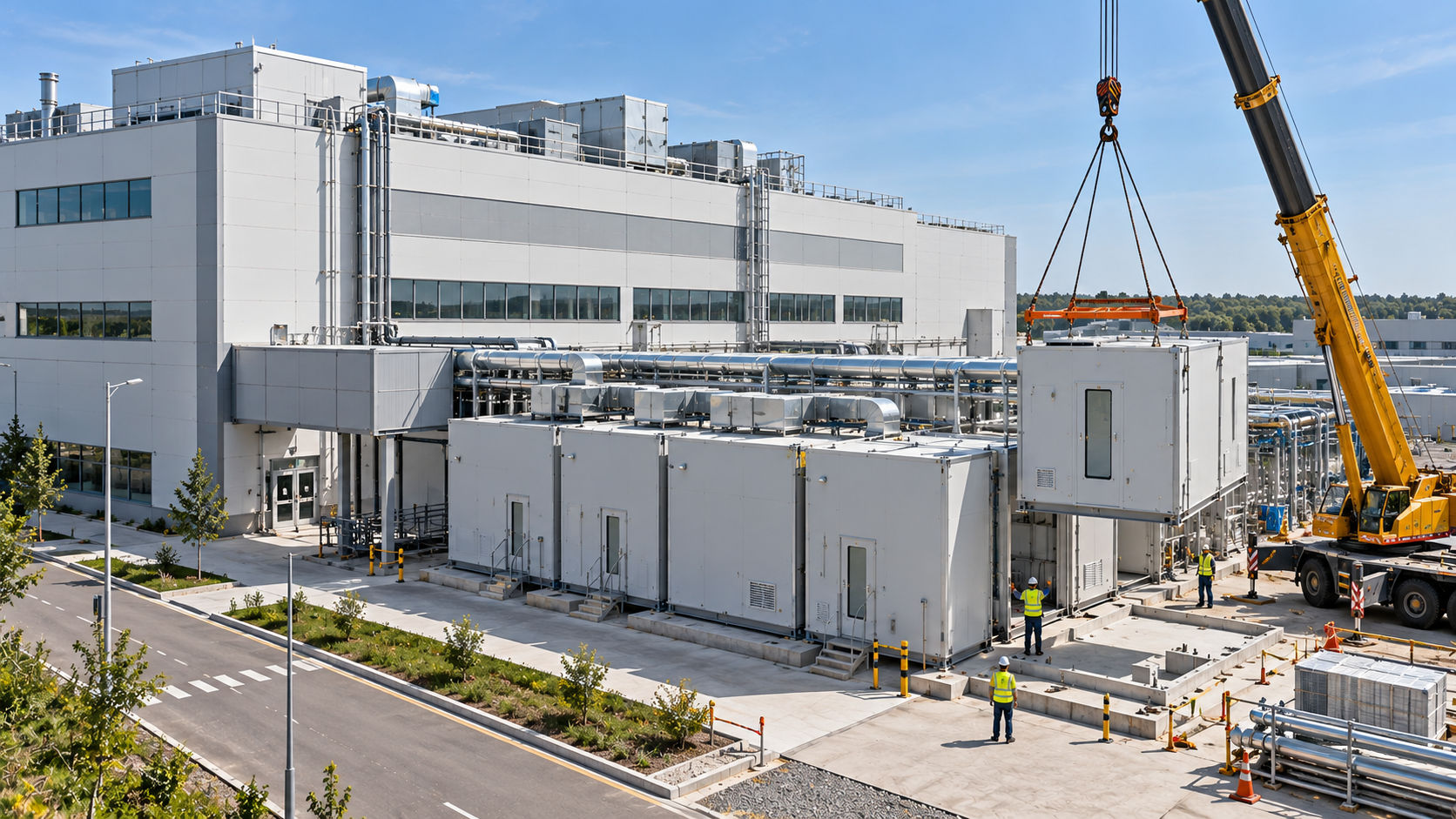
When to Use Modular Expansion for Existing Pharma Plants

Existing pharmaceutical plants are often expected to support more products, higher output, new technologies, and changing market requirements without interrupting ongoing production. For plant heads, engineering teams, CDMOs, biotech companies, and facility owners, this creates a practical challenge: how do you add GMP manufacturing capacity without turning a running plant into a complex construction zone?

Traditional brownfield expansion can work well in many cases, but it often comes with constraints. Construction activity near operating GMP areas may affect personnel flow, material movement, contamination control, shutdown planning, HVAC interfaces, utility tie-ins, and validation timelines. When production continuity and speed are both important, modular expansion becomes a strong engineering option.

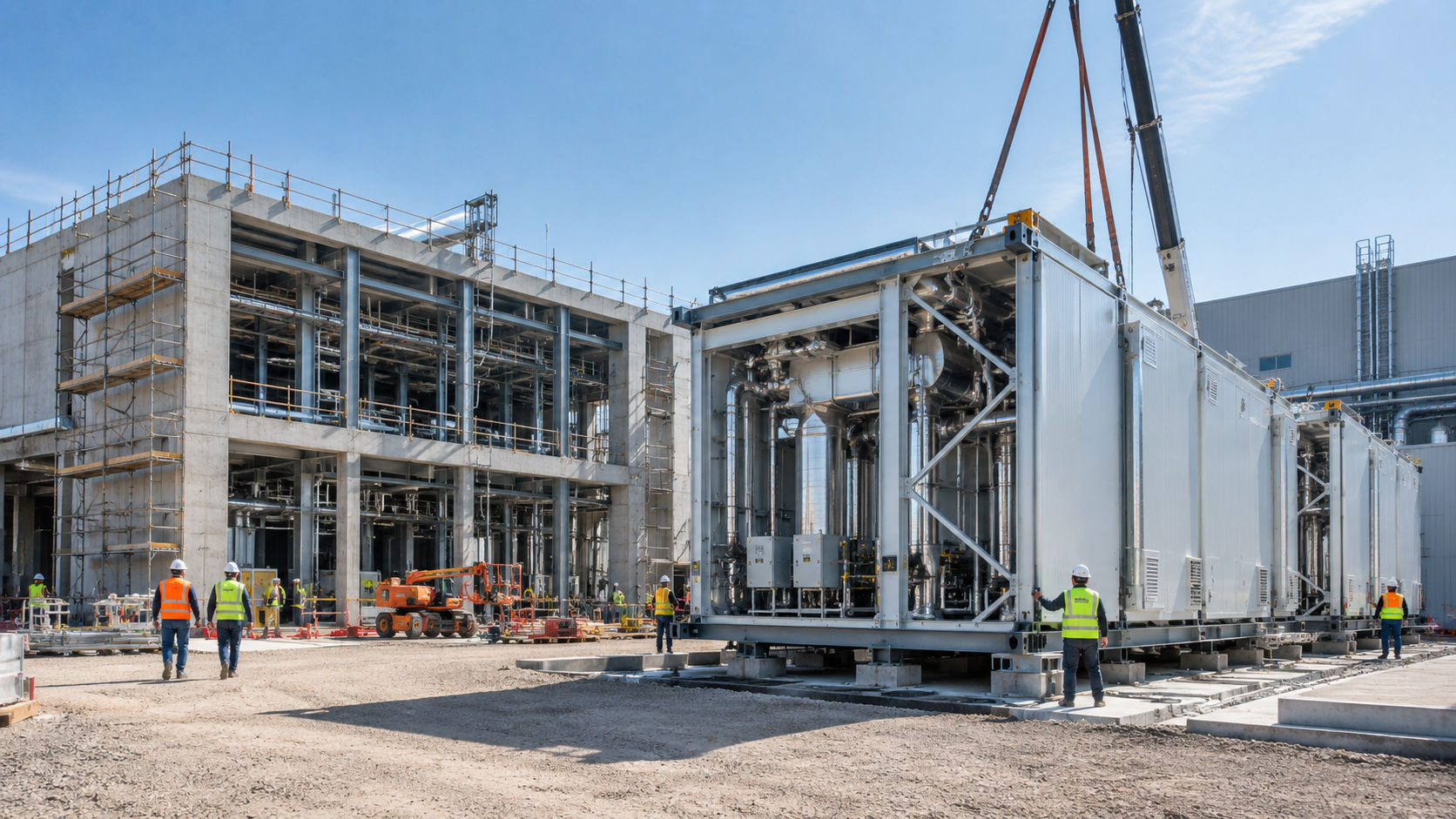
Modular expansion for existing pharma plants allows critical facility areas to be designed, manufactured, assembled, and tested off-site before being transported, installed, and connected to the existing site. The approach is not simply about adding space faster. It is about creating a controlled, GMP-ready manufacturing environment with better project predictability and reduced disruption to live operations.

What Does Modular Expansion Mean for an Existing Pharma Plant?

Modular expansion refers to the use of pre-engineered and prefabricated facility modules to extend an existing pharmaceutical manufacturing site. These modules can include cleanrooms, process rooms, technical areas, HVAC systems, electrical provisions, process utilities, automation interfaces, equipment spaces, and controlled personnel or material movement routes.

In pharmaceutical manufacturing, a Modular Pharmaceutical Facility cannot be treated as a temporary structure or a basic building shell. It must function as part of the GMP environment. That means it needs to support cleanroom classification, pressure cascades, HEPA filtration, environmental control, utility integration, process flow, cleaning requirements, maintenance access, commissioning, and validation.

For existing plants, modular expansion may be used to add a dedicated production block, sterile processing suite, formulation area, biotech manufacturing zone, packaging support area, laboratory extension, or utility-supported manufacturing space. The right application depends on the product, process, regulatory expectations, site layout, and future capacity plan.

Use Modular Expansion When Capacity Is Needed Without Extending Brownfield Timelines

One of the strongest reasons to use modular expansion is the need for additional capacity within a shorter project window. Pharmaceutical manufacturers may need to respond to new product launches, increased market demand, contract manufacturing requirements, regional supply strategies, or portfolio expansion.

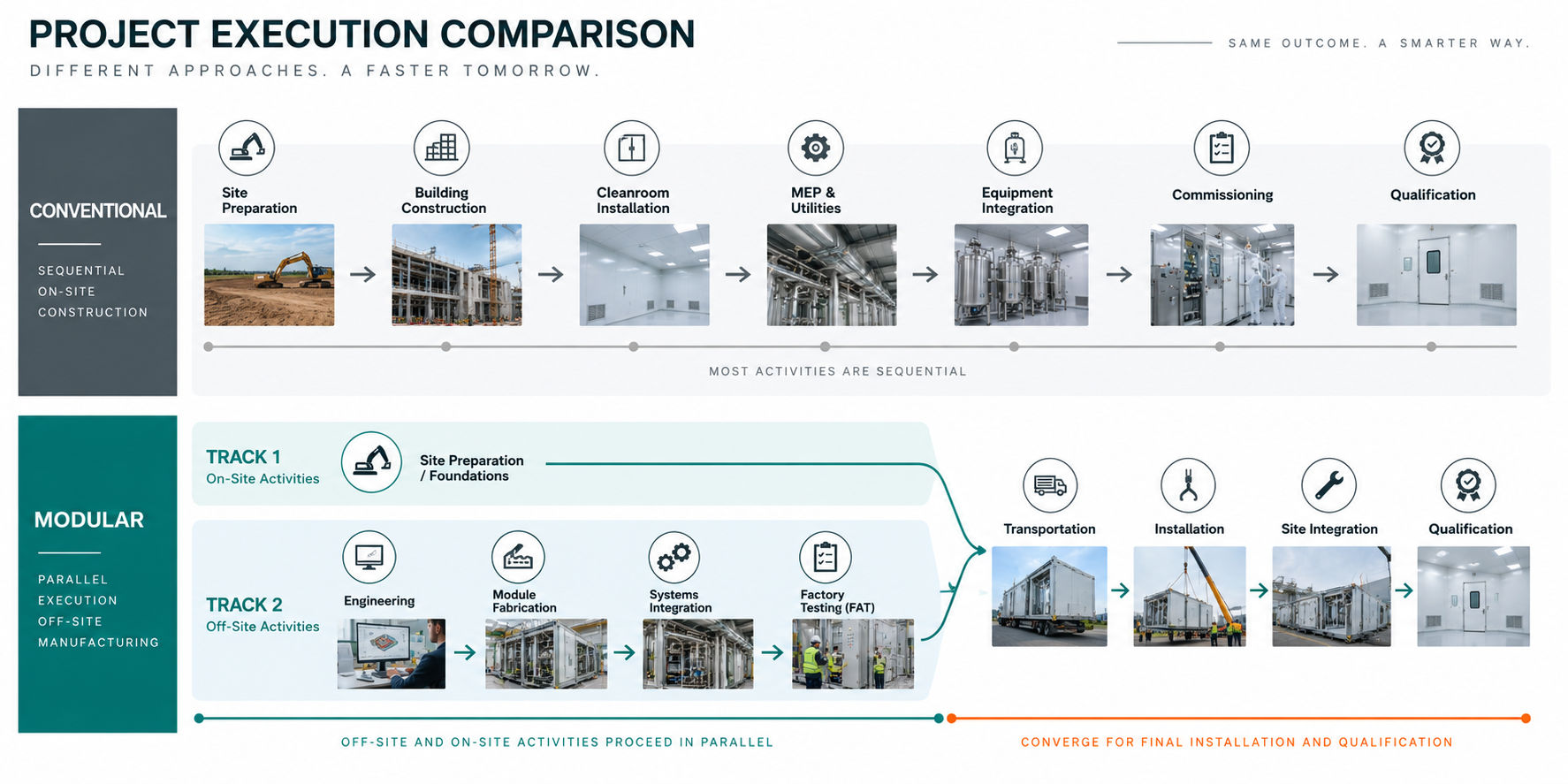
In a conventional construction sequence, design, civil work, cleanroom installation, utility routing, equipment placement, commissioning, and qualification usually happen in a largely linear manner. This can extend timelines, especially when the work has to be coordinated around an operating facility.

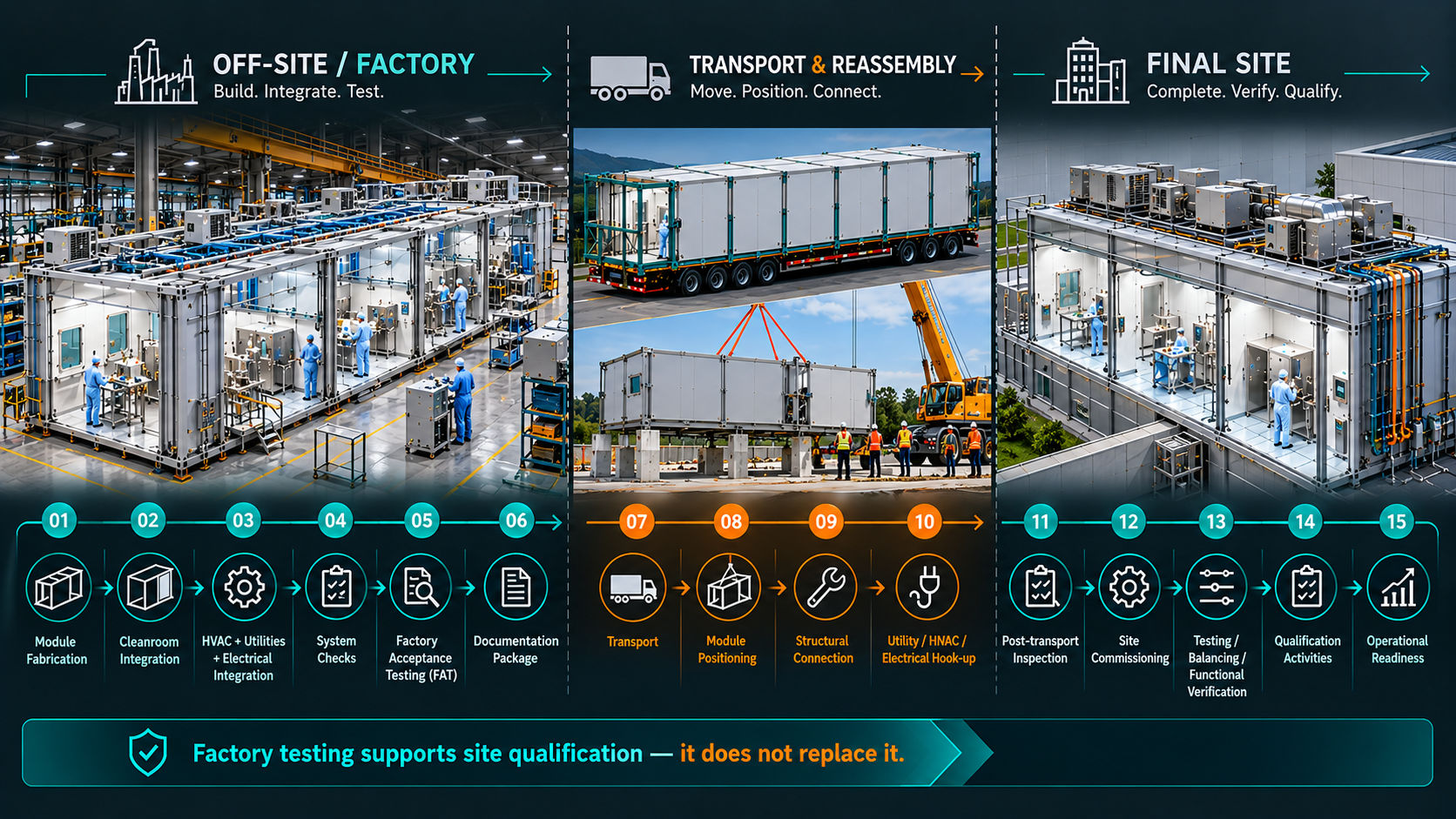
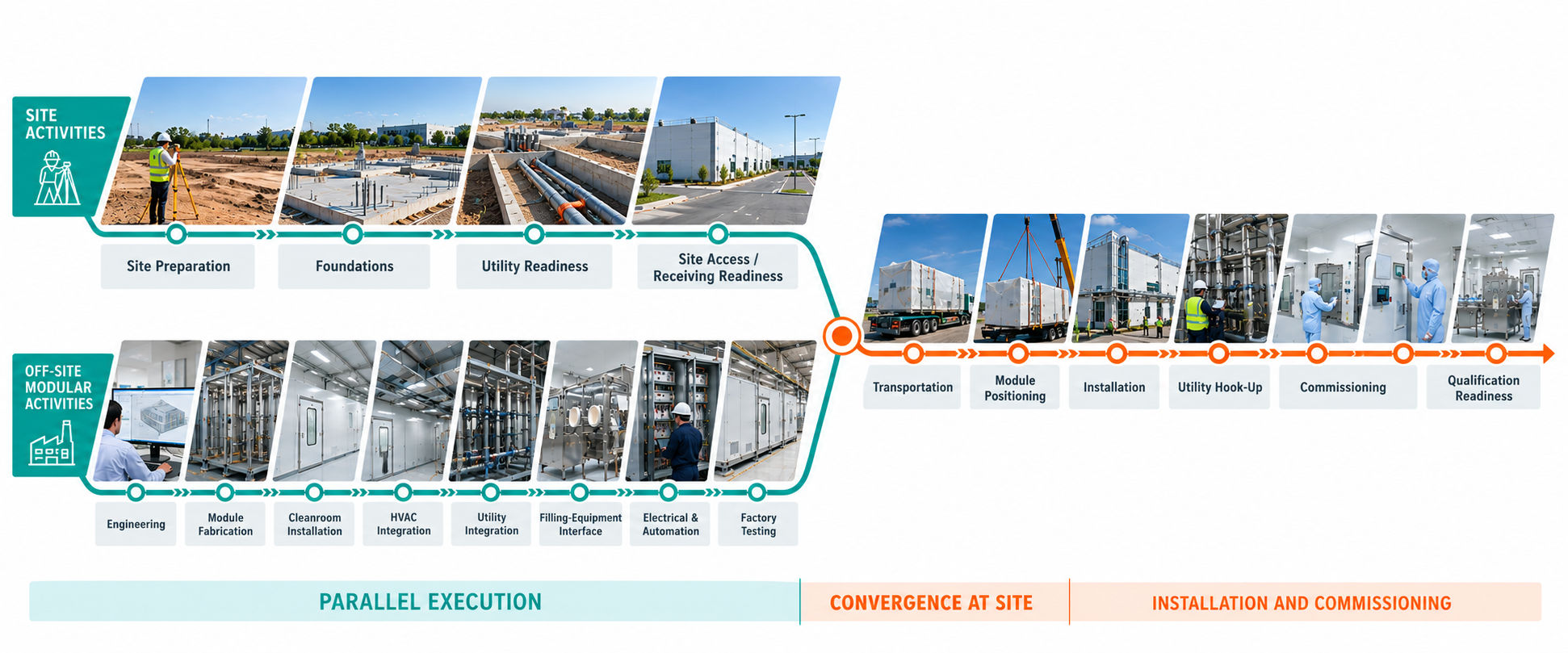
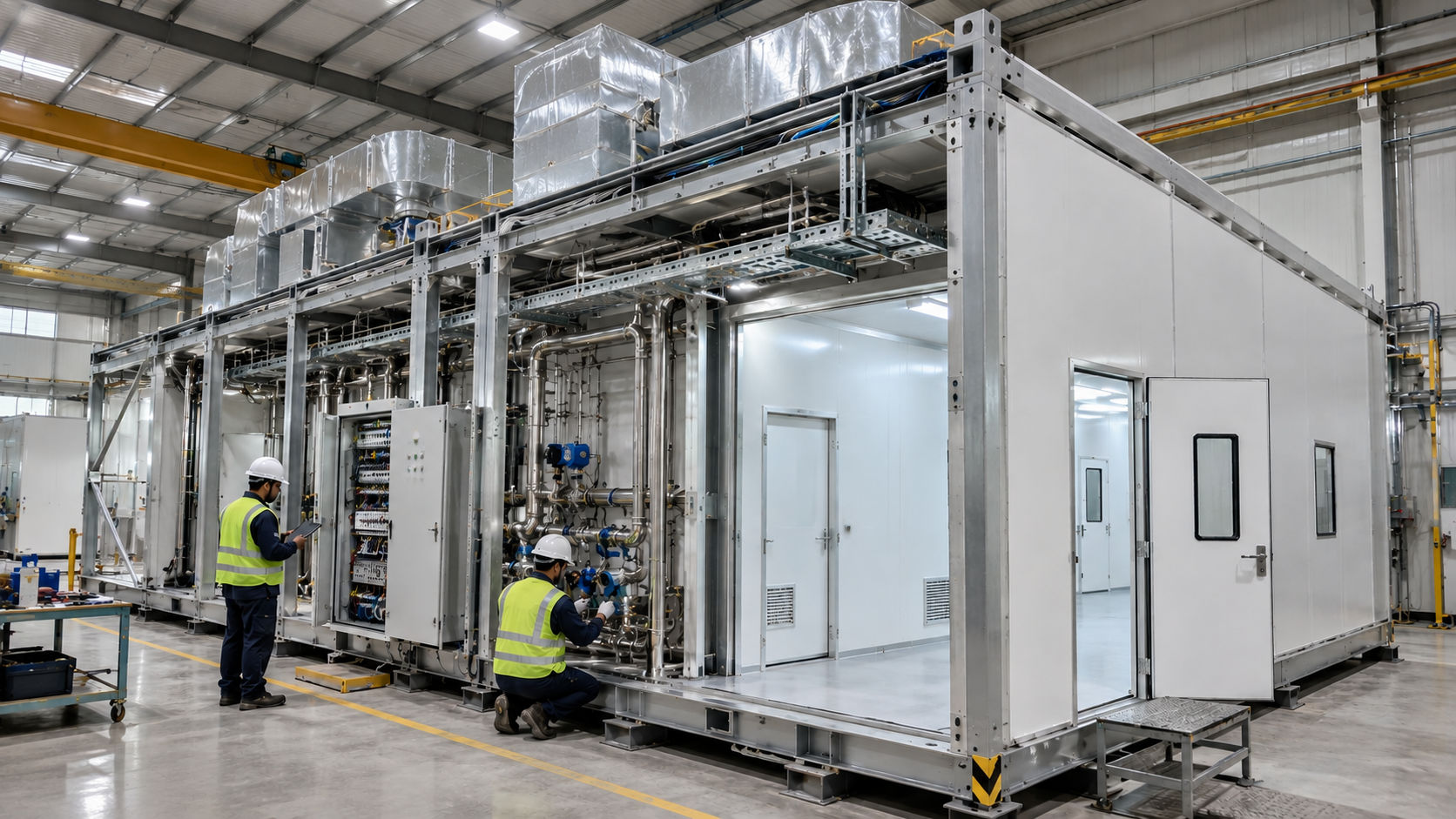
Modular construction allows a more parallel approach. While the existing site is being prepared for foundations, access, utility tie-ins, and receiving areas, the modular pharmaceutical facility can be fabricated through Off-site Modular Manufacturing in a controlled environment. Cleanroom panels, HVAC components, utility services, electrical systems, and equipment provisions can be coordinated before the module arrives on site.

This makes modular expansion useful when production readiness is time-sensitive and every delay affects manufacturing availability, revenue planning, or market access.

Use Modular Expansion When the Existing Plant Must Stay Operational

Expanding a live pharmaceutical facility requires more control than a general industrial expansion. In GMP environments, construction work can introduce risks related to dust, traffic movement, cleaning access, pest control, temporary partitions, pressure control, and cross-contamination.

When the existing plant must continue operating during the expansion, modular construction can reduce the intensity and duration of on-site activity. Since a significant portion of fabrication, fit-out, and pre-testing happens away from the plant, the site team has fewer construction interfaces to manage near active GMP areas.

This is especially relevant for facilities with limited shutdown windows or continuous manufacturing commitments. Modular expansion can help project teams plan the most disruptive activities around defined Installation & Hook-up windows rather than prolonged construction phases.

For plant heads and project managers, this can improve control over production continuity, site safety, and GMP discipline during the expansion period.

Use Modular Expansion When Cleanroom Segregation Is Required

Many existing pharma plants require expansion because the current layout no longer supports the desired level of segregation. This may be due to new product categories, sterile manufacturing requirements, biotech processes, containment needs, dedicated formulation areas, or a need to separate personnel and material flows more clearly.

In such cases, the expansion is not only about adding rooms. It is about creating a properly controlled GMP envelope.

A modular cleanroom can be designed around defined cleanroom classifications, airlocks, HEPA filtration, HVAC zoning, pressure cascades, personnel entry routes, material transfer, waste movement, and cleaning requirements. These decisions are easier to control when they are built into the Design & Engineering stage rather than adjusted during late-stage construction.

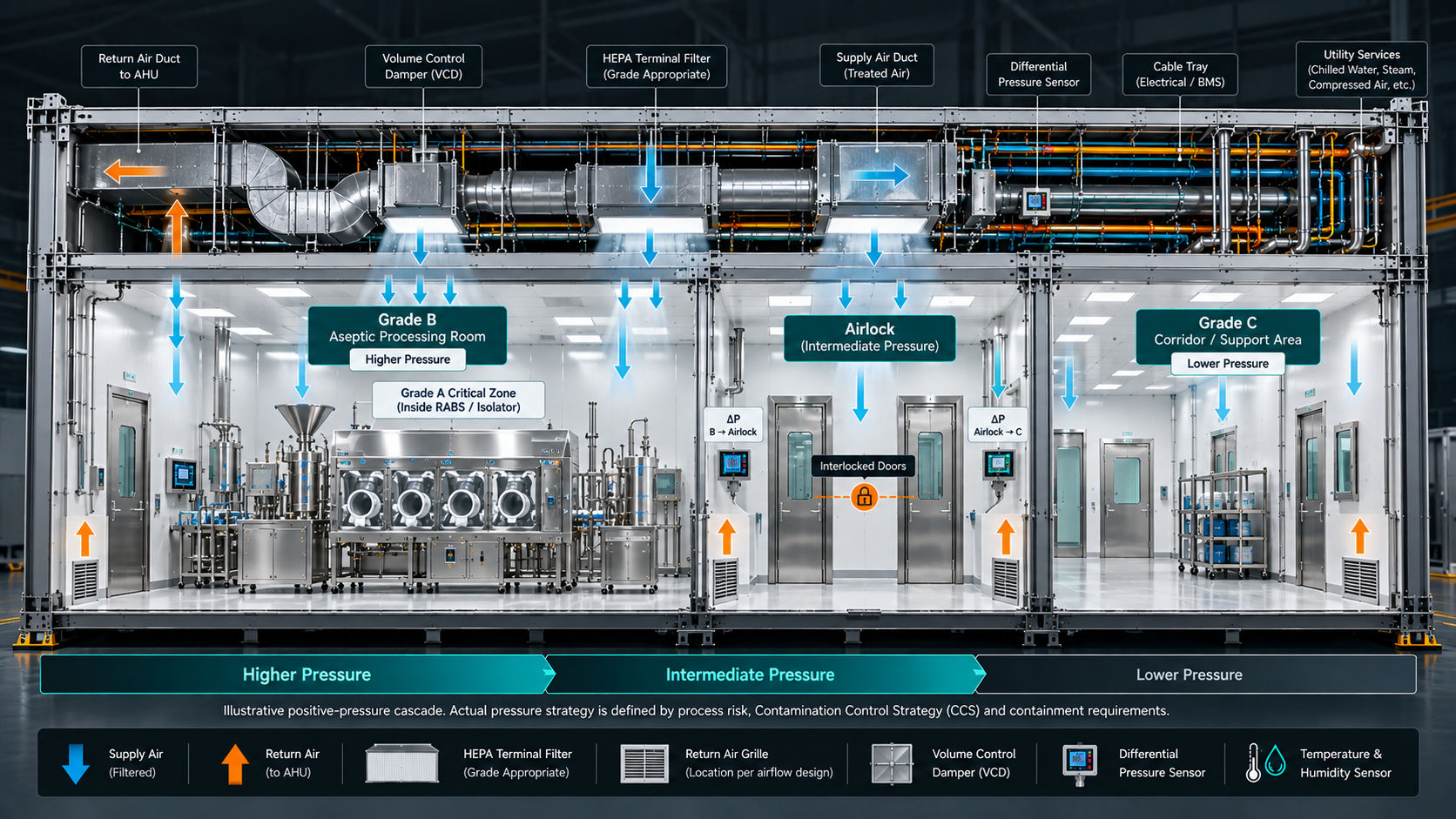
For sterile and aseptic areas, this becomes even more important. Airflow direction, pressure relationships, environmental monitoring, and contamination control must be planned as part of the facility concept. Modular expansion can help create a clearly defined controlled environment with fewer modifications inside the existing plant.

Use Modular Expansion When Site Space Is Limited or Difficult to Modify

Existing pharmaceutical sites often have physical constraints. The available area may be restricted by current buildings, utility yards, warehouses, access roads, service corridors, or structural limitations. Internal expansion may also be difficult if existing rooms are already occupied or if the current layout does not support new flows.

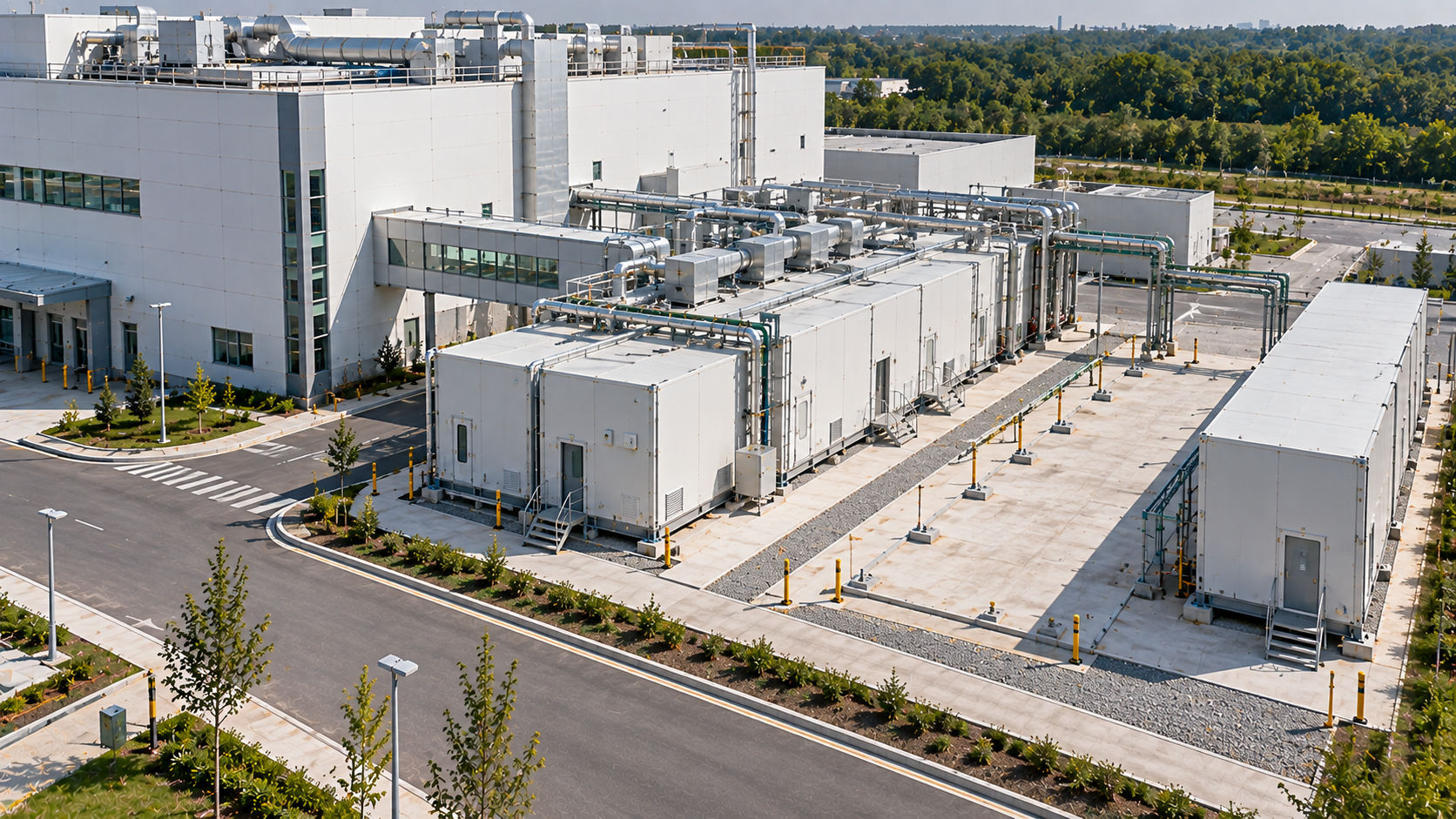
Modular expansion can be suitable when the plant needs a compact, engineered facility addition that fits within a defined site footprint. Modules can be designed around available space, installation access, transport routes, equipment loads, structural requirements, and future connection points.

Some modular units may be placed adjacent to the existing plant. Others may be connected through clean corridors, technical interfaces, or controlled hook-up zones. In all cases, site evaluation is essential. Module dimensions, lifting strategy, transportation route, foundation design, and utility connection points must be aligned before the project moves into detailed execution.

When these factors are addressed early, modular expansion can reduce late-stage design changes and improve installation readiness.

Use Modular Expansion When Utility Integration Is Clearly Defined

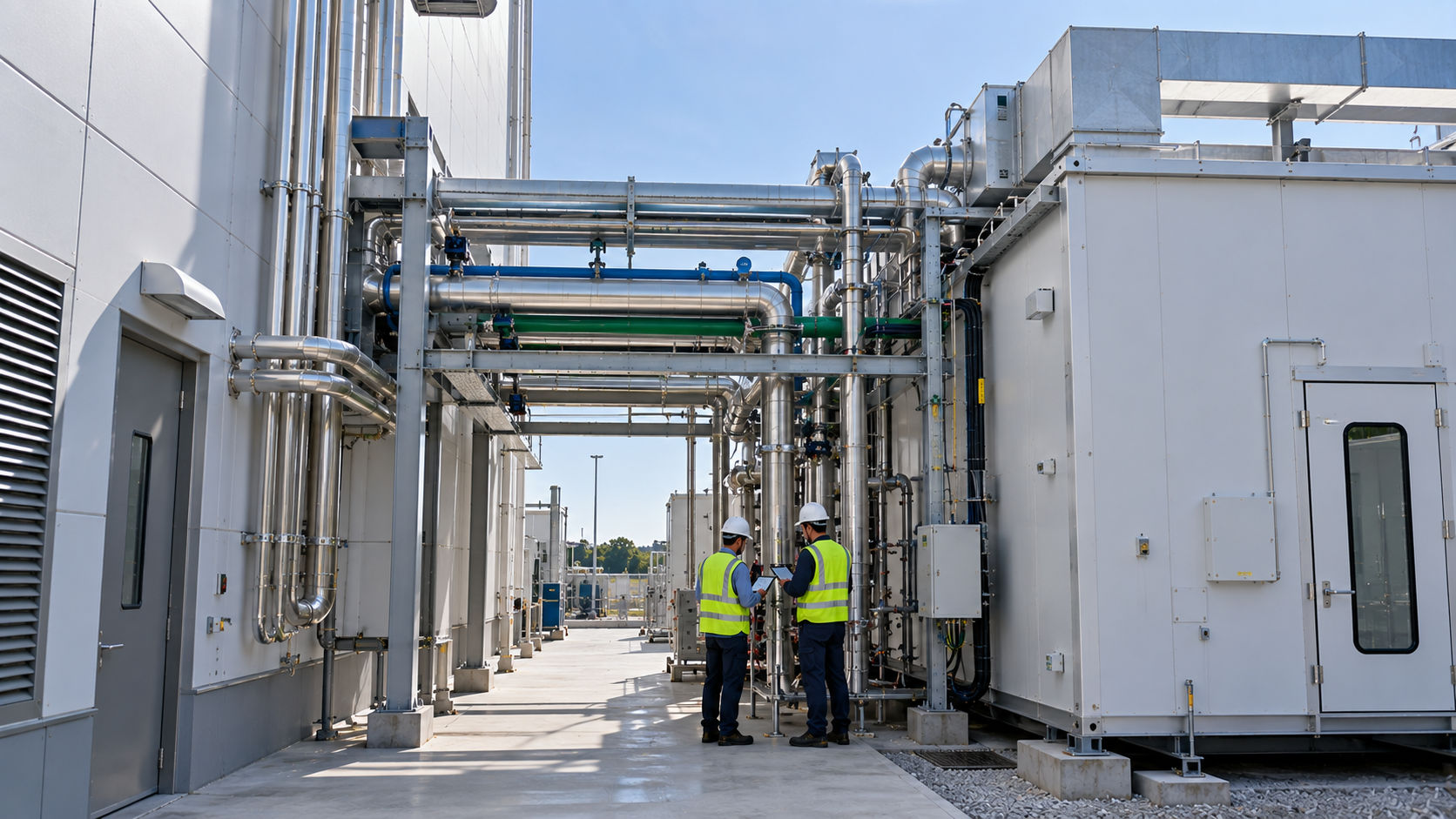
A modular manufacturing facility must connect successfully with the plant’s existing utility backbone. This may include HVAC, electrical power, purified water, WFI, clean steam, compressed air, nitrogen, chilled water, hot water, drainage, process exhaust, EMS, BMS, fire safety systems, and automation networks.

Before choosing modular expansion, the project team must assess whether the existing plant has enough utility capacity to support the new area. If the current system is undersized, the project may require utility upgrades, separate utility skids, or independent utility systems.

This step is critical because modular construction can accelerate facility delivery, but it cannot solve an undefined utility strategy. Process loads, diversity factors, pressure requirements, temperature and humidity control, maintenance access, tie-in points, and redundancy requirements must be clarified early.

When utility integration is properly planned, modular construction becomes more effective. It allows piping, electrical systems, technical spaces, and service routes to be coordinated inside the module before site installation, reducing the risk of rework during hook-up and Commissioning.
Use Modular Expansion When URS and Design Decisions Are Mature

Modular expansion works best when the project team has clarity on user requirements. Since modules are manufactured off-site, early decisions have a major impact on quality, cost, and schedule.

The URS should define the intended use of the facility, product type, process flow, equipment requirements, cleanroom classification, HVAC expectations, personnel and material movement, utility loads, automation needs, regulatory expectations, and future expansion plans.

A clear URS supports design freeze. This is important because late changes in modular projects can affect fabrication, transportation, equipment integration, utility routing, and validation documentation.

For pharmaceutical companies, modular expansion is most effective when engineering, quality, validation, operations, and regulatory teams are aligned before off-site manufacturing begins. This ensures the facility is not only faster to build, but also suitable for long-term GMP operation.

Use Modular Expansion When Future Scalability Matters

Pharmaceutical demand can change quickly. A product may move from development to commercial scale, a CDMO may need to support multiple clients, or a manufacturer may want to expand in phases instead of committing to one large facility from the beginning.

Modular expansion supports this type of phased planning. A facility can be designed with future expansion corridors, utility provisions, cleanroom extensions, technical interfaces, and additional module connections in mind.

This is especially relevant for biotech companies, vaccine manufacturers, CDMOs, and manufacturers managing multiple dosage forms or product portfolios. Modular infrastructure can support staged investment while keeping future growth visible from the beginning.

However, scalability must be planned from the first phase. The initial module should not block future access, utility routing, maintenance movement, or expansion areas. A good modular expansion strategy considers both immediate production needs and long-term pharmaceutical infrastructure planning.
Use Modular Expansion When FAT Can Reduce Site Risk

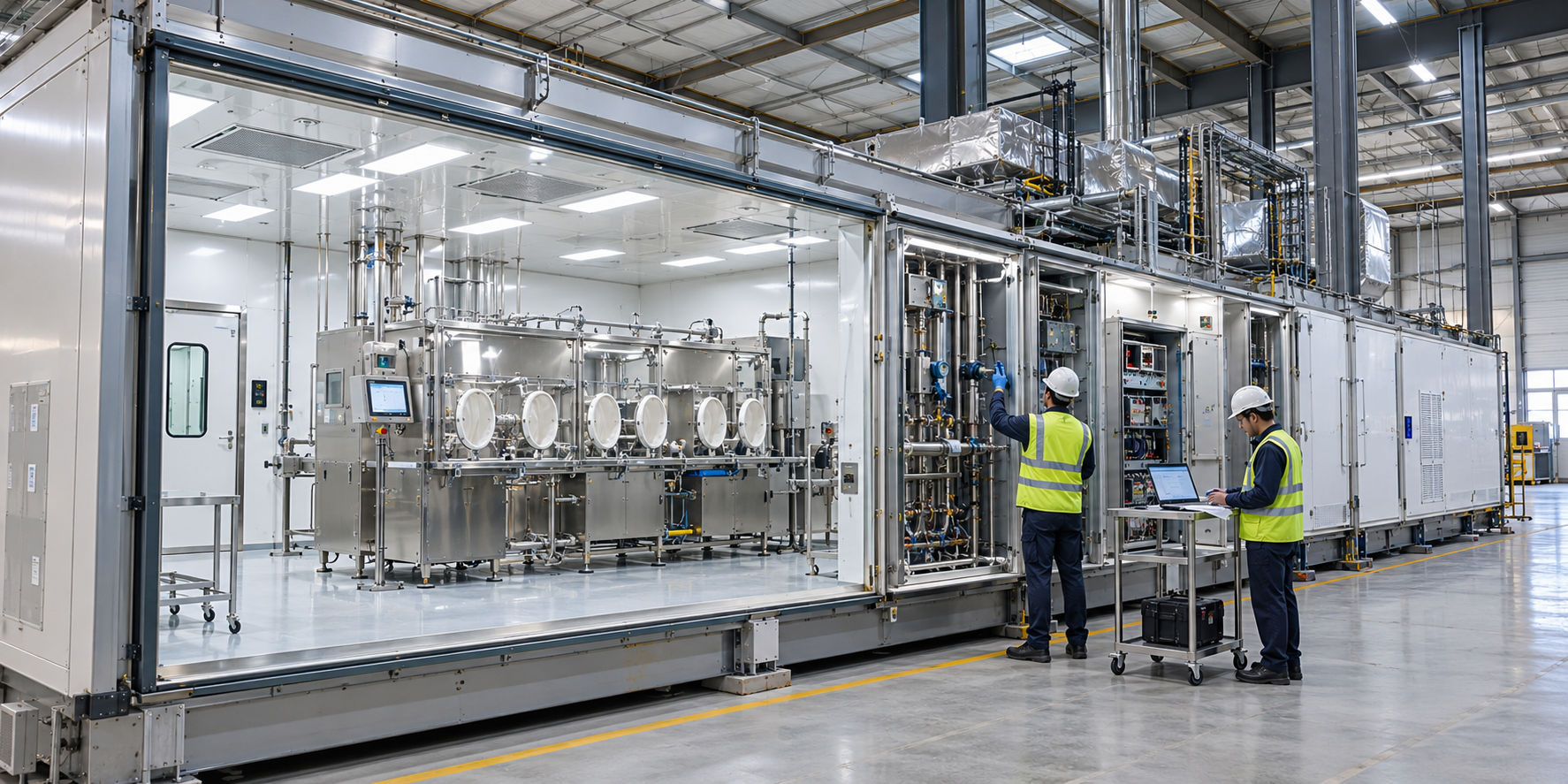
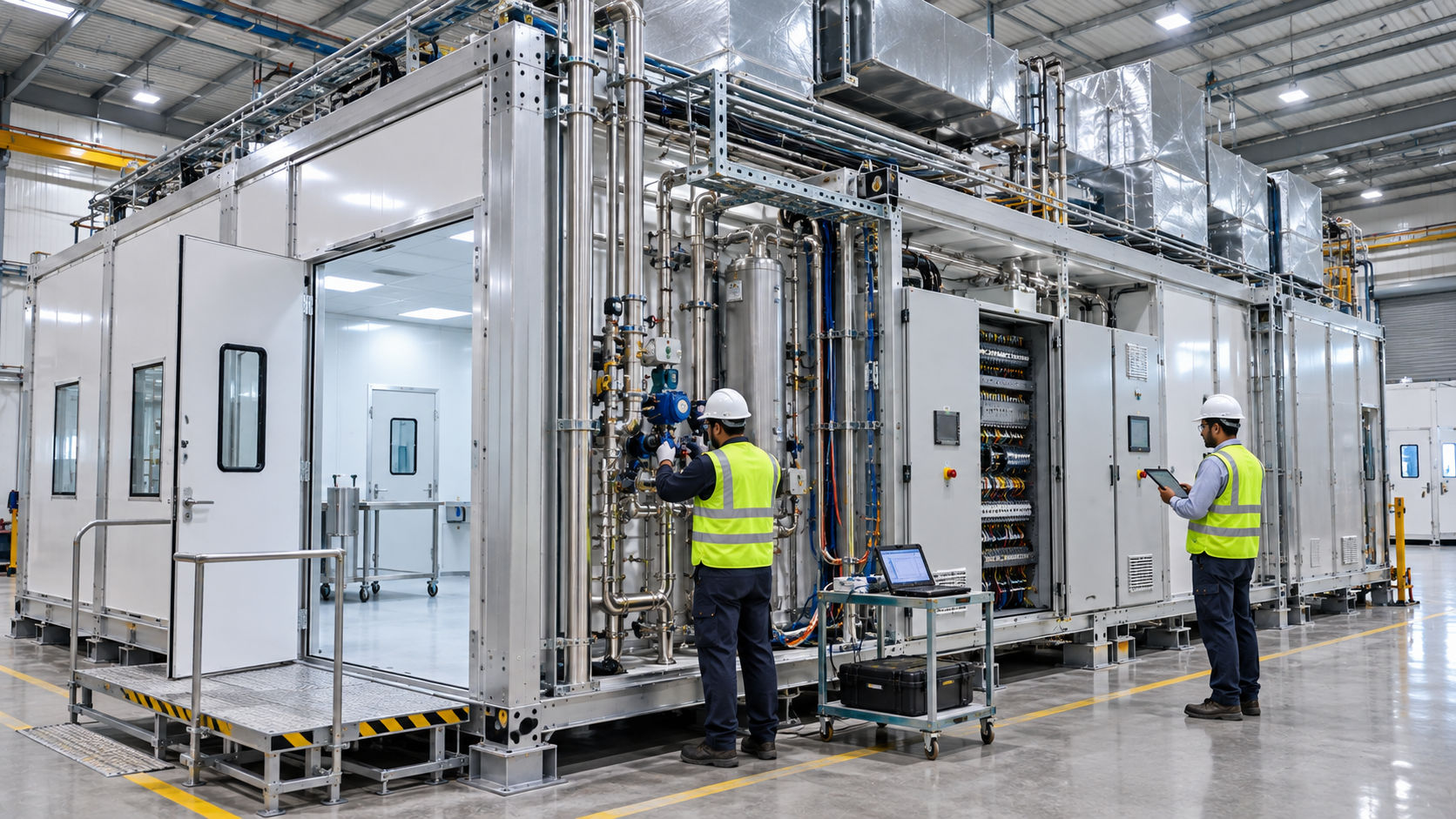
Factory Acceptance Testing is one of the key advantages of modular execution. Since the module is built in a controlled off-site environment, many systems can be inspected and tested before transportation.

FAT may include checks related to room finishes, equipment installation, HVAC components, control panels, electrical systems, utility routing, automation interfaces, documentation, and functional performance depending on the project scope.

For existing pharma plants, this is valuable because issues identified in the factory are generally easier to correct before the module reaches the live site. Once the module arrives, the project can move more efficiently into installation, hook-up, Site Acceptance Testing, commissioning, qualification, and Validation Support.

FAT also gives project teams better visibility before shipment. It helps reduce installation deviations, improves commissioning readiness, and supports a more structured handover process.

Use Modular Expansion When Validation Planning Starts Early

A GMP Modular Facility still needs to meet the same GMP expectations as a conventionally built facility. The construction method may be different, but the requirements for qualification, validation, documentation, and quality oversight remain.

For an existing plant, expansion may also trigger change control, regulatory review, variation assessment, or post-approval impact evaluation depending on the product, market, process, and approved facility registration.

This means validation planning should begin early. The project should define the design qualification approach, commissioning strategy, qualification scope, documentation structure, and handover requirements before execution reaches the site.

DQ, IQ, OQ, and PQ expectations must be aligned with the facility’s intended use. HVAC performance, cleanroom classification, pressure cascade verification, utility qualification, equipment integration, environmental monitoring readiness, and process interfaces should all be part of the validation strategy.

When validation is planned from the beginning, modular expansion becomes a controlled GMP delivery method rather than only a faster construction route.

When Modular Expansion May Not Be the Right Fit

Modular expansion is useful, but it is not automatically the right answer for every existing pharma plant. It may not be suitable if the project requirements are still unclear, the process is frequently changing, or the regulatory pathway has not been assessed.

It may also become difficult if the site has poor access for module transportation, limited lifting space, unresolved structural constraints, insufficient utility capacity, or no clear plan for installation and hook-up. In such cases, modular construction may still be possible, but the project will need deeper engineering evaluation before the approach is finalized.

The key question is whether modular expansion reduces project risk in the specific site context. If the plant has clear requirements, defined utilities, practical logistics, mature design inputs, and a structured validation plan, modular execution can offer significant advantages. If these inputs are missing, the first step should be feasibility and engineering assessment.

How MMF Approaches Modular Expansion for Existing Pharma Plants

Modular Mobile Facility approaches expansion as an integrated pharmaceutical engineering project, not as a standalone prefabrication exercise. The process begins with Design & Engineering, where the facility concept, cleanroom layout, process flow, HVAC strategy, utility integration, equipment placement, and GMP requirements are developed around the client’s manufacturing needs.

The project then moves into Off-site Modular Manufacturing, where the facility modules are fabricated in a controlled environment. Cleanroom systems, technical utilities, equipment provisions, electrical systems, automation interfaces, and HVAC components can be coordinated before the module reaches site.

Factory Acceptance Testing supports early verification and helps reduce uncertainties during installation. Once the module is ready, MMF manages Transportation, Installation & Hook-up, Commissioning, and Validation Support to help the facility move toward operational readiness.

This delivery sequence — Design & Engineering, Off-site Modular Manufacturing, Factory Acceptance Testing, Transportation, Installation & Hook-up, Commissioning, and Validation Support — is especially valuable for existing pharma plants where project interfaces, live operations, and GMP readiness must be managed carefully.

Why Choose Modular Mobile Facility?

Modular Mobile Facility helps pharmaceutical manufacturers expand existing plants with engineered, GMP-focused modular infrastructure. For companies that need additional manufacturing capacity, cleanroom segregation, utility-supported process areas, or scalable facility extensions, MMF provides a structured route from concept to operational readiness.

With expertise across Design & Engineering, Off-site Modular Manufacturing, Factory Acceptance Testing, Transportation, Installation & Hook-up, Commissioning, and Validation Support, MMF helps reduce project interfaces and improve control over schedule, quality, and GMP compliance.

For plant heads, engineering teams, CDMOs, biotech companies, vaccine manufacturers, API manufacturers, and facility owners, MMF offers a practical way to expand pharmaceutical infrastructure without losing focus on production continuity, contamination control, utility integration, and long-term scalability.

Frequently Asked Questions

1. What is modular expansion for an existing pharma plant?

Modular expansion is the addition of prefabricated GMP facility modules to an existing pharmaceutical manufacturing site. These modules may include cleanrooms, process areas, HVAC systems, utilities, technical spaces, and equipment provisions. The modules are engineered and manufactured off-site, then transported, installed, hooked up, commissioned, and validated at the existing plant.

2. When should a pharmaceutical company use modular expansion?

A pharmaceutical company should consider modular expansion when it needs faster capacity addition, reduced disruption to ongoing operations, cleanroom segregation, scalable infrastructure, or controlled GMP space within an existing plant. It is especially useful when conventional brownfield construction may create long timelines, site congestion, or operational interruptions.

3. Can modular pharma facilities meet GMP requirements?

Yes, modular pharma facilities can meet GMP requirements when they are properly designed, constructed, documented, commissioned, qualified, and validated. A modular facility must support cleanroom classification, HVAC control, pressure cascades, personnel flow, material flow, process utilities, contamination control, and validation expectations like any conventional GMP facility.

4. How does modular expansion reduce disruption in existing plants?

Modular expansion reduces disruption by shifting a significant part of fabrication, installation, and testing to an off-site controlled environment. This limits construction activity near live GMP areas, reduces site congestion, and helps project teams plan installation and hook-up around defined shutdown or access windows.

5. Why is utility integration important in modular pharma expansion?

Utility integration is critical because the new modular facility must connect with existing plant services such as HVAC, purified water, WFI, clean steam, compressed air, chilled water, electrical systems, EMS, BMS, and drainage. If utilities are not assessed early, the project may face delays during installation, commissioning, or validation.

6. What is the role of FAT in modular pharmaceutical facilities?

Factory Acceptance Testing verifies key systems, equipment, and module components before shipment. FAT helps identify issues early, reduce site rework, improve commissioning readiness, and support documentation for qualification and validation. For existing plants, this reduces the risk of discovering major issues after the module reaches the operating site.

7. Does modular expansion require validation?

Yes, modular expansion requires commissioning, qualification, and validation based on the intended use of the facility. This may include DQ, IQ, OQ, PQ, cleanroom qualification, HVAC verification, utility qualification, equipment checks, environmental monitoring readiness, and documentation review as per GMP requirements.

8. Is modular expansion suitable for sterile manufacturing facilities?

Modular expansion can be suitable for sterile manufacturing when cleanroom classification, airlocks, pressure cascades, HEPA filtration, environmental monitoring, personnel flow, material flow, and contamination control are planned correctly. Sterile applications require early involvement of engineering, quality, validation, and regulatory teams to ensure GMP readiness.

9. Can modular expansion support future pharma plant scalability?

Yes, modular expansion can support future scalability when the facility is planned with additional modules, utility corridors, cleanroom extensions, technical interfaces, maintenance access, and equipment changes in mind. It is useful for CDMOs, biotech companies, vaccine manufacturers, and pharma manufacturers planning phased growth.

10. When is modular expansion not the right choice?

Modular expansion may not be the right choice if the project requirements are unclear, the URS is incomplete, the process is still changing, utilities are insufficient, site access is restricted, or the regulatory pathway is not defined. In such cases, feasibility assessment and engineering evaluation should be completed before selecting the modular route.

Technical Reference

European Commission — EudraLex Volume 4, Chapter 3: Premises and Equipment

2. European Commission — EudraLex Volume 4, Annex 15: Qualification and Validation

4. ASTM E2500-25 — Specification, Design and Verification of Pharmaceutical and Biopharmaceutical Manufacturing Systems and Equipment

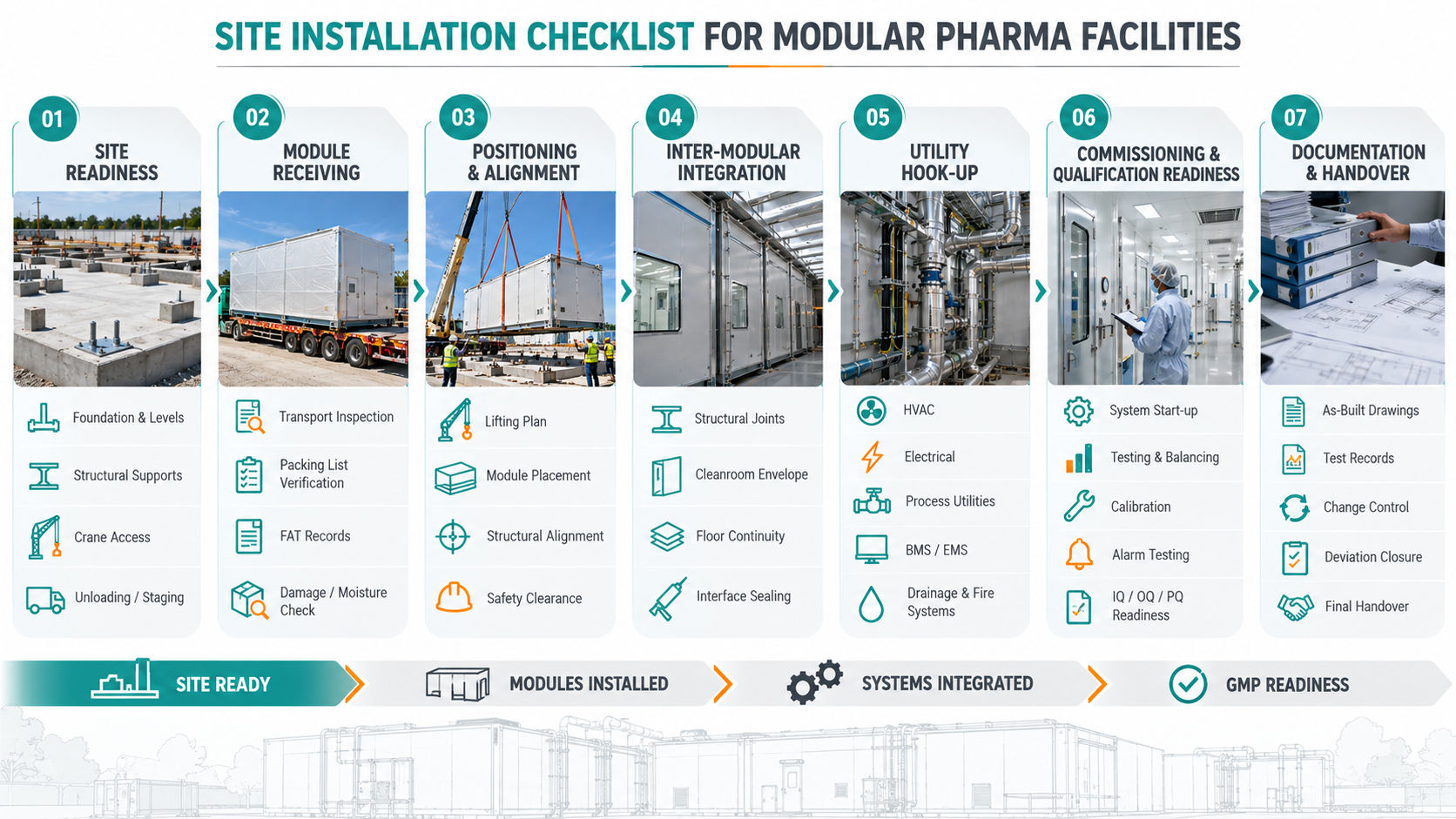
Site Installation Checklist for Modular Pharma Facilities

In modular pharmaceutical projects, installation is the stage where design, logistics, GMP requirements, utilities, cleanroom performance, and documentation come together on site. Since a major part of the facility is already engineered, manufactured, and tested off site, the site must be fully prepared before the modules arrive.

For pharmaceutical manufacturers, CDMOs, biotech companies, vaccine manufacturers, and API facilities, a modular approach can support faster project delivery and better control over construction quality. However, the final success depends on how smoothly the facility is received, positioned, connected, commissioned, and validated.

A clear site installation checklist helps reduce delays, avoid rework, maintain GMP design intent, and create a structured path from module placement to operational readiness.

Why Site Readiness Matters

A modular pharmaceutical facility cannot be treated like a standard construction package. By the time modules reach the project site, the civil base, utility connections, unloading area, crane access, safety clearances, and installation sequence should already be confirmed.

If the foundation level is incorrect, utility points do not match, or access for lifting is restricted, the installation timeline can be affected. For GMP facilities, these issues can also impact cleanroom performance, personnel flow, material flow, and commissioning readiness.

This is why Design & Engineering should define site interfaces, utility loads, module placement, HVAC requirements, and installation logic before off-site fabrication begins.

Civil and Structural Readiness

Before the modules arrive, the site team should verify that the civil and structural work is ready to receive the facility. This includes checking foundation levels, load-bearing capacity, anchor points, drainage, access roads, lifting radius, and temporary staging areas.

The module base must match the approved layout and structural design. Any mismatch at this stage may create alignment issues during placement or inter-modular connection.

Key checks include: 

  • Foundation readiness and level verification 
  • Structural support alignment 
  • Load-bearing confirmation 
  • Crane access and lifting radius 
  • Module unloading area 
  • Temporary staging area 
  • Drainage and waterlogging control 
  • Access for installation teams and equipment 
  • Site safety barricading 

Module Receiving and Logistics

The receiving stage is critical because modular pharma facilities are transported as pre-engineered units. Each module must be protected from physical damage, moisture, dust, and contamination risk during transport, unloading, and positioning.

Before shipment reaches the site, the project team should confirm transport route clearance, crane availability, lifting permits, unloading sequence, and temporary storage requirements. After delivery, modules should be inspected against packing lists, drawings, and FAT records.

This connects directly with Off-site Modular Construction, where modules are built under controlled conditions before being transported to the final location.

Cleanroom and Layout Integrity

A modular facility must maintain the approved GMP layout after installation. Personnel flow, material flow, gowning sequence, airlock position, process movement, waste movement, and maintenance access should remain aligned with the original facility design.

For modular cleanrooms, sterile areas, biotech suites, or API facilities, this is especially important. Room positioning, door direction, pass box placement, cleanroom panel joints, wall and floor interfaces, and classified area segregation must be verified during installation.

Strong Pharmaceutical Facility Design and Cleanroom Engineering ensure that the facility is designed around the product, process, and GMP requirements from the beginning.

Utility Integration and Hook-up

Utility integration is one of the most important parts of modular pharma facility installation. Modules may arrive with pre-installed HVAC, electrical systems, process piping, cleanroom panels, EMS, BMS, and other services. These systems still need to be connected correctly to site infrastructure.

The checklist should cover electrical connections, HVAC ducting, compressed air, chilled water, process utilities, drainage, instrumentation, control cabling, fire safety interfaces, earthing, leak testing, and pressure testing.

For a GMP manufacturing facility, utility performance directly affects product quality. HVAC, HEPA filtration, temperature, humidity, pressure cascades, and environmental monitoring must be verified before commissioning.

This is where Installation & Hook-up becomes a GMP-critical activity, not just a construction step.

Inter-Modular Connections

When multiple modules are joined together, the interfaces between them are as important as the modules themselves. Structural joints, cleanroom envelope sealing, flooring continuity, HVAC ducts, utility piping, electrical cabling, and monitoring systems must connect without compromising the facility design.

For modular cleanrooms, even small gaps or poorly finished joints can affect pressure control, cleanability, and contamination control. Inter-modular connection should therefore be planned, inspected, and documented carefully.

FAT and Site Verification

Factory Acceptance Testing helps verify equipment, systems, controls, and module integration before shipment. It allows many technical issues to be corrected in the factory environment instead of at the project site.

However, FAT does not replace site verification. After transportation and installation, the team must confirm that modules, utilities, instruments, controls, alarms, HVAC systems, and safety systems are still performing as intended.

FAT records, open points, inspection reports, and site verification documents should be available before commissioning begins.

Commissioning and Validation Readiness

Commissioning confirms that installed systems are connected, energized, tested, and ready for qualification. This includes HVAC start-up, utility checks, pressure balancing, filter installation, control system communication, alarm testing, and safety system verification.

After commissioning, the facility moves toward qualification and validation. IQ, OQ, and PQ documentation should be supported by approved drawings, calibration records, material certificates, FAT reports, commissioning records, change controls, and SOP readiness.

Any change made during installation should be reviewed through proper change control, especially if it affects room classification, pressure cascade, utility routing, monitoring systems, personnel flow, or material flow.

This makes Validation & Commissioning an essential part of the installation journey.

Documentation and Handover

Installation is not complete without proper documentation. Missing drawings, incomplete FAT closure, open punch points, or unresolved deviations can delay commissioning and validation.

The final handover package should include approved drawings, as-built drawings, installation records, utility test reports, FAT documents, commissioning reports, calibration certificates, material certificates, change control records, deviation closure, training records, and final handover documentation.

For pharmaceutical manufacturers, documentation supports GMP compliance, maintenance, inspection readiness, and future expansion.

Why Choose Modular Mobile Facility (MMF)?

Modular Mobile Facility supports pharmaceutical companies through an integrated delivery model covering Design & Engineering, Off-site Modular Construction, Manufacturing, Factory Acceptance Testing, Transportation, On-Site Installation, Installation & Hook-up, Validation Support, and Commissioning.

MMF’s approach is built around controlled off-site construction, GMP-focused engineering, faster project delivery, and structured on-site installation. By moving a significant part of facility construction and testing into a controlled workshop environment, MMF helps reduce site dependency and supports a smoother path from design to operational readiness.

For pharmaceutical manufacturers, biotech companies, CDMOs, vaccine facilities, and API producers, MMF provides turnkey modular solutions engineered for compliant and efficient pharmaceutical manufacturing.

Frequently Asked Questions

1. What is a site installation checklist for modular pharma facilities?

A site installation checklist for modular pharma facilities is a structured readiness document used before, during, and after module installation. It covers civil readiness, module receiving, lifting, placement, utility hook-up, cleanroom interfaces, HVAC integration, commissioning, documentation, and validation readiness. It helps pharmaceutical project teams reduce rework, maintain GMP design intent, and move smoothly from installation to qualification.

2. Why is site readiness important for a modular pharmaceutical facility?

Site readiness is critical because modular facilities arrive with many systems already fabricated and integrated. If foundations, utilities, access routes, lifting areas, or connection points are not ready, installation delays can occur. For GMP facilities, poor site readiness can also affect cleanroom performance, material flow, personnel flow, utility integration, and commissioning timelines.

3. What should be checked before modular pharma modules arrive on site?

Before modules arrive, teams should check foundation levels, structural supports, crane access, unloading areas, temporary storage, utility stub-outs, safety clearances, installation drawings, and site permits. The project team should also confirm module arrival sequence, lifting plans, manpower readiness, and documentation availability to ensure smooth installation.

4. How does FAT support modular pharma facility installation?

Factory Acceptance Testing helps verify equipment, systems, and module integration before shipment. It allows issues to be identified and corrected in the factory environment rather than at the project site. In modular pharma facilities, FAT can reduce site installation risk, shorten commissioning time, and provide documentation support for later qualification activities.

5. Do modular cleanrooms require validation after installation?

Yes. Modular cleanrooms still require qualification and validation after installation. Even if the cleanroom is pre-fabricated and tested off site, final verification must confirm that the installed facility meets approved design and GMP requirements. This may include IQ, OQ, PQ, airflow testing, pressure cascade verification, HEPA filter integrity testing, and environmental monitoring checks.

6. What utilities are important during modular pharma facility hook-up?

Important utilities include HVAC, electrical power, compressed air, process utilities, water systems where applicable, drainage, BMS, EMS, fire safety systems, instrumentation, and control wiring. These utilities must be correctly connected, tested, and documented before commissioning and qualification can proceed.

7. What is the difference between installation and commissioning in modular pharma projects?

Installation focuses on placing modules, connecting structures, completing utility hook-ups, and ensuring physical readiness. Commissioning confirms that systems are installed correctly and operate as intended. In pharmaceutical projects, commissioning prepares the facility for qualification and validation activities such as IQ, OQ, and PQ.

8. How can MMF help with modular pharma facility installation?

MMF supports modular pharma facility projects through design, engineering, off-site manufacturing, FAT, transportation, on-site installation, hook-up, commissioning, and validation support. This integrated approach helps pharmaceutical companies reduce site complexity, maintain GMP alignment, and achieve a more controlled path to operational readiness.

How FAT Reduces Risk in Modular Pharma Projects

In modular pharma projects, the costliest risks often appear after the module reaches the site. A missed utility interface, an unverified control sequence, an access limitation, or a pressure cascade issue can delay commissioning and affect GMP readiness. 

In conventional project delivery, many of these issues appear during site commissioning, when access is limited, timelines are compressed, and multiple contractors are working in parallel. In modular pharma projects, Factory Acceptance Testing in Modular Pharma Projects, shifts this risk forward. It allows critical systems to be checked in a controlled manufacturing environment before shipment and installation.

For pharmaceutical manufacturers, biotechnology companies, CDMOs, vaccine manufacturers, and API producers, FAT is not only a testing activity. It is a project risk-reduction tool. When planned correctly, FAT helps verify whether the modular pharmaceutical facility is aligned with user requirements, GMP intent, design specifications, and operational expectations before it reaches the site.

Why FAT Matters in Modular Pharma Facilities

A modular pharmaceutical facility is not simply a prefabricated structure. It is an integrated manufacturing environment that may include cleanrooms, HVAC systems, HEPA filtration, pressure cascades, process utilities, electrical systems, automation, EMS, BMS, and process equipment. The value of modular execution lies in bringing many of these elements together off-site, under controlled conditions.

This is where Design & Engineering plays a critical role. FAT becomes effective only when the project has a clear design basis, defined user requirements, approved drawings, utility loads, equipment layouts, and operating philosophy. Without this foundation, FAT becomes a checklist exercise. With proper engineering, it becomes a structured verification process.

In modular projects, the facility is assembled and tested before shipment. This makes it possible to identify design gaps, interface issues, equipment access concerns, utility mismatches, and control-sequence errors earlier in the project lifecycle. Correcting these issues at the module construction facility is usually more practical than resolving them after delivery, placement, and site hook-up.

FAT as a Risk-Control Step Before Shipment

Factory Acceptance Testing reduces risk by confirming that the module or equipment package has been built according to approved specifications. It helps project teams verify whether the delivered system matches the URS, design documents, P&IDs, equipment specifications, layout drawings, utility requirements, and automation logic.

For a modular manufacturing facility, this may include checks related to equipment installation, cleanroom finishes, utility routing, access panels, instrumentation, alarm logic, control panels, room zoning, pressure cascade logic, and hook-up readiness. The objective is not to complete final qualification at the factory. The objective is to reduce uncertainty before the module is transported.

This is especially important because modular pharma projects involve multiple interfaces. A process skid may depend on clean utilities. The cleanroom may depend on HVAC balancing. HVAC performance may depend on ducting, filters, sensors, dampers, and controls. Automation may depend on field instruments, alarms, interlocks, and communication with BMS or EMS.

Through Off-site Modular Construction, many of these systems can be brought together before site work reaches its most critical stage. FAT allows project teams to verify whether these systems are coordinated, accessible, and ready for shipment.

Reducing Design and Engineering Risk

One of the most important benefits of FAT is its ability to reveal design and coordination issues before they become site-level delays. Even with detailed engineering, modular projects can face practical challenges once equipment, utilities, cleanroom panels, HVAC ducts, and controls come together in the same physical space.

FAT helps confirm whether equipment is positioned correctly, whether maintenance access is available, whether instruments are reachable, whether utility routes are practical, and whether the module can support the intended operating and cleaning requirements. These are not minor details in pharmaceutical manufacturing. They directly affect GMP readiness, operational efficiency, and long-term maintainability.

For example, a pressure sensor may be technically specified but poorly located. A utility connection may be correctly sized but difficult to access after installation. A control panel may be functional but positioned in a way that complicates operation. FAT gives the project team an opportunity to identify and resolve these issues while the module is still in a controlled workshop environment.

This reinforces the importance of Pharmaceutical Facility Design as an early-stage risk management activity. A well-designed facility makes FAT more meaningful, and a well-executed FAT validates the practical readiness of that design.

Managing GMP and Cleanroom Risks

In GMP manufacturing facilities, facility performance is closely linked to contamination control, personnel flow, material flow, environmental control, and utility reliability. FAT helps project teams review whether the modular cleanroom and its supporting systems are aligned with the intended GMP strategy.

For modular cleanrooms, this may involve checking room finishes, panel joints, door interlocks, return air paths, pressure cascade logic, HVAC integration, HEPA filter installation readiness, EMS points, BMS connections, and alarm conditions. While final cleanroom qualification must be completed after installation, pre-shipment checks help reduce the risk of discovering major gaps during commissioning.

FAT also supports better documentation discipline. When observations, deviations, corrective actions, and acceptance criteria are documented before shipment, the project team has clearer evidence of what was verified at the factory and what must be reconfirmed at the site.

This is where Validation & FAT becomes an important part of integrated project delivery. FAT should be connected with later qualification, commissioning, and validation support. It should not be treated as a separate event disconnected from site readiness.

What Dual FAT Means in MMF Projects

For modular pharma projects, a dual FAT approach can further reduce risk. Dual FAT is not a separate regulatory term, but it is a practical engineering approach that fits modular execution well.

The first FAT is typically performed at the OEM or vendor level. This may apply to critical process equipment, clean utility skids, HVAC packages, automation panels, or other engineered systems. At this stage, the focus is on verifying whether the individual package performs according to its specification.

The second FAT is performed after these systems are integrated into the modular facility. This is where the focus shifts from equipment readiness to facility readiness. The question is no longer only whether a skid works. The question is whether the skid, cleanroom, utilities, HVAC, automation, and module interfaces work together as an integrated pharmaceutical manufacturing environment.

For MMF projects, this dual FAT approach is highly relevant because the facility is engineered, constructed, assembled, and checked off-site before transportation. It allows critical systems to be verified first as independent packages and then again as part of the modular facility.

This supports a clearer transition from Manufacturing to Factory Acceptance Testing, and then from FAT to Installation & Hook-up at the project site.

FAT Does Not Replace SAT, Commissioning, or Validation

FAT reduces risk, but it does not eliminate the need for Site Acceptance Testing, commissioning, or validation. This distinction is important for pharmaceutical decision-makers.

Some checks can be meaningfully completed before shipment. Others must be repeated or confirmed after transportation, unloading, placement, inter-modular connections, utility hook-up, and final site conditions. For example, a control sequence may be verified during FAT, but site power, final utility connections, pressure balancing, airflow verification, and cleanroom qualification must be confirmed after installation.

A strong FAT strategy clearly defines what is accepted at the factory, what is carried forward to site testing, and what must be confirmed during commissioning and validation. This prevents overclaiming and helps maintain compliance integrity.

Through On-Site Installation, the modular facility moves from factory-tested readiness to site-specific readiness. Placement, inter-modular connections, hook-up, commissioning, and validation support are essential to confirm that the module performs as intended in its final operating environment.

What a Strong Modular FAT Protocol Should Include

A FAT protocol for modular pharma projects should be built around risk, not only around inspection. It should reflect the URS, approved drawings, design specifications, GMP requirements, equipment data, automation logic, and operating philosophy.

A strong protocol may include verification of construction completion, equipment installation, utility routing, instrument tagging, access for operation and maintenance, automation sequences, alarms, interlocks, cleanroom finishes, HVAC integration, pressure cascade logic, EMS/BMS points, and hook-up readiness.

It should also clearly identify acceptance criteria. This helps avoid subjective decisions during FAT. Each test should define what is being verified, how it will be checked, what documentation is required, and what action is needed if the result is not acceptable.

For modular projects, the FAT protocol should also define what may be affected by transportation. Any function that could change during shipment, lifting, placement, or site reconnection should be reconfirmed during SAT, commissioning, or validation.

How FAT Supports Faster Project Delivery

One of the reasons pharmaceutical companies consider modular pharma facilities is faster project delivery. However, speed is useful only when it is supported by control. FAT helps protect the schedule by reducing late-stage rework and improving visibility before shipment.

When issues are identified during FAT, they can be corrected while the module is still accessible and before the project depends on site availability. This reduces the likelihood of delays during installation and commissioning. It also improves coordination between engineering teams, vendors, validation teams, and site project managers.

For facility owners and investors, FAT improves confidence. It provides a structured view of project readiness before the facility leaves the factory. For plant heads and operations leaders, it helps confirm that the facility has been reviewed from an operational perspective before arriving at site.

This makes FAT a practical bridge between Off-site Modular Construction and Validation & Commissioning.

Why Choose Modular Mobile Facility (MMF)?

Modular Mobile Facility supports pharmaceutical companies with turnkey modular solutions designed for GMP compliance, faster project delivery, and scalable pharmaceutical infrastructure. MMF integrates Design & Engineering, Off-site Modular Construction, Factory Acceptance Testing, Transportation, Installation & Hook-up, Validation Support, and Commissioning into a connected project delivery model.

Because MMF manages modular facility delivery from design and engineering to FAT, transportation, installation, hook-up, validation support, and commissioning, FAT is not treated as a separate inspection event. It becomes part of the complete project-readiness strategy. 

For modular pharma projects, this integrated approach matters. FAT is most effective when it is planned from the beginning, aligned with design intent, connected with site installation, and supported through commissioning and validation. MMF’s approach helps reduce uncertainty by verifying key systems in a controlled environment before shipment and supporting the facility through final site readiness.

For pharmaceutical manufacturers, biotech companies, CDMOs, vaccine producers, and API manufacturers, MMF provides modular pharmaceutical facilities engineered around compliance, integration, and practical execution.

Frequently Asked Questions

1. What is FAT in a modular pharma project?

Factory Acceptance Testing is a pre-shipment verification process carried out before a modular facility, equipment package, or integrated system is transported to the site. In modular pharma projects, FAT helps confirm that the facility or system is built according to approved specifications, user requirements, and GMP design intent. It reduces the risk of discovering major issues during installation, commissioning, or validation.

2. Why is FAT important for modular pharmaceutical facilities?

FAT is important because modular pharmaceutical facilities combine cleanrooms, HVAC, utilities, equipment, controls, and automation within a factory-built environment. Testing these systems before shipment helps identify design gaps, interface issues, access concerns, and control-sequence problems early. This reduces site rework, protects the project schedule, and supports smoother commissioning.

3. What is dual FAT in modular pharma projects?

Dual FAT refers to a practical two-stage testing approach. The first FAT is performed at the OEM or vendor level for critical equipment or utility packages. The second FAT is performed after those systems are integrated into the modular facility. This helps verify both individual equipment readiness and overall facility integration before shipment.

4. Does FAT replace SAT in pharmaceutical projects?

No, FAT does not replace Site Acceptance Testing. FAT verifies systems before shipment, while SAT confirms performance after delivery, placement, hook-up, and site installation. In modular projects, some checks completed during FAT may remain valid, but functions affected by transportation, lifting, reconnection, or final site conditions must be reconfirmed onsite.

5. What should be checked during FAT for a GMP modular facility?

A FAT protocol for a GMP modular facility may include checks for construction completion, equipment installation, cleanroom finishes, utility routing, HVAC integration, pressure cascade logic, instrumentation, alarms, interlocks, EMS/BMS points, access for operation and maintenance, and hook-up readiness. The protocol should be based on URS, design documents, and risk assessment.

6. How does FAT reduce commissioning risk?

FAT reduces commissioning risk by identifying and resolving issues before the module reaches the site. Since systems are more accessible at the factory, corrections can be made earlier and with less disruption. This reduces late-stage troubleshooting, improves documentation readiness, and allows commissioning teams to focus on site-specific verification rather than unresolved factory issues.

7. Is FAT required for every modular pharma facility?

FAT is strongly recommended for modular pharma facilities, especially when the project includes complex equipment, cleanrooms, HVAC systems, process utilities, automation, or GMP-critical interfaces. The exact FAT scope depends on the project risk profile, system complexity, regulatory expectations, and agreed qualification strategy.

8. How does MMF support FAT in modular pharma projects?

MMF supports FAT as part of its integrated modular project delivery model. The process connects design, off-site modular construction, equipment integration, factory acceptance testing, transportation, installation, hook-up, validation support, and commissioning. This helps pharmaceutical companies reduce technical uncertainty before shipment and move toward site readiness with greater control.

Designing GMP Cleanrooms for Modular Pharma Facilities

For pharmaceutical manufacturers, cleanroom design is often one of the most critical factors influencing compliance, project timelines, and operational readiness. A cleanroom is not only a controlled space with filtered air. It is an engineered environment where room classification, HVAC performance, pressure cascades, material movement, personnel flow, utilities, cleanroom finishes, monitoring systems, commissioning, and validation must work together.

As pharmaceutical manufacturing moves toward faster, more flexible, and more predictable infrastructure models, modular pharma facilities are becoming a practical approach for new facilities, expansions, and capacity additions. However, the success of any Modular Pharmaceutical Facility depends on how clearly the GMP cleanroom is designed at the beginning of the project.

In modular execution, cleanroom decisions must be finalized early because a large portion of the facility is manufactured, integrated, and checked off-site. When the design is incomplete or unclear, the project may face rework during installation, hook-up, commissioning, or validation. When the design is well defined, modular delivery can support a faster route to GMP readiness with better control over quality and execution.

Why GMP Cleanroom Design Starts With Process Understanding

A GMP cleanroom should always be designed around the manufacturing process. Before deciding the room size, classification, HVAC capacity, or module configuration, the project team must clearly understand the product type, process steps, equipment needs, contamination risks, personnel activities, and material movement.

For example, the cleanroom requirements for sterile filling, vaccine manufacturing, biotech processing, or API handling may differ significantly. Each process has its own expectations for room classification, air change rates, pressure relationships, containment, utility demand, cleaning approach, and environmental monitoring.

This is why early-stage Design & Engineering becomes important in a modular facility project. A well-developed design helps define the cleanroom zones, equipment placement, service corridors, utility routes, pass boxes, airlocks, gowning areas, and future expansion possibilities before the modules move into manufacturing.

When process requirements are clearly translated into engineering design, the modular facility becomes easier to manufacture, transport, install, qualify, and operate.

Cleanroom Classification and GMP Zoning

Cleanroom classification is one of the first technical decisions in GMP facility design. The required classification depends on the product exposure level, manufacturing operation, contamination risk, and applicable regulatory expectations.

In pharmaceutical manufacturing, cleanrooms are typically planned using controlled zones such as Grade A, B, C, and D or ISO-based classifications, depending on the process and regulatory framework. The objective is to provide the right level of environmental control without overdesigning the facility.

For modular cleanrooms, zoning must be integrated into the module layout from the start. Critical areas should be protected with appropriate airlocks, pressure cascades, HEPA filtration, and controlled access. Lower-grade areas should support material preparation, equipment movement, gowning, and support activities without compromising higher-grade zones.

Good zoning also helps optimize CAPEX and OPEX. Instead of treating the entire facility as one highly classified area, the cleanroom can be engineered with appropriate classification levels based on actual process risk. This supports compact, efficient, and GMP-aligned pharmaceutical facility design.

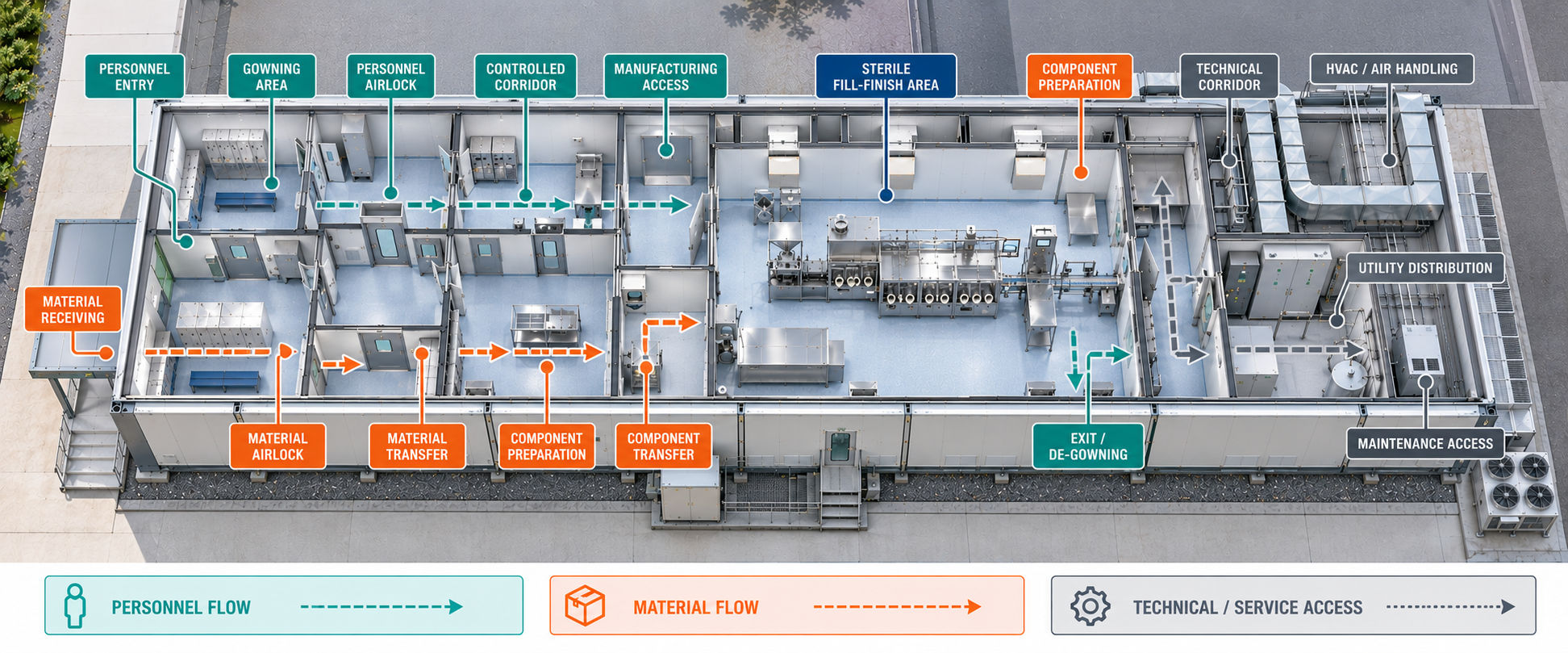
Personnel Flow and Material Flow in Modular Cleanrooms

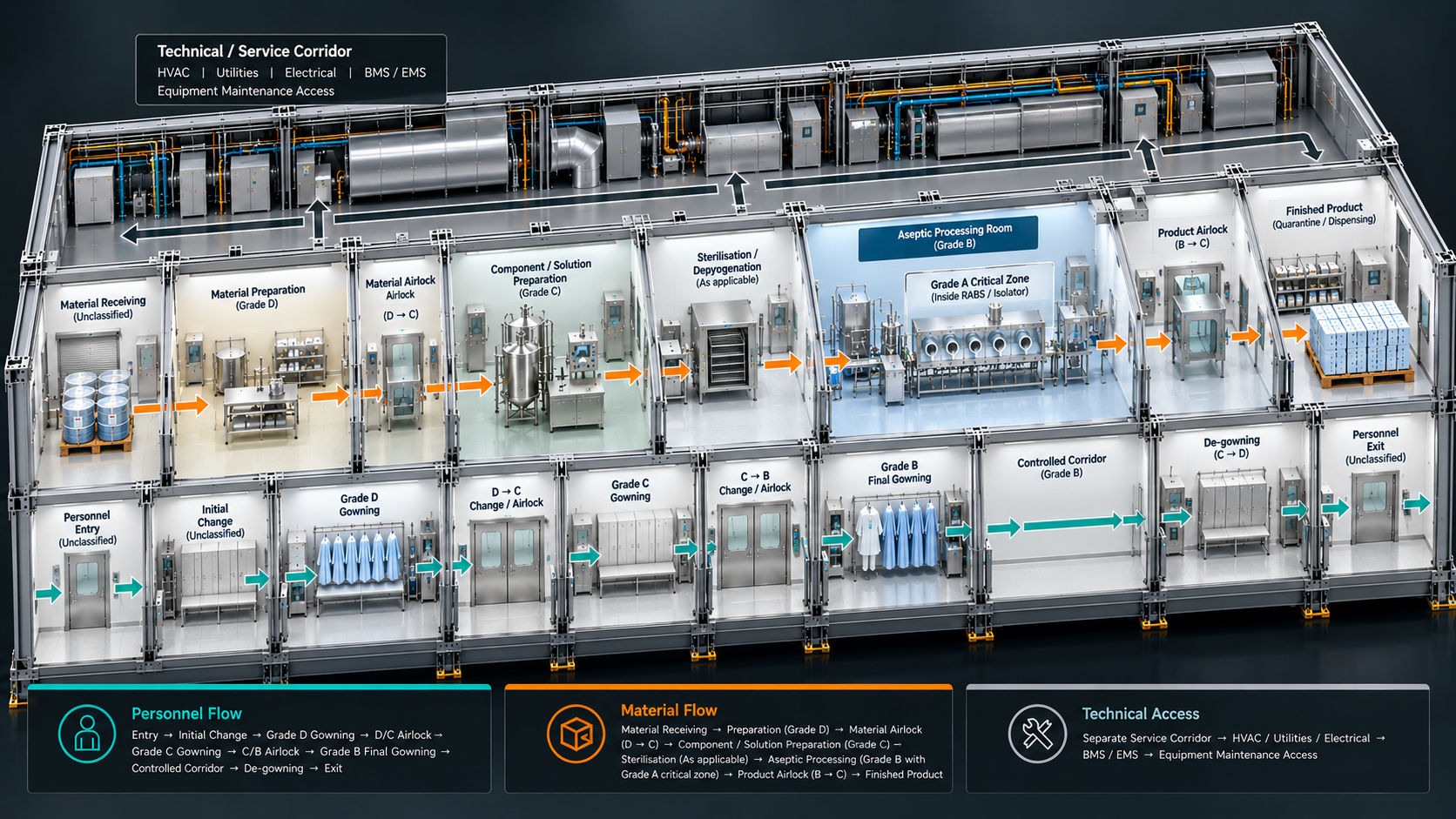
A cleanroom layout should reduce unnecessary movement and prevent cross-contamination. Personnel flow and material flow must be clearly separated wherever required, especially in facilities handling sterile products, biologics, vaccines, or sensitive pharmaceutical processes.

Personnel movement typically includes entry, gowning, transition through airlocks, process area access, and exit flow. Material movement may include raw materials, components, consumables, equipment parts, packaging materials, waste, and finished goods. If these flows are not properly planned, the risk of contamination, mix-ups, pressure disturbance, and operational inefficiency increases.

In a modular pharma facility, these flows also influence module interfaces. Door positions, pass-through systems, interlocking arrangements, airlocks, corridor widths, and transfer routes need to be coordinated during the design stage. Any late change after module fabrication can affect structural design, HVAC balancing, utility routing, and validation documentation.

MMF’s approach connects workflow planning with Off-site Modular Construction, allowing cleanroom layouts and critical interfaces to be developed in a controlled factory environment before site installation. 

HVAC, HEPA Filtration, and Pressure Cascades

HVAC is one of the most critical systems in GMP cleanroom engineering. It controls temperature, humidity, air cleanliness, airflow direction, pressure differentials, and particle control. In pharmaceutical manufacturing, HVAC is not only a comfort system; it is a product protection system.

A well-designed cleanroom HVAC system should consider:

  • Air change requirements
  • HEPA filtration
  • Airflow patterns
  • Room pressure relationships
  • Temperature and humidity control
  • Return air strategy
  • Fresh air requirements
  • Exhaust needs
  • Equipment heat load
  • Operator movement
  • Monitoring points
  • Utility integration

Pressure cascades help maintain airflow from cleaner areas toward less clean areas. This is especially important in sterile or high-control environments where exposed product, components, or critical process steps must be protected. In some applications, negative pressure or containment logic may be required depending on product risk.

For Modular Cleanrooms, HVAC routing must be coordinated with the module structure, ceiling height, utility zones, service access, and transportation limits. Ducting, terminal filters, dampers, sensors, and control systems should be planned before off-site fabrication begins.

By integrating HVAC, electrical systems, EMS, BMS, utilities, and cleanroom envelope requirements during manufacturing, MMF supports a more controlled and predictable execution pathway.

Cleanroom Finishes and Modular Envelope Design

The cleanroom envelope plays an important role in GMP compliance. Walls, ceilings, flooring, doors, windows, joints, coving, and service penetrations should support cleaning, disinfection, durability, and contamination control.

Cleanroom finishes should generally be smooth, non-shedding, easy to clean, resistant to cleaning agents, and suitable for the intended manufacturing environment. Poor detailing around joints, panels, service penetrations, or ceiling interfaces can create cleaning challenges and long-term maintenance risks.

In modular cleanroom construction, much of the cleanroom envelope is manufactured in a controlled environment. This allows better coordination between structural framing, wall panels, flooring, HVAC openings, utilities, lighting, and access points. It also reduces dependency on extensive site-based finishing work.

This controlled off-site approach supports consistency and reduces the risk of variation that can occur when multiple construction activities are handled sequentially at site.

Utility Integration in GMP Cleanroom Design

A GMP Manufacturing Facility requires more than cleanroom panels and HVAC. Process utilities and clean utilities must be planned in coordination with equipment requirements and cleanroom operations.

Depending on the process, utility integration may include purified water, WFI, clean steam, compressed air, nitrogen, process gases, chilled water, hot water, vacuum, drainage, electrical distribution, automation, EMS, and BMS systems.

In modular pharma facilities, utility planning is especially important because many utility routes, service connections, and equipment interfaces are pre-integrated before shipment. This requires accurate load calculations, space planning, maintenance access, connection points, and hook-up strategy.

Early utility coordination supports smoother Installation & Hook-up and reduces delays during commissioning. It also helps the project team avoid clashes between cleanroom layout, equipment arrangement, HVAC routing, and process utility distribution.

Factory Acceptance Testing for Modular Cleanrooms

One of the major advantages of modular execution is the ability to complete key checks before the facility reaches the site. Factory Acceptance Testing allows project teams to verify selected systems, components, interfaces, and documentation during or after off-site manufacturing.

For GMP cleanrooms, FAT may include checks related to module construction, equipment installation, utility integration, HVAC components, electrical systems, automation panels, documentation readiness, and functional performance depending on the project scope.

This does not replace site qualification or validation. However, it helps identify and resolve issues earlier, before transportation and installation. For pharmaceutical project teams, early testing can reduce site uncertainty, support faster commissioning, and improve confidence before final qualification activities begin.

MMF’s approach places strong importance on FAT because modular facilities are designed, manufactured, integrated, and checked before being shipped to the final project site.

Commissioning and Validation Support

Cleanroom performance must be demonstrated through proper commissioning, qualification, and validation activities. A modular facility still requires documented evidence that the cleanroom, utilities, equipment, and systems are installed correctly and operate as intended.

Validation planning should begin during the design stage. This helps align the User Requirement Specification, design qualification, installation qualification, operational qualification, performance qualification, FAT documentation, commissioning records, and final handover package.

For modular GMP facilities, validation boundaries must be clearly defined. The project team should identify what is tested at the manufacturing facility, what is verified after transportation, what is checked during hook-up, and what must be qualified at the final site.

MMF supports this lifecycle approach through Validation & Commissioning, helping pharmaceutical companies move from modular manufacturing to operational readiness with better documentation control and project clarity.

Why Modular Cleanroom Design Supports Faster Facility Delivery

Traditional pharmaceutical facility construction can be affected by site dependency, sequential activities, coordination delays, weather exposure, local labour limitations, and late-stage design changes. Modular cleanroom delivery addresses many of these challenges by shifting a large part of construction, integration, and checking into a controlled off-site environment.

This approach allows site preparation and module manufacturing to progress in parallel. It also supports better coordination between engineering, cleanroom envelope, HVAC, utilities, equipment placement, and documentation.

For pharmaceutical manufacturers, biotechnology companies, CDMOs, vaccine manufacturers, and facility owners, this can support faster project delivery without compromising the engineering discipline required for GMP compliance.

However, the value of modular construction depends on strong front-end design. If process requirements, cleanroom classification, utility loads, equipment interfaces, and validation expectations are not clearly defined early, modular execution can face the same delays as conventional construction.

Why Choose Modular Mobile Facility (MMF)?

Modular Mobile Facility (MMF) helps pharmaceutical companies plan and execute GMP-ready modular infrastructure through an integrated project delivery model. From Design & Engineering and Off-site Modular Construction to Manufacturing, Factory Acceptance Testing, Transportation, Installation & Hook-up, and Validation & Commissioning, MMF brings key stages of facility delivery into one coordinated pathway.

For companies planning a new Modular Pharmaceutical Facility, facility expansion, cleanroom addition, or faster route to GMP manufacturing readiness, MMF provides engineering-led modular solutions designed for compliance, predictable execution, and scalable pharmaceutical manufacturing.

Frequently Asked Questions 

1. What is GMP cleanroom design for modular pharma facilities?

GMP cleanroom design for modular pharma facilities involves planning controlled environments that support pharmaceutical manufacturing, contamination control, HVAC performance, pressure cascades, personnel flow, material flow, utilities, and validation requirements. In modular execution, these cleanroom systems are designed and integrated before off-site manufacturing begins, allowing the facility to be built, checked, transported, installed, and commissioned with better project control.

2. Can modular cleanrooms meet GMP requirements?

Yes, modular cleanrooms can meet GMP requirements when they are properly designed, engineered, manufactured, installed, qualified, and validated. The construction method does not define compliance by itself. Compliance depends on cleanroom classification, HVAC design, pressure control, cleanable finishes, workflow segregation, documentation, monitoring systems, and validation evidence.

3. Why is HVAC important in a GMP cleanroom?

HVAC is critical because it controls air cleanliness, airflow direction, temperature, humidity, pressure differentials, and contamination protection. In pharmaceutical cleanrooms, HVAC directly supports product quality and regulatory compliance. Poor HVAC planning can affect pressure cascades, particle control, operator comfort, equipment performance, and cleanroom qualification.

4. What are pressure cascades in pharmaceutical cleanrooms?

Pressure cascades are controlled pressure relationships between rooms of different cleanliness levels. They help ensure that air moves from cleaner areas toward less clean areas, reducing contamination risk. In modular cleanrooms, pressure cascades must be planned early because they affect HVAC design, airlocks, door interlocks, room layout, monitoring points, and commissioning activities.

5. Why is Factory Acceptance Testing important in modular cleanroom projects?

Factory Acceptance Testing helps verify selected systems, components, and interfaces before the modular facility is shipped to site. For modular cleanrooms, FAT can help identify issues earlier, reduce installation errors, support documentation readiness, and shorten the path to commissioning. It is especially useful when HVAC, utilities, equipment, electrical systems, and automation are pre-integrated off-site.

6. When should validation planning begin for a modular pharma facility?

Validation planning should begin during the design stage. Early planning helps align URS, design qualification, FAT scope, installation qualification, operational qualification, performance qualification, and final handover documentation. In modular projects, this is important because some checks may happen at the manufacturing facility, while others must be completed after transportation, installation, and hook-up.

7. What are the main design factors for modular cleanrooms?

The main design factors include cleanroom classification, process flow, personnel flow, material flow, HVAC design, HEPA filtration, pressure cascades, cleanroom finishes, equipment layout, utility integration, automation, monitoring systems, maintenance access, FAT requirements, commissioning strategy, and validation planning.

8. How does modular construction help pharmaceutical facility delivery?

Modular construction helps pharmaceutical facility delivery by allowing a large portion of construction, integration, and testing to happen in a controlled off-site environment. This can reduce site dependency, improve coordination, support parallel execution, and create a more predictable route from design to installation, hook-up, commissioning, and validation.

How Modular Fill-Finish Facilities Cut Time to Market

How Modular Fill-Finish Facilities Reduce Time to Market in Pharma Manufacturing 

In sterile pharmaceutical manufacturing, time to market is directly linked to facility readiness. A product may be technically developed, regulatory strategy may be in progress, and market demand may already exist, but delays in fill-finish infrastructure can hold back commercial launch, clinical supply, or capacity expansion.

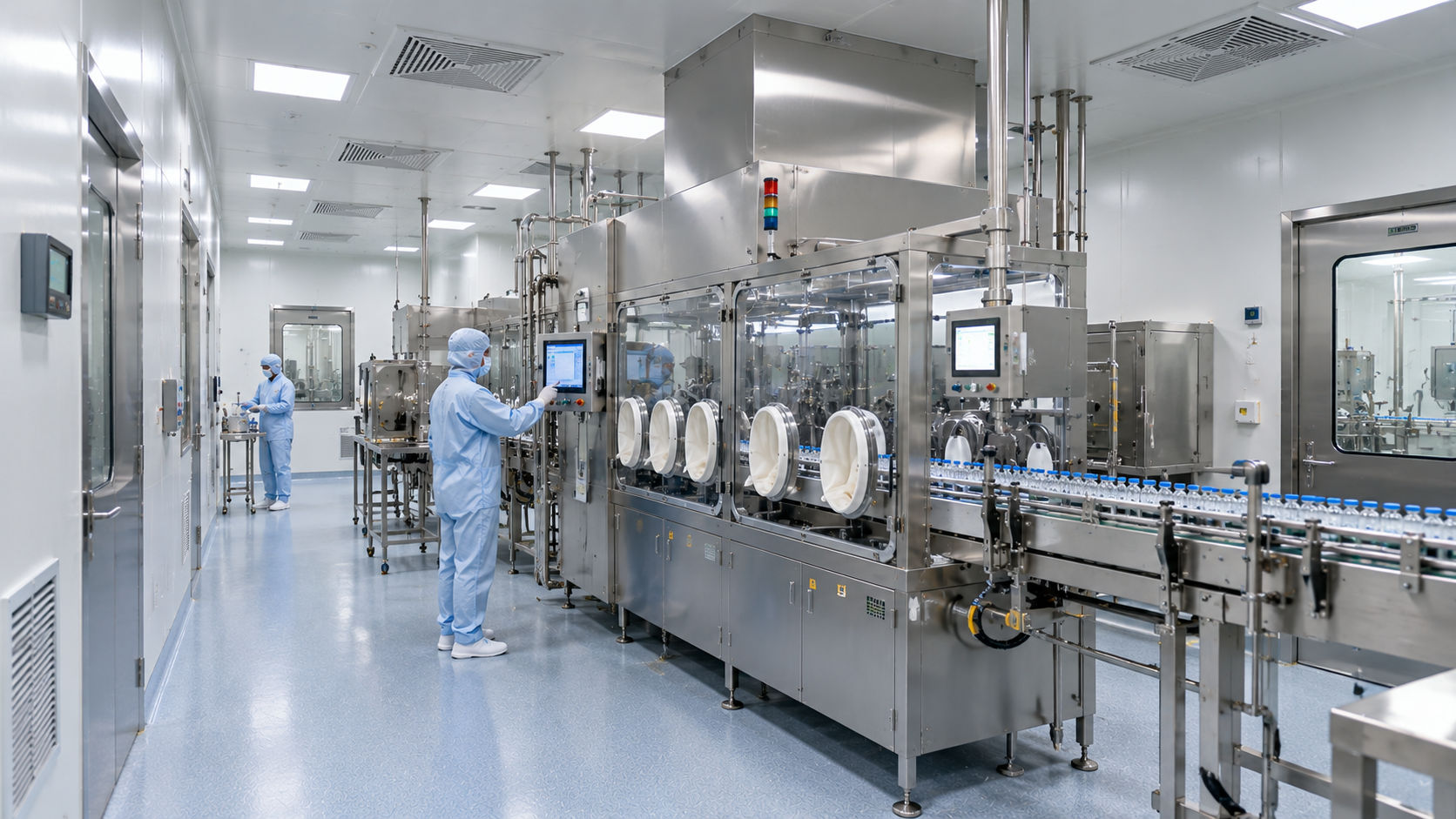
Fill-finish projects are especially sensitive because they require controlled cleanroom environments, qualified HVAC systems, process utilities, aseptic processing areas, personnel and material flow, environmental monitoring, and validation-ready documentation. These requirements make project execution more complex than standard manufacturing infrastructure.

As pharmaceutical manufacturers, biotechnology companies, vaccine producers, and CDMOs respond to changing product pipelines, they need facilities that can be delivered faster without compromising GMP compliance. This is where a Modular Fill-Finish Facility offers a practical advantage.

Instead of building every component sequentially at the project site, modular fill-finish facilities allow a major part of the facility to be engineered, manufactured, integrated, tested, and prepared off-site in a controlled environment. The result is a more predictable route from design to operational readiness.

Why Fill-Finish Projects Often Face Delays

Fill-finish is one of the final and most critical stages of pharmaceutical manufacturing. It involves filling sterile drug products into final containers such as vials, ampoules, cartridges, or prefilled syringes, followed by closing, inspection, and packaging-related activities.

The facility supporting this process must be designed around contamination control. Cleanrooms, HEPA filtration, pressure cascades, air change rates, temperature and humidity control, personnel movement, material transfer, and equipment access must all work together.

In a conventional project, many of these activities happen in sequence. Civil construction must progress before cleanroom installation. Cleanroom installation must progress before HVAC balancing. Utility routing must align with equipment installation. Qualification and commissioning often begin only after major site work is completed.

Common delay reasons include:

  • Sequential dependencies: Each stage often waits for the previous one to finish.
  • Site coordination gaps: Civil, HVAC, utility, equipment, and validation teams may not align smoothly.
  • Late design conflicts: Utility clashes or layout issues may appear during installation.
  • More on-site work: Higher dependency on labour, site access, weather, and safety conditions.
  • Delayed commissioning: HVAC, utilities, cleanrooms, or equipment may not be ready on time.

This creates pressure on the project timeline. Even small coordination gaps between civil, mechanical, electrical, automation, process equipment, and validation teams can delay the start of GMP operations.

A modular approach helps reduce this dependency by shifting a large part of the project into Off-Site Modular Construction.

How Modular Fill-Finish Facilities Reduce the Critical Path

The key time-saving advantage of modular construction is parallel execution.

While site preparation, foundation work, and external infrastructure progress at the final location, the modules can be manufactured off-site in a controlled factory environment. Cleanroom panels, HVAC distribution, utility lines, electrical systems, automation provisions, and equipment interfaces can be integrated before the modules reach the site.

This reduces waiting time between project stages. Instead of starting facility fit-out only after the building is ready, site development and module fabrication move ahead together.

For pharmaceutical companies, this improves schedule control and reduces dependency on site conditions, weather delays, and large on-site coordination. Through Design & Engineering, the facility can be planned around product type, batch size, filling format, cleanroom classification, utilities, and future scalability before fabrication begins.

GMP Compliance Is Built Into the Design Stage

In modular fill-finish projects, speed must be supported by proper planning. The facility design should consider material and personnel movement, cleanroom zoning, HVAC requirements, process utilities, equipment access, environmental monitoring, cleaning approach, and validation needs before manufacturing begins.

Traditional vs Modular: Why Off-Site Manufacturing Improves Predictability 

AreaTraditional ConstructionModular Construction
Project EnvironmentWork happens mostly at site, where weather, access issues, labour availability, and site conditions can affect progress. Major fabrication happens off-site in a controlled factory environment, making execution more predictable. 
Schedule DependencyActivities often move step by step, so delays in civil work, cleanroom installation, HVAC, or utilities can affect the next phase. Site work and module manufacturing can progress in parallel, reducing dependency on one activity finishing before another begins. 
Quality ControlQuality checks are spread across different site stages and may depend on multiple contractors working together. Defined inspection points, supervision, and factory-level checks help maintain better consistency before the module reaches site. 
Installation RiskMore work is completed at the final site, increasing the chance of coordination gaps, rework, and commissioning delays. Pre-integrated cleanrooms, utilities, HVAC interfaces, and equipment provisions reduce high-risk site work and support faster hook-up. 

Factory Acceptance Testing Reduces Surprises During Commissioning

One of the key advantages of modular fill-finish delivery is that testing can begin before shipment.

Through Factory Acceptance Testing, key systems, equipment, and interfaces are reviewed while the modules are still at the manufacturing facility. This may include checks for utility routing, electrical connections, control systems, HVAC interfaces, equipment installation, and basic operational readiness.

FAT does not replace final commissioning or validation, but it helps identify and correct issues before transportation. This reduces rework, avoids site-stage delays, and gives the project team better confidence before installation begins.

By integrating Validation & FAT into the modular project lifecycle, MMF helps bring engineering, quality, and execution teams into alignment before the facility reaches the site.

Faster Installation and Hook-Up at Site

Once the modules reach the site, the focus shifts from large-scale construction to planned installation, positioning, interconnection, and hook-up.

Pre-fabricated modules are placed, aligned, and integrated with site utilities and services. This may include utility hook-up, HVAC integration, electrical connections, automation interface checks, and final commissioning support.

With proper planning, Installation & Hook-Up follows a defined sequence of placement, connection, checking, and commissioning support, helping reduce uncertainty at the site stage.  This supports faster readiness, reduces site workload, and helps minimize disruption to ongoing pharmaceutical operations.

Supporting Validation and Commissioning Readiness

A fill-finish facility is not GMP-ready just because physical installation is complete. It must still go through commissioning, qualification, and validation before operation.

Modular construction supports this stage by carrying forward structured records from off-site integration, inspection, and testing. This helps with installation checks, system verification, utility readiness, HVAC balancing, cleanroom performance testing, environmental monitoring setup, and validation documentation.

The advantage is not that validation is avoided. It is that validation planning can begin earlier and move forward through a more organized project delivery sequence.

Why Modular Fill-Finish Facilities Support Scalable Growth

Pharmaceutical pipelines are changing. Companies may need smaller, faster, and more flexible manufacturing environments for biologics, vaccines, sterile injectables, clinical batches, or regional supply requirements.

A modular fill-finish facility can support this need because it can be planned around defined capacity and future expansion. Modules can be configured for specific process requirements while allowing the infrastructure to remain adaptable.

For CDMOs, modularity can support faster client onboarding and capacity addition. For vaccine manufacturers, it can help respond to urgent production needs. For biotech companies, it can provide a more practical route to GMP manufacturing without waiting for long conventional construction cycles.

This makes modular delivery a strong option for organizations that need Scalable Pharmaceutical Infrastructure with better control over project timelines.

Why Choose a Modular Mobile Facility?

Modular Mobile Facility (MMF) helps pharmaceutical companies save time in fill-finish facility delivery by reducing site dependency and improving project predictability.

  • Parallel project execution: Site preparation and off-site module manufacturing can progress at the same time, helping reduce the overall project timeline.
  • Early design clarity: Through Design & Engineering, the facility is planned around product type, filling format, cleanroom classification, utility needs, and future scalability before fabrication begins.
  • Controlled off-site manufacturing: Cleanroom systems, HVAC distribution, utility lines, electrical provisions, and equipment interfaces are integrated in a controlled factory environment.
  • Factory-level checks before shipment: Factory Acceptance Testing helps identify and resolve issues before the modules reach the site, reducing rework during installation.
  • Faster site installation: Pre-integrated modules reduce construction-heavy site work and support quicker installation, hook-up, and commissioning readiness.
  • Validation and commissioning support: MMF supports the project through validation support and commissioning, helping pharmaceutical manufacturers move faster from concept to GMP-ready facility.

Frequently Asked Questions

1. What is a modular fill-finish facility?

A modular fill-finish facility is a pharmaceutical manufacturing facility built using pre-engineered modules that are manufactured off-site and installed at the project location. It can include cleanrooms, HVAC systems, process utilities, filling area infrastructure, electrical systems, automation provisions, and equipment interfaces designed for sterile pharmaceutical manufacturing.

2. How does a modular fill-finish facility reduce time to market?

It reduces time to market by allowing site preparation and module manufacturing to happen in parallel. Cleanrooms, utilities, HVAC systems, and equipment interfaces can be integrated off-site while civil and infrastructure work continues at the final location. This shortens the overall project schedule and reduces delays during installation and commissioning.

3. Are modular fill-finish facilities suitable for GMP manufacturing?

Yes, modular fill-finish facilities can be designed for GMP manufacturing when they are engineered with proper cleanroom zoning, HVAC systems, pressure cascades, personnel flow, material flow, process utilities, commissioning, and validation requirements. GMP compliance depends on the quality of design, execution, documentation, and qualification.

4. What role does FAT play in modular pharmaceutical facilities?

Factory Acceptance Testing allows key systems, equipment, and interfaces to be checked before the modules are shipped to site. This helps identify and resolve issues earlier, reducing rework during installation and commissioning. FAT supports better project predictability and faster movement toward GMP readiness.

5. Can modular fill-finish facilities support vaccines and biologics?

Yes, modular fill-finish facilities can be designed for sterile products such as vaccines, biologics, injectables, vials, cartridges, ampoules, and prefilled syringes. The facility design must be based on the product requirements, aseptic process needs, cleanroom classification, equipment strategy, and regulatory expectations.

6. Is modular construction only suitable for new facilities?

No. Modular pharmaceutical facilities can be used for greenfield projects, facility extensions, capacity expansion, and specialized manufacturing areas. They are useful when companies need faster deployment, controlled execution, and scalable infrastructure without relying entirely on conventional on-site construction.

7. What is included in MMF’s modular facility delivery approach?

MMF supports modular facility delivery through design and engineering, off-site modular manufacturing, FAT, transportation, installation, hook-up, validation support, and commissioning. This integrated model helps pharmaceutical companies manage project timelines, technical interfaces, and GMP readiness more effectively.

8. Why is modular delivery useful for sterile fill-finish projects?

Sterile fill-finish facilities require strong control over cleanrooms, HVAC, utilities, contamination control, personnel flow, and validation. Modular delivery helps bring these elements together earlier in the project, allowing better coordination, factory-level checks, reduced site dependency, and faster commissioning readiness.

Technical Reference

European Commission — EU GMP Annex 1: Manufacture of Sterile Medicinal Products

US FDA — FDA Aseptic Processing Guidance

ISO 14644-1:2015 — Classification of Air Cleanliness by Particle Concentration

EU GMP Annex 15 — Qualification and Validation

Modular vs Conventional Pharma Facilities

Modular vs Conventional Pharma Facilities: Choosing the Right Pharmaceutical Facility for Faster GMP Manufacturing 

The demand for faster pharmaceutical GMP manufacturing facilities continues to grow as companies expand production capacity, develop new therapies, and respond to evolving regulatory requirements. Choosing the right facility construction method has become a strategic business decision, influencing project timelines, operational efficiency, and long-term manufacturing flexibility. 

This growing demand for speed, flexibility, and regulatory compliance has accelerated the adoption of modular pharmaceutical facilities. Unlike conventional construction, modular pharmaceutical facilities are engineered, manufactured, and tested in a controlled factory environment before being installed on-site. This innovative approach helps pharmaceutical manufacturers reduce project timelines, improve construction quality, and achieve operational readiness much faster.

As pharmaceutical manufacturing continues to evolve with advancements in biologics, vaccines, cell and gene therapies, and high-potency APIs, facility infrastructure must also adapt to changing production requirements. Modular pharmaceutical construction  provides the scalability, efficiency, and precision needed to support these next-generation manufacturing environments.

In this article, we compare modular and conventional pharma facilities, explore their advantages and limitations, and explain why companies worldwide are increasingly choosing modular solutions and trusted partners like Modular Mobile Facility (MMF) to build future-ready pharmaceutical infrastructure.

Understanding Conventional Pharma Facilities

Conventional pharmaceutical facilities are built entirely on-site using traditional construction methods. Every phase from civil work and structural construction to cleanroom installation, HVAC integration, utilities, and equipment commissioning is completed sequentially at the project location.
Although conventional facilities can be customized extensively, they often involve lengthy construction schedules, multiple contractors, and complex project coordination. Since every stage depends on the completion of the previous one, delays caused by weather, labor shortages, material availability, or site-related challenges can significantly impact the overall timeline.

For pharmaceutical companies operating in highly competitive markets, delayed facility completion often translates into delayed production, postponed product launches, and increased project costs.

What Are Modular Pharma Facilities?

A modular pharma facility is a prefabricated pharmaceutical building manufactured in a controlled production environment and assembled at the final project site. Unlike conventional buildings, modular pharmaceutical facilities are designed as integrated systems that combine cleanrooms, process utilities, HVAC, electrical infrastructure, and mechanical services into prefabricated modules. This integrated approach simplifies installation, improves quality control, and enables faster deployment of GMP-compliant manufacturing environments. 

After manufacturing, the completed modules are transported to the site where they are installed, connected, validated, and commissioned.

Modern modular pharmaceutical facilities are designed to accommodate diverse manufacturing processes, cleanroom environments, laboratories, and supporting infrastructure for pharmaceutical and life sciences operations. 

This method significantly accelerates project delivery while maintaining the stringent quality standards required by the pharmaceutical industry.

Why Modular Pharma Facilities Are Gaining Popularity

The pharmaceutical sector demands speed without compromising quality. Modular pharmaceutical construction  addresses this need by allowing factory fabrication and site preparation to occur simultaneously.

Instead of waiting for structural work to finish before installing utilities or cleanrooms, modular manufacturing enables parallel execution. As a result, companies can reduce project schedules, streamline installation, and begin validation much sooner than with conventional construction.

The growing adoption of modular pharmaceutical facilities is also driven by their ability to provide:

  • Faster project completion
  • Factory-controlled manufacturing quality
  • Reduced on-site construction risks
  • Easier regulatory compliance
  • Flexible facility expansion
  • Lower operational disruption
  • Predictable project timelines

These advantages make modular construction particularly valuable for pharmaceutical manufacturers seeking to expand capacity or establish new facilities within aggressive timelines.

Growing Industry Demand for Modular Pharmaceutical Infrastructure

The global pharmaceutical industry is experiencing continued growth , fueled by rising healthcare demands, personalized medicine, biotechnology advancements, and stricter regulatory expectations. As manufacturing technologies evolve, companies require facilities that can be deployed quickly while maintaining the highest levels of quality and compliance.

Traditional construction methods often require long project schedules due to sequential construction activities, extensive on-site coordination, and dependency on external factors such as weather and labor availability. In contrast, modular pharmaceutical construction allows off-site manufacturing and on-site preparation to proceed simultaneously, helping organizations significantly shorten project delivery timelines.

This approach has become particularly valuable for companies investing in vaccine production, biologics manufacturing, research laboratories, cleanrooms, and specialized pharmaceutical processing facilities where speed-to-market is a competitive advantage.

Superior Quality Through Controlled Manufacturing

Quality is one of the most significant advantages of modular pharmaceutical construction.

Unlike conventional projects that are exposed to varying weather conditions and multiple site variables, modular pharmaceutical facilities are manufactured inside controlled production environments. This allows every module to be built using standardized processes, precision engineering, and comprehensive quality inspections.

Factory-controlled production minimizes construction errors, improves consistency, and ensures each component is manufactured according to design specifications before leaving the facility.

Many modular projects also undergo:

  • Factory Acceptance Testing (FAT)
  • Mechanical and electrical verification
  • Documentation review
  • Quality inspections
  • Pre-delivery system testing

These processes help reduce installation issues and simplify the qualification and validation process once the modules arrive on-site.
Modern modular pharmaceutical facilities are designed using advanced engineering principles that support compliance with internationally recognized pharmaceutical standards and cleanroom requirements. Critical design considerations such as HVAC zoning, pressure cascades, HEPA filtration, contamination control, material flow, and personnel flow are integrated during the engineering stage rather than being addressed later during construction.

Many modular pharmaceutical facilities  are also designed to support qualification activities including Design Qualification (DQ), Installation Qualification (IQ), Operational Qualification (OQ), and Performance Qualification (PQ). These structured validation processes help pharmaceutical manufacturers demonstrate that facilities and systems consistently operate according to predefined specifications while meeting regulatory expectations.

Faster Compliance with GMP Standards

Pharmaceutical manufacturing facilities must comply with strict Good Manufacturing Practice (GMP) regulations and industry standards.

Modular facilities are designed with compliance in mind from the earliest engineering stages. Cleanroom systems, HVAC configurations, material flow, personnel movement, and utility integration are all planned to support regulatory requirements.

Because much of the engineering and testing occurs before delivery, modular facilities often simplify commissioning activities and reduce the risk of costly modifications during validation.

This structured approach helps pharmaceutical companies achieve operational readiness faster while maintaining regulatory confidence.

Flexible Designs That Support Future Growth

One common misconception is that modular buildings offer limited design flexibility. In reality, modern modular pharmaceutical facilities can be customized to meet highly specialized production requirements.

Facilities can be engineered around specific manufacturing processes, production capacities, cleanroom classifications, and automation requirements.

They can also be designed for future expansion, allowing additional modules to be integrated as production demand increases. This scalability enables businesses to grow without undertaking extensive renovations or disrupting existing operations.

Whether the requirement is a small pilot plant or a large commercial GMP manufacturing facility , modular pharmaceutical construction offers the flexibility to support both present and future business objectives.

Improved Project Efficiency and Reduced Risks

Traditional pharmaceutical construction often involves multiple contractors working simultaneously on-site, increasing coordination challenges and the potential for delays.

Modular construction significantly reduces these risks because much of the work is completed before installation begins.

Benefits include:

  • Reduced site congestion
  • Improved worker safety
  • Less exposure to weather-related delays
  • Better schedule predictability
  • Faster installation
  • Lower construction waste
  • Minimal disruption to ongoing pharmaceutical operations

These efficiencies contribute to smoother project execution and better overall cost management.

Applications of Modular Pharma Facilities

The versatility of modular construction makes it suitable for a wide range of pharmaceutical and life sciences applications. Modern modular pharmaceutical facilities  can be customized to support various manufacturing processes while maintaining GMP compliance and operational efficiency.

Common applications include:

  • GMP pharmaceutical manufacturing plants
  • API manufacturing facilities
  • Sterile injectable production units
  • Biotechnology and biopharmaceutical facilities
  • Vaccine manufacturing centers
  • Quality Control (QC) laboratories
  • Research & Development (R&D) laboratories
  • Modular cleanrooms
  • Packaging and secondary manufacturing facilities
  • Pilot production plants
  • Medical device manufacturing units

Because these facilities are highly adaptable, organizations can expand or reconfigure production spaces as business requirements evolve, making modular infrastructure an ideal long-term investment.

Why Choose Modular Mobile Facility (MMF)?

Selecting the right modular construction partner is essential for ensuring project success. Modular Mobile Facility (MMF) combines engineering expertise, precision manufacturing, and pharmaceutical industry knowledge to deliver turnkey modular infrastructure solutions that meet the highest quality and compliance standards.

MMF offers an integrated project delivery approach, enabling clients to work with a single trusted partner from concept development through final commissioning. This streamlined workflow minimizes project risks, improves communication, and ensures consistent quality throughout every phase of construction. Every project begins with detailed design and engineering to optimize facility layout, process flow, cleanroom performance, and future scalability. 

MMF’s comprehensive capabilities include:

  • Pharmaceutical facility planning and engineering
  • Customized modular facility design
  • GMP-compliant modular cleanroom solutions
  • Mechanical, Electrical & Plumbing (MEP) integration
  • Factory Acceptance Testing (FAT)
  • Factory-controlled modular manufacturing
  • Transportation and logistics management
  • On-site installation and module integration
  • Validation and commissioning support
  • Scalable facility expansion for future production growth

Every MMF project is designed with precision, manufactured under controlled conditions, and thoroughly inspected before delivery. This approach helps reduce project uncertainty, improve quality consistency, and accelerate operational readiness for pharmaceutical manufacturers worldwide.

Whether building a new pharmaceutical manufacturing facility, expanding an existing production site, or deploying specialized cleanroom infrastructure, MMF provides reliable modular solutions tailored to the evolving needs of the pharmaceutical and life sciences industries.

Frequently Asked Questions (FAQs)

1. What is a modular pharma facility?

A modular pharma facility is a prefabricated pharmaceutical building manufactured in a controlled factory environment and assembled on-site. It offers faster construction, consistent quality, and easier scalability compared to traditional construction methods.

2. Are modular pharma facilities GMP compliant?

Yes. Modular facilities are designed to meet GMP and other pharmaceutical regulatory requirements through controlled engineering, quality manufacturing processes, and proper validation and commissioning.

3. What are the advantages of modular pharma facilities over conventional construction?

Modular facilities provide faster project delivery, improved quality control, reduced on-site construction, lower project risks, easier expansion, and more predictable schedules while maintaining high compliance standards.

4. Can modular pharmaceutical facilities  be customized for different pharmaceutical applications?

Absolutely. They can be designed for sterile manufacturing, API production, biotechnology, vaccine facilities, R&D laboratories, quality control labs, packaging units, and cleanroom environments.

5. What is Factory Acceptance Testing (FAT)?

Factory Acceptance Testing (FAT) is performed before shipment to verify that systems, equipment, and modules function as intended. It helps identify issues early, reducing installation time and simplifying on-site commissioning.

6. How long does it take to build a modular pharmaceutical facility?

Project timelines vary depending on the size and complexity of the facility. However, because module fabrication and site preparation occur simultaneously, modular construction generally enables faster project completion than conventional construction methods.

Technical References

  1. European Commission — EudraLex Volume 4: EU Guidelines for Good Manufacturing Practice
  2. PIC/S — Guide to Good Manufacturing Practice for Medicinal Products
  3. ISPE — Commissioning & Qualification / Pharmaceutical Facility Engineering Guidance