


Modular vs Conventional Pharma Facilities: Choosing the Right Pharmaceutical Facility for Faster GMP Manufacturing
The demand for faster pharmaceutical GMP manufacturing facilities continues to grow as companies expand production capacity, develop new therapies, and respond to evolving regulatory requirements. Choosing the right facility construction method has become a strategic business decision, influencing project timelines, operational efficiency, and long-term manufacturing flexibility.
This growing demand for speed, flexibility, and regulatory compliance has accelerated the adoption of modular pharmaceutical facilities. Unlike conventional construction, modular pharmaceutical facilities are engineered, manufactured, and tested in a controlled factory environment before being installed on-site. This innovative approach helps pharmaceutical manufacturers reduce project timelines, improve construction quality, and achieve operational readiness much faster.
As pharmaceutical manufacturing continues to evolve with advancements in biologics, vaccines, cell and gene therapies, and high-potency APIs, facility infrastructure must also adapt to changing production requirements. Modular pharmaceutical construction provides the scalability, efficiency, and precision needed to support these next-generation manufacturing environments.
In this article, we compare modular and conventional pharma facilities, explore their advantages and limitations, and explain why companies worldwide are increasingly choosing modular solutions and trusted partners like Modular Mobile Facility (MMF) to build future-ready pharmaceutical infrastructure.
Understanding Conventional Pharma Facilities
Conventional pharmaceutical facilities are built entirely on-site using traditional construction methods. Every phase from civil work and structural construction to cleanroom installation, HVAC integration, utilities, and equipment commissioning is completed sequentially at the project location.
Although conventional facilities can be customized extensively, they often involve lengthy construction schedules, multiple contractors, and complex project coordination. Since every stage depends on the completion of the previous one, delays caused by weather, labor shortages, material availability, or site-related challenges can significantly impact the overall timeline.
For pharmaceutical companies operating in highly competitive markets, delayed facility completion often translates into delayed production, postponed product launches, and increased project costs.
What Are Modular Pharma Facilities?
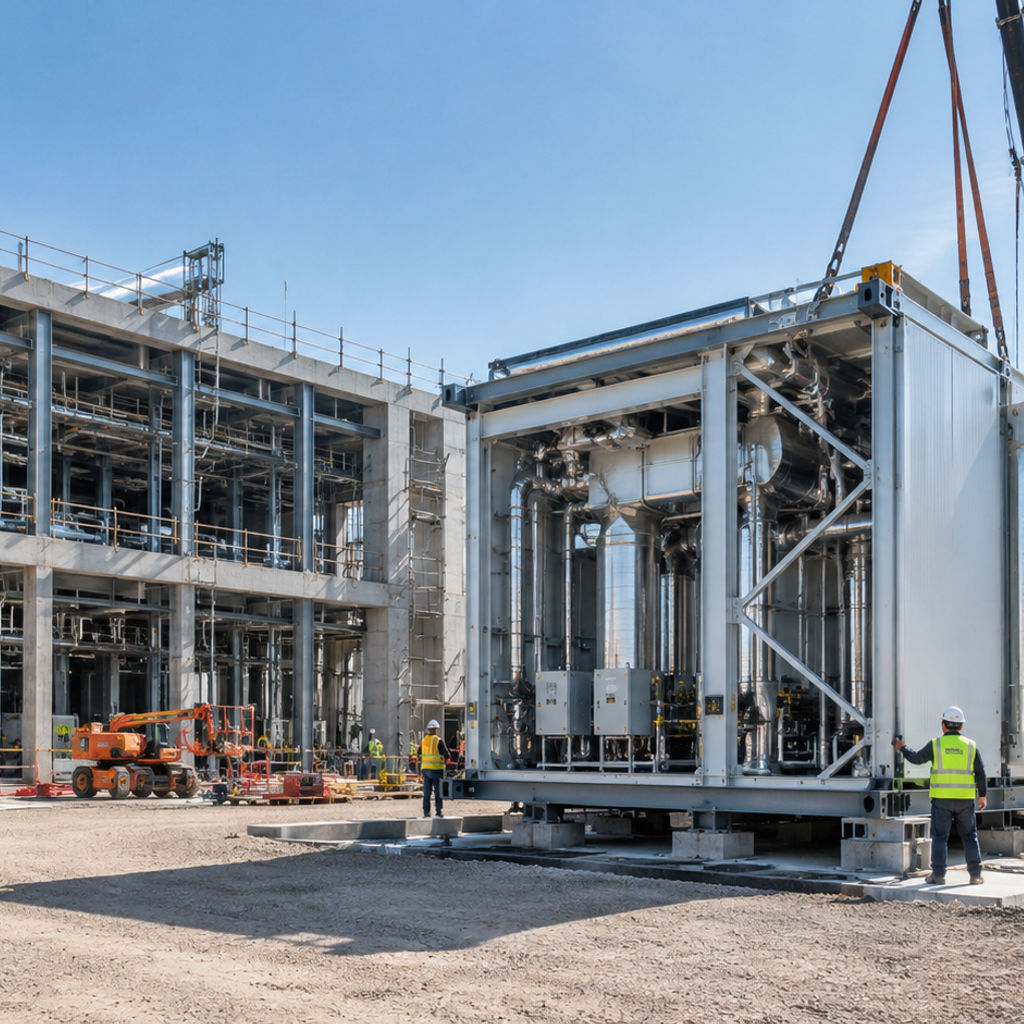
A modular pharma facility is a prefabricated pharmaceutical building manufactured in a controlled production environment and assembled at the final project site. Unlike conventional buildings, modular pharmaceutical facilities are designed as integrated systems that combine cleanrooms, process utilities, HVAC, electrical infrastructure, and mechanical services into prefabricated modules. This integrated approach simplifies installation, improves quality control, and enables faster deployment of GMP-compliant manufacturing environments.
After manufacturing, the completed modules are transported to the site where they are installed, connected, validated, and commissioned.
Modern modular pharmaceutical facilities are designed to accommodate diverse manufacturing processes, cleanroom environments, laboratories, and supporting infrastructure for pharmaceutical and life sciences operations.
This method significantly accelerates project delivery while maintaining the stringent quality standards required by the pharmaceutical industry.
Why Modular Pharma Facilities Are Gaining Popularity
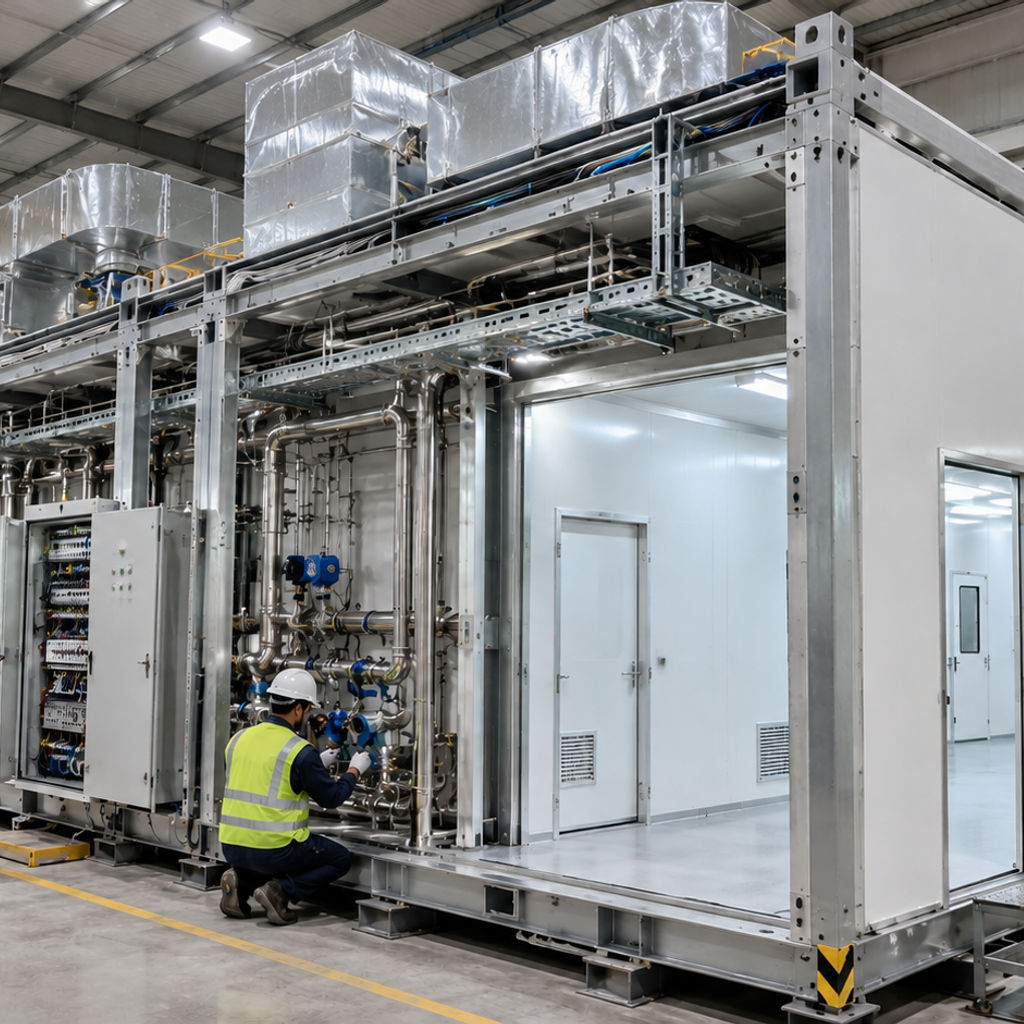
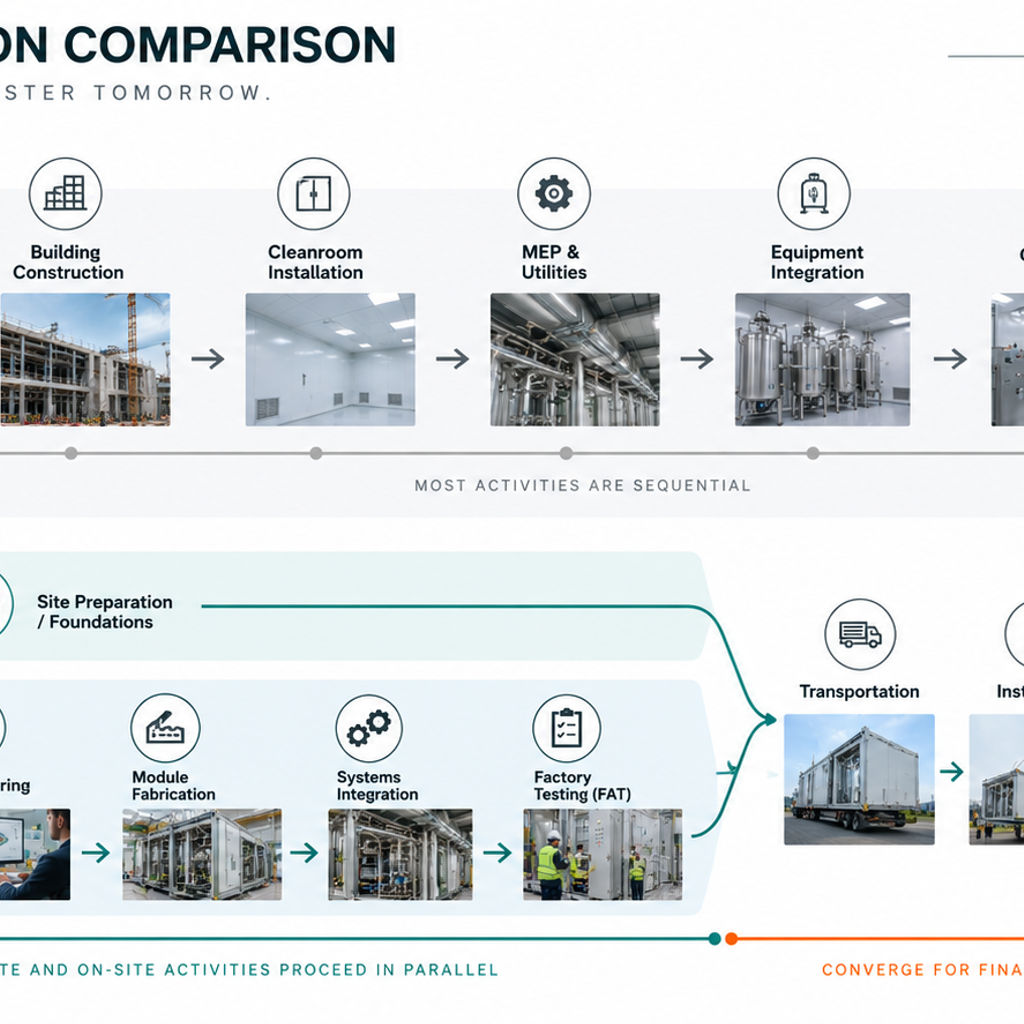
The pharmaceutical sector demands speed without compromising quality. Modular pharmaceutical construction addresses this need by allowing factory fabrication and site preparation to occur simultaneously.
Instead of waiting for structural work to finish before installing utilities or cleanrooms, modular manufacturing enables parallel execution. As a result, companies can reduce project schedules, streamline installation, and begin validation much sooner than with conventional construction.
The growing adoption of modular pharmaceutical facilities is also driven by their ability to provide:
- Faster project completion
- Factory-controlled manufacturing quality
- Reduced on-site construction risks
- Easier regulatory compliance
- Flexible facility expansion
- Lower operational disruption
- Predictable project timelines
These advantages make modular construction particularly valuable for pharmaceutical manufacturers seeking to expand capacity or establish new facilities within aggressive timelines.
Growing Industry Demand for Modular Pharmaceutical Infrastructure
The global pharmaceutical industry is experiencing continued growth , fueled by rising healthcare demands, personalized medicine, biotechnology advancements, and stricter regulatory expectations. As manufacturing technologies evolve, companies require facilities that can be deployed quickly while maintaining the highest levels of quality and compliance.
Traditional construction methods often require long project schedules due to sequential construction activities, extensive on-site coordination, and dependency on external factors such as weather and labor availability. In contrast, modular pharmaceutical construction allows off-site manufacturing and on-site preparation to proceed simultaneously, helping organizations significantly shorten project delivery timelines.
This approach has become particularly valuable for companies investing in vaccine production, biologics manufacturing, research laboratories, cleanrooms, and specialized pharmaceutical processing facilities where speed-to-market is a competitive advantage.
Superior Quality Through Controlled Manufacturing
Quality is one of the most significant advantages of modular pharmaceutical construction.
Unlike conventional projects that are exposed to varying weather conditions and multiple site variables, modular pharmaceutical facilities are manufactured inside controlled production environments. This allows every module to be built using standardized processes, precision engineering, and comprehensive quality inspections.
Factory-controlled production minimizes construction errors, improves consistency, and ensures each component is manufactured according to design specifications before leaving the facility.
Many modular projects also undergo:
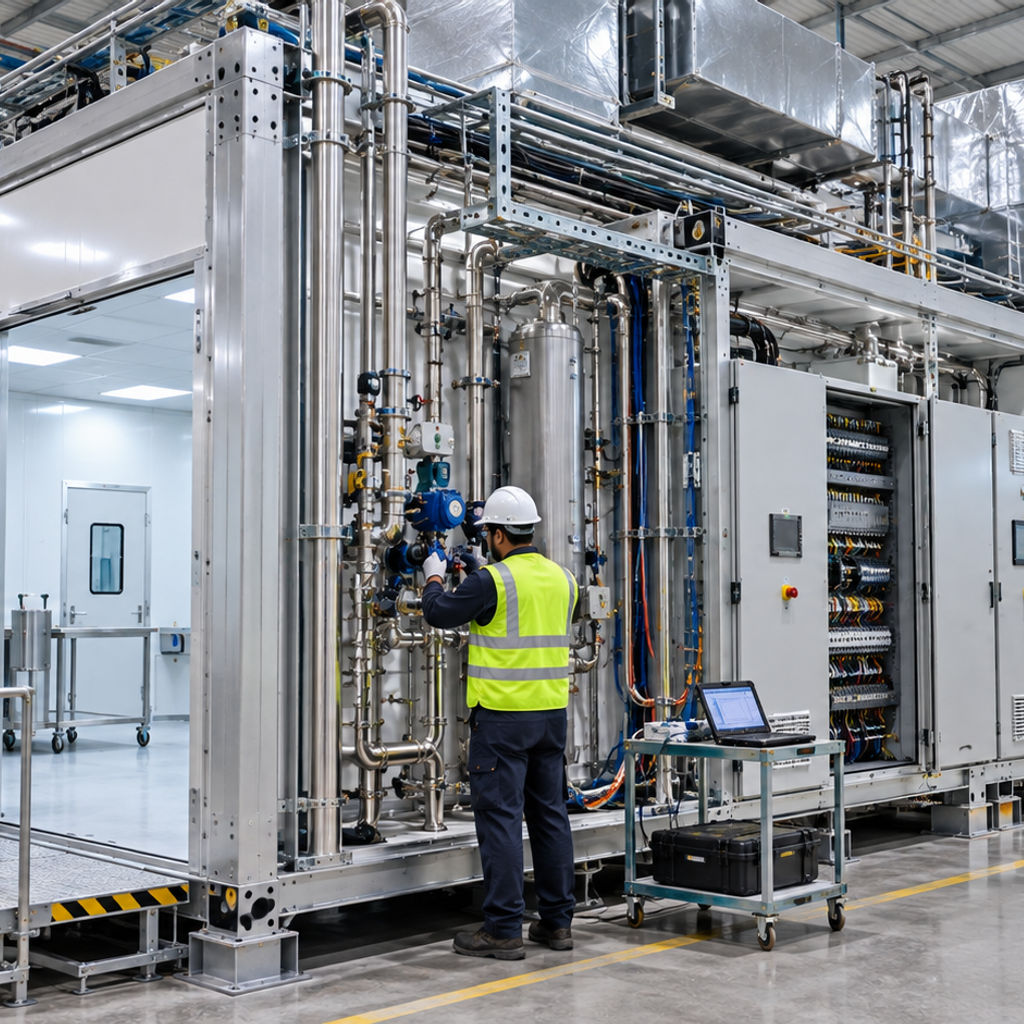
- Factory Acceptance Testing (FAT)
- Mechanical and electrical verification
- Documentation review
- Quality inspections
- Pre-delivery system testing
These processes help reduce installation issues and simplify the qualification and validation process once the modules arrive on-site.
Modern modular pharmaceutical facilities are designed using advanced engineering principles that support compliance with internationally recognized pharmaceutical standards and cleanroom requirements. Critical design considerations such as HVAC zoning, pressure cascades, HEPA filtration, contamination control, material flow, and personnel flow are integrated during the engineering stage rather than being addressed later during construction.
Many modular pharmaceutical facilities are also designed to support qualification activities including Design Qualification (DQ), Installation Qualification (IQ), Operational Qualification (OQ), and Performance Qualification (PQ). These structured validation processes help pharmaceutical manufacturers demonstrate that facilities and systems consistently operate according to predefined specifications while meeting regulatory expectations.
Faster Compliance with GMP Standards
Pharmaceutical manufacturing facilities must comply with strict Good Manufacturing Practice (GMP) regulations and industry standards.
Modular facilities are designed with compliance in mind from the earliest engineering stages. Cleanroom systems, HVAC configurations, material flow, personnel movement, and utility integration are all planned to support regulatory requirements.
Because much of the engineering and testing occurs before delivery, modular facilities often simplify commissioning activities and reduce the risk of costly modifications during validation.
This structured approach helps pharmaceutical companies achieve operational readiness faster while maintaining regulatory confidence.
Flexible Designs That Support Future Growth
One common misconception is that modular buildings offer limited design flexibility. In reality, modern modular pharmaceutical facilities can be customized to meet highly specialized production requirements.
Facilities can be engineered around specific manufacturing processes, production capacities, cleanroom classifications, and automation requirements.
They can also be designed for future expansion, allowing additional modules to be integrated as production demand increases. This scalability enables businesses to grow without undertaking extensive renovations or disrupting existing operations.
Whether the requirement is a small pilot plant or a large commercial GMP manufacturing facility , modular pharmaceutical construction offers the flexibility to support both present and future business objectives.
Improved Project Efficiency and Reduced Risks
Traditional pharmaceutical construction often involves multiple contractors working simultaneously on-site, increasing coordination challenges and the potential for delays.
Modular construction significantly reduces these risks because much of the work is completed before installation begins.
Benefits include:
- Reduced site congestion
- Improved worker safety
- Less exposure to weather-related delays
- Better schedule predictability
- Faster installation
- Lower construction waste
- Minimal disruption to ongoing pharmaceutical operations
These efficiencies contribute to smoother project execution and better overall cost management.
Applications of Modular Pharma Facilities
The versatility of modular construction makes it suitable for a wide range of pharmaceutical and life sciences applications. Modern modular pharmaceutical facilities can be customized to support various manufacturing processes while maintaining GMP compliance and operational efficiency.
Common applications include:
- GMP pharmaceutical manufacturing plants
- API manufacturing facilities
- Sterile injectable production units
- Biotechnology and biopharmaceutical facilities
- Vaccine manufacturing centers
- Quality Control (QC) laboratories
- Research & Development (R&D) laboratories
- Modular cleanrooms
- Packaging and secondary manufacturing facilities
- Pilot production plants
- Medical device manufacturing units
Because these facilities are highly adaptable, organizations can expand or reconfigure production spaces as business requirements evolve, making modular infrastructure an ideal long-term investment.
Why Choose Modular Mobile Facility (MMF)?
Selecting the right modular construction partner is essential for ensuring project success. Modular Mobile Facility (MMF) combines engineering expertise, precision manufacturing, and pharmaceutical industry knowledge to deliver turnkey modular infrastructure solutions that meet the highest quality and compliance standards.
MMF offers an integrated project delivery approach, enabling clients to work with a single trusted partner from concept development through final commissioning. This streamlined workflow minimizes project risks, improves communication, and ensures consistent quality throughout every phase of construction. Every project begins with detailed design and engineering to optimize facility layout, process flow, cleanroom performance, and future scalability.
MMF’s comprehensive capabilities include:
- Pharmaceutical facility planning and engineering
- Customized modular facility design
- GMP-compliant modular cleanroom solutions
- Mechanical, Electrical & Plumbing (MEP) integration
- Factory Acceptance Testing (FAT)
- Factory-controlled modular manufacturing
- Transportation and logistics management
- On-site installation and module integration
- Validation and commissioning support
- Scalable facility expansion for future production growth
Every MMF project is designed with precision, manufactured under controlled conditions, and thoroughly inspected before delivery. This approach helps reduce project uncertainty, improve quality consistency, and accelerate operational readiness for pharmaceutical manufacturers worldwide.
Whether building a new pharmaceutical manufacturing facility, expanding an existing production site, or deploying specialized cleanroom infrastructure, MMF provides reliable modular solutions tailored to the evolving needs of the pharmaceutical and life sciences industries.
Frequently Asked Questions (FAQs)
1. What is a modular pharma facility?
A modular pharma facility is a prefabricated pharmaceutical building manufactured in a controlled factory environment and assembled on-site. It offers faster construction, consistent quality, and easier scalability compared to traditional construction methods.
2. Are modular pharma facilities GMP compliant?
Yes. Modular facilities are designed to meet GMP and other pharmaceutical regulatory requirements through controlled engineering, quality manufacturing processes, and proper validation and commissioning.
3. What are the advantages of modular pharma facilities over conventional construction?
Modular facilities provide faster project delivery, improved quality control, reduced on-site construction, lower project risks, easier expansion, and more predictable schedules while maintaining high compliance standards.
4. Can modular pharmaceutical facilities be customized for different pharmaceutical applications?
Absolutely. They can be designed for sterile manufacturing, API production, biotechnology, vaccine facilities, R&D laboratories, quality control labs, packaging units, and cleanroom environments.
5. What is Factory Acceptance Testing (FAT)?
Factory Acceptance Testing (FAT) is performed before shipment to verify that systems, equipment, and modules function as intended. It helps identify issues early, reducing installation time and simplifying on-site commissioning.
6. How long does it take to build a modular pharmaceutical facility?
Project timelines vary depending on the size and complexity of the facility. However, because module fabrication and site preparation occur simultaneously, modular construction generally enables faster project completion than conventional construction methods.