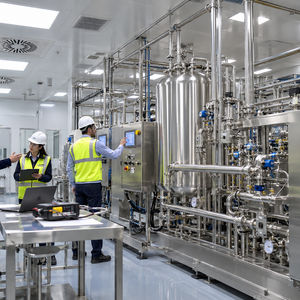
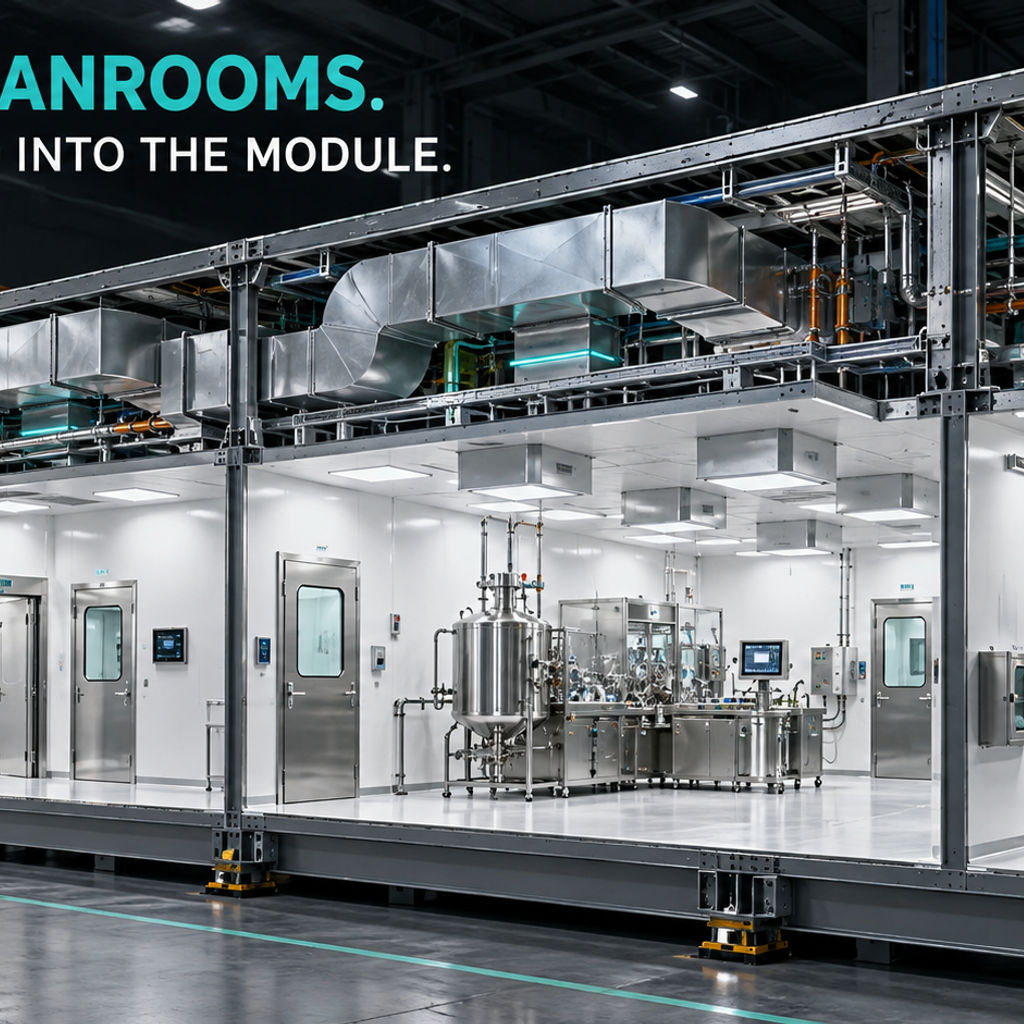


For pharmaceutical manufacturers, cleanroom design is often one of the most critical factors influencing compliance, project timelines, and operational readiness. A cleanroom is not only a controlled space with filtered air. It is an engineered environment where room classification, HVAC performance, pressure cascades, material movement, personnel flow, utilities, cleanroom finishes, monitoring systems, commissioning, and validation must work together.
As pharmaceutical manufacturing moves toward faster, more flexible, and more predictable infrastructure models, modular pharma facilities are becoming a practical approach for new facilities, expansions, and capacity additions. However, the success of any Modular Pharmaceutical Facility depends on how clearly the GMP cleanroom is designed at the beginning of the project.
In modular execution, cleanroom decisions must be finalized early because a large portion of the facility is manufactured, integrated, and checked off-site. When the design is incomplete or unclear, the project may face rework during installation, hook-up, commissioning, or validation. When the design is well defined, modular delivery can support a faster route to GMP readiness with better control over quality and execution.
Why GMP Cleanroom Design Starts With Process Understanding
A GMP cleanroom should always be designed around the manufacturing process. Before deciding the room size, classification, HVAC capacity, or module configuration, the project team must clearly understand the product type, process steps, equipment needs, contamination risks, personnel activities, and material movement.
For example, the cleanroom requirements for sterile filling, vaccine manufacturing, biotech processing, or API handling may differ significantly. Each process has its own expectations for room classification, air change rates, pressure relationships, containment, utility demand, cleaning approach, and environmental monitoring.
This is why early-stage Design & Engineering becomes important in a modular facility project. A well-developed design helps define the cleanroom zones, equipment placement, service corridors, utility routes, pass boxes, airlocks, gowning areas, and future expansion possibilities before the modules move into manufacturing.
When process requirements are clearly translated into engineering design, the modular facility becomes easier to manufacture, transport, install, qualify, and operate.
Cleanroom Classification and GMP Zoning
Cleanroom classification is one of the first technical decisions in GMP facility design. The required classification depends on the product exposure level, manufacturing operation, contamination risk, and applicable regulatory expectations.
In pharmaceutical manufacturing, cleanrooms are typically planned using controlled zones such as Grade A, B, C, and D or ISO-based classifications, depending on the process and regulatory framework. The objective is to provide the right level of environmental control without overdesigning the facility.
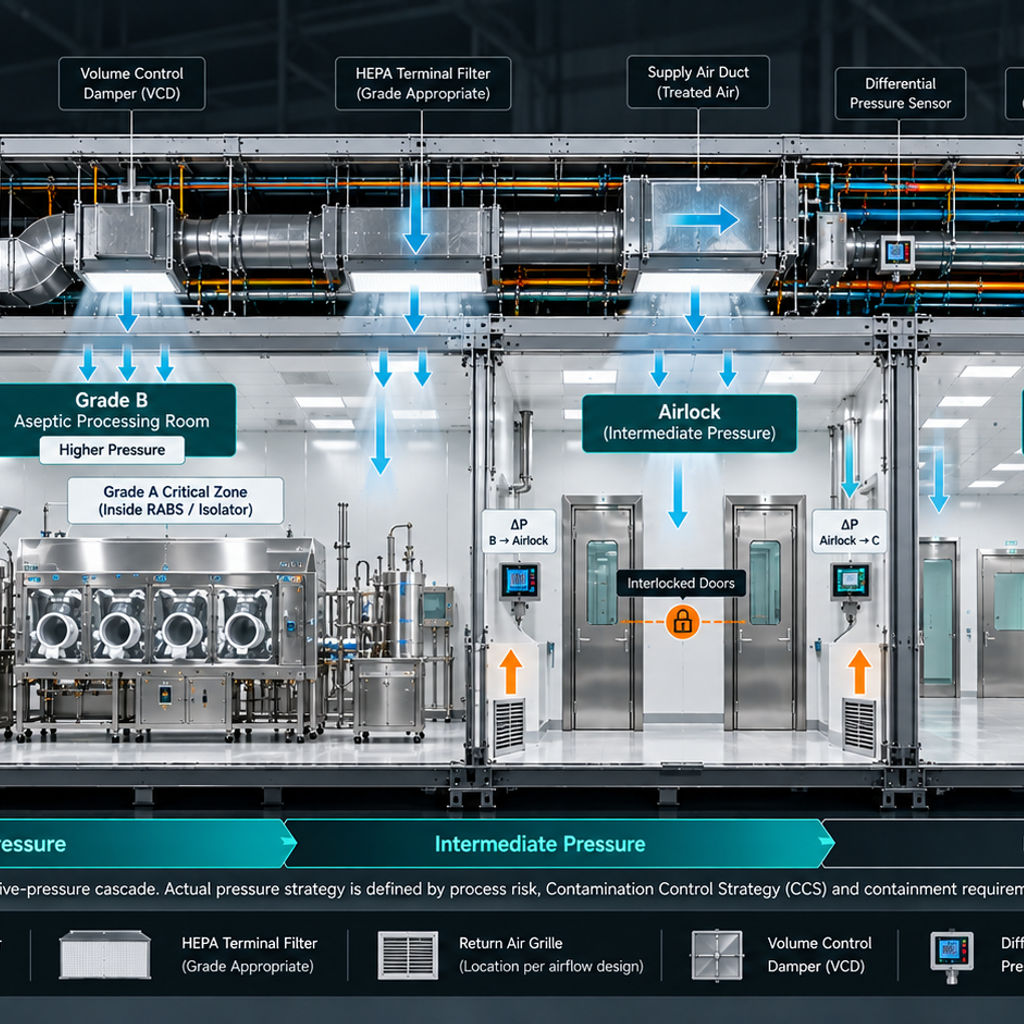
For modular cleanrooms, zoning must be integrated into the module layout from the start. Critical areas should be protected with appropriate airlocks, pressure cascades, HEPA filtration, and controlled access. Lower-grade areas should support material preparation, equipment movement, gowning, and support activities without compromising higher-grade zones.
Good zoning also helps optimize CAPEX and OPEX. Instead of treating the entire facility as one highly classified area, the cleanroom can be engineered with appropriate classification levels based on actual process risk. This supports compact, efficient, and GMP-aligned pharmaceutical facility design.
Personnel Flow and Material Flow in Modular Cleanrooms
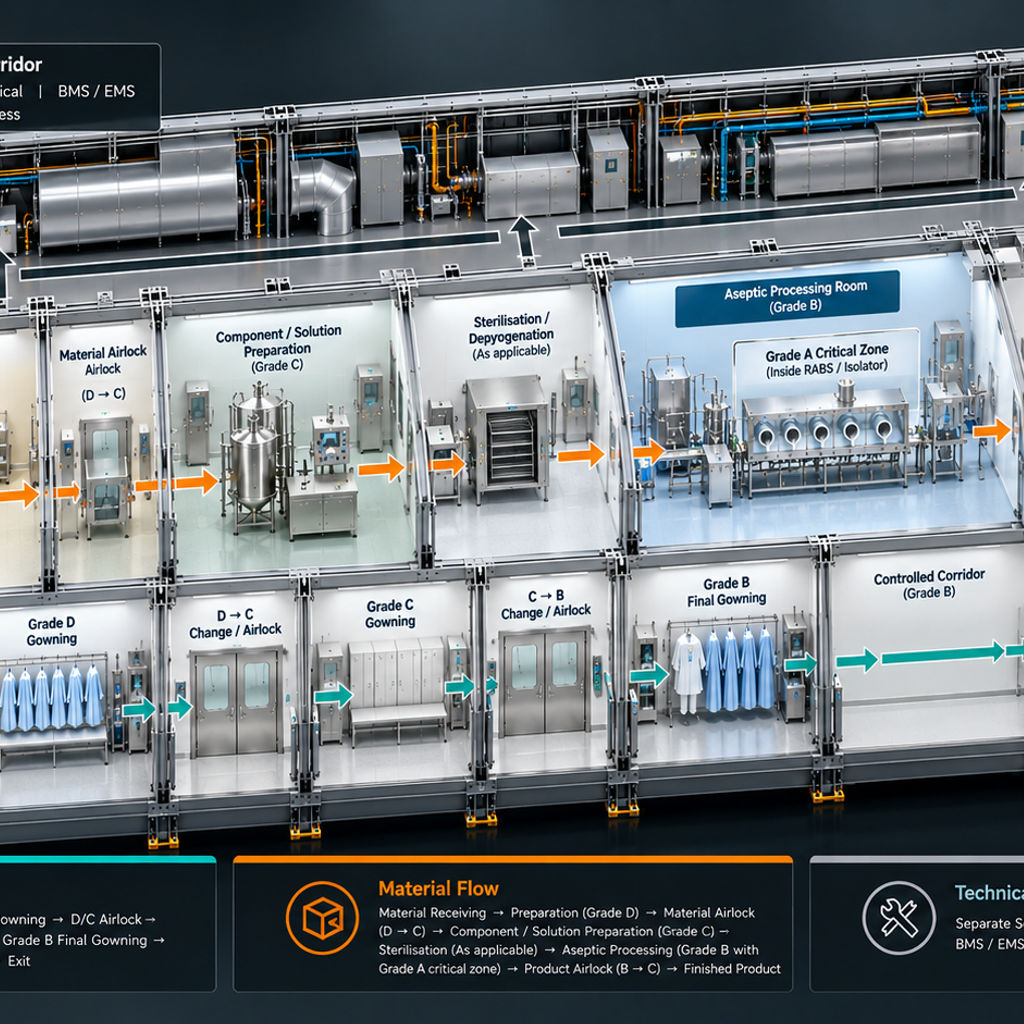
A cleanroom layout should reduce unnecessary movement and prevent cross-contamination. Personnel flow and material flow must be clearly separated wherever required, especially in facilities handling sterile products, biologics, vaccines, or sensitive pharmaceutical processes.
Personnel movement typically includes entry, gowning, transition through airlocks, process area access, and exit flow. Material movement may include raw materials, components, consumables, equipment parts, packaging materials, waste, and finished goods. If these flows are not properly planned, the risk of contamination, mix-ups, pressure disturbance, and operational inefficiency increases.
In a modular pharma facility, these flows also influence module interfaces. Door positions, pass-through systems, interlocking arrangements, airlocks, corridor widths, and transfer routes need to be coordinated during the design stage. Any late change after module fabrication can affect structural design, HVAC balancing, utility routing, and validation documentation.
MMF’s approach connects workflow planning with Off-site Modular Construction, allowing cleanroom layouts and critical interfaces to be developed in a controlled factory environment before site installation.
HVAC, HEPA Filtration, and Pressure Cascades
HVAC is one of the most critical systems in GMP cleanroom engineering. It controls temperature, humidity, air cleanliness, airflow direction, pressure differentials, and particle control. In pharmaceutical manufacturing, HVAC is not only a comfort system; it is a product protection system.
A well-designed cleanroom HVAC system should consider:
- Air change requirements
- HEPA filtration
- Airflow patterns
- Room pressure relationships
- Temperature and humidity control
- Return air strategy
- Fresh air requirements
- Exhaust needs
- Equipment heat load
- Operator movement
- Monitoring points
- Utility integration
Pressure cascades help maintain airflow from cleaner areas toward less clean areas. This is especially important in sterile or high-control environments where exposed product, components, or critical process steps must be protected. In some applications, negative pressure or containment logic may be required depending on product risk.
For Modular Cleanrooms, HVAC routing must be coordinated with the module structure, ceiling height, utility zones, service access, and transportation limits. Ducting, terminal filters, dampers, sensors, and control systems should be planned before off-site fabrication begins.
By integrating HVAC, electrical systems, EMS, BMS, utilities, and cleanroom envelope requirements during manufacturing, MMF supports a more controlled and predictable execution pathway.
Cleanroom Finishes and Modular Envelope Design
The cleanroom envelope plays an important role in GMP compliance. Walls, ceilings, flooring, doors, windows, joints, coving, and service penetrations should support cleaning, disinfection, durability, and contamination control.
Cleanroom finishes should generally be smooth, non-shedding, easy to clean, resistant to cleaning agents, and suitable for the intended manufacturing environment. Poor detailing around joints, panels, service penetrations, or ceiling interfaces can create cleaning challenges and long-term maintenance risks.
In modular cleanroom construction, much of the cleanroom envelope is manufactured in a controlled environment. This allows better coordination between structural framing, wall panels, flooring, HVAC openings, utilities, lighting, and access points. It also reduces dependency on extensive site-based finishing work.
This controlled off-site approach supports consistency and reduces the risk of variation that can occur when multiple construction activities are handled sequentially at site.
Utility Integration in GMP Cleanroom Design
A GMP Manufacturing Facility requires more than cleanroom panels and HVAC. Process utilities and clean utilities must be planned in coordination with equipment requirements and cleanroom operations.
Depending on the process, utility integration may include purified water, WFI, clean steam, compressed air, nitrogen, process gases, chilled water, hot water, vacuum, drainage, electrical distribution, automation, EMS, and BMS systems.
In modular pharma facilities, utility planning is especially important because many utility routes, service connections, and equipment interfaces are pre-integrated before shipment. This requires accurate load calculations, space planning, maintenance access, connection points, and hook-up strategy.
Early utility coordination supports smoother Installation & Hook-up and reduces delays during commissioning. It also helps the project team avoid clashes between cleanroom layout, equipment arrangement, HVAC routing, and process utility distribution.
Factory Acceptance Testing for Modular Cleanrooms
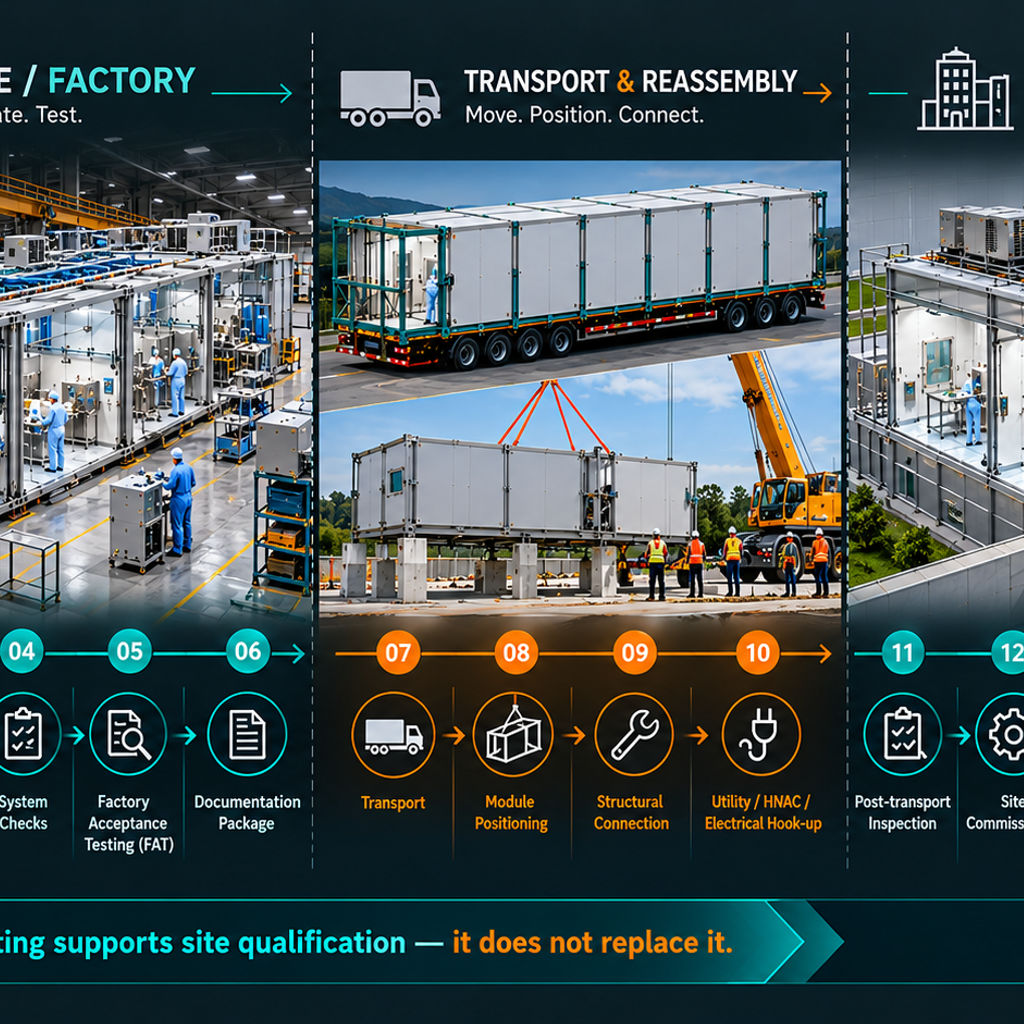
One of the major advantages of modular execution is the ability to complete key checks before the facility reaches the site. Factory Acceptance Testing allows project teams to verify selected systems, components, interfaces, and documentation during or after off-site manufacturing.
For GMP cleanrooms, FAT may include checks related to module construction, equipment installation, utility integration, HVAC components, electrical systems, automation panels, documentation readiness, and functional performance depending on the project scope.
This does not replace site qualification or validation. However, it helps identify and resolve issues earlier, before transportation and installation. For pharmaceutical project teams, early testing can reduce site uncertainty, support faster commissioning, and improve confidence before final qualification activities begin.
MMF’s approach places strong importance on FAT because modular facilities are designed, manufactured, integrated, and checked before being shipped to the final project site.
Commissioning and Validation Support
Cleanroom performance must be demonstrated through proper commissioning, qualification, and validation activities. A modular facility still requires documented evidence that the cleanroom, utilities, equipment, and systems are installed correctly and operate as intended.
Validation planning should begin during the design stage. This helps align the User Requirement Specification, design qualification, installation qualification, operational qualification, performance qualification, FAT documentation, commissioning records, and final handover package.
For modular GMP facilities, validation boundaries must be clearly defined. The project team should identify what is tested at the manufacturing facility, what is verified after transportation, what is checked during hook-up, and what must be qualified at the final site.
MMF supports this lifecycle approach through Validation & Commissioning, helping pharmaceutical companies move from modular manufacturing to operational readiness with better documentation control and project clarity.
Why Modular Cleanroom Design Supports Faster Facility Delivery
Traditional pharmaceutical facility construction can be affected by site dependency, sequential activities, coordination delays, weather exposure, local labour limitations, and late-stage design changes. Modular cleanroom delivery addresses many of these challenges by shifting a large part of construction, integration, and checking into a controlled off-site environment.
This approach allows site preparation and module manufacturing to progress in parallel. It also supports better coordination between engineering, cleanroom envelope, HVAC, utilities, equipment placement, and documentation.
For pharmaceutical manufacturers, biotechnology companies, CDMOs, vaccine manufacturers, and facility owners, this can support faster project delivery without compromising the engineering discipline required for GMP compliance.
However, the value of modular construction depends on strong front-end design. If process requirements, cleanroom classification, utility loads, equipment interfaces, and validation expectations are not clearly defined early, modular execution can face the same delays as conventional construction.
Why Choose Modular Mobile Facility (MMF)?
Modular Mobile Facility (MMF) helps pharmaceutical companies plan and execute GMP-ready modular infrastructure through an integrated project delivery model. From Design & Engineering and Off-site Modular Construction to Manufacturing, Factory Acceptance Testing, Transportation, Installation & Hook-up, and Validation & Commissioning, MMF brings key stages of facility delivery into one coordinated pathway.
For companies planning a new Modular Pharmaceutical Facility, facility expansion, cleanroom addition, or faster route to GMP manufacturing readiness, MMF provides engineering-led modular solutions designed for compliance, predictable execution, and scalable pharmaceutical manufacturing.
Frequently Asked Questions
1. What is GMP cleanroom design for modular pharma facilities?
GMP cleanroom design for modular pharma facilities involves planning controlled environments that support pharmaceutical manufacturing, contamination control, HVAC performance, pressure cascades, personnel flow, material flow, utilities, and validation requirements. In modular execution, these cleanroom systems are designed and integrated before off-site manufacturing begins, allowing the facility to be built, checked, transported, installed, and commissioned with better project control.
2. Can modular cleanrooms meet GMP requirements?
Yes, modular cleanrooms can meet GMP requirements when they are properly designed, engineered, manufactured, installed, qualified, and validated. The construction method does not define compliance by itself. Compliance depends on cleanroom classification, HVAC design, pressure control, cleanable finishes, workflow segregation, documentation, monitoring systems, and validation evidence.
3. Why is HVAC important in a GMP cleanroom?
HVAC is critical because it controls air cleanliness, airflow direction, temperature, humidity, pressure differentials, and contamination protection. In pharmaceutical cleanrooms, HVAC directly supports product quality and regulatory compliance. Poor HVAC planning can affect pressure cascades, particle control, operator comfort, equipment performance, and cleanroom qualification.
4. What are pressure cascades in pharmaceutical cleanrooms?
Pressure cascades are controlled pressure relationships between rooms of different cleanliness levels. They help ensure that air moves from cleaner areas toward less clean areas, reducing contamination risk. In modular cleanrooms, pressure cascades must be planned early because they affect HVAC design, airlocks, door interlocks, room layout, monitoring points, and commissioning activities.
5. Why is Factory Acceptance Testing important in modular cleanroom projects?
Factory Acceptance Testing helps verify selected systems, components, and interfaces before the modular facility is shipped to site. For modular cleanrooms, FAT can help identify issues earlier, reduce installation errors, support documentation readiness, and shorten the path to commissioning. It is especially useful when HVAC, utilities, equipment, electrical systems, and automation are pre-integrated off-site.
6. When should validation planning begin for a modular pharma facility?
Validation planning should begin during the design stage. Early planning helps align URS, design qualification, FAT scope, installation qualification, operational qualification, performance qualification, and final handover documentation. In modular projects, this is important because some checks may happen at the manufacturing facility, while others must be completed after transportation, installation, and hook-up.
7. What are the main design factors for modular cleanrooms?
The main design factors include cleanroom classification, process flow, personnel flow, material flow, HVAC design, HEPA filtration, pressure cascades, cleanroom finishes, equipment layout, utility integration, automation, monitoring systems, maintenance access, FAT requirements, commissioning strategy, and validation planning.
8. How does modular construction help pharmaceutical facility delivery?
Modular construction helps pharmaceutical facility delivery by allowing a large portion of construction, integration, and testing to happen in a controlled off-site environment. This can reduce site dependency, improve coordination, support parallel execution, and create a more predictable route from design to installation, hook-up, commissioning, and validation.