

How Modular Fill-Finish Facilities Reduce Time to Market in Pharma Manufacturing
In sterile pharmaceutical manufacturing, time to market is directly linked to facility readiness. A product may be technically developed, regulatory strategy may be in progress, and market demand may already exist, but delays in fill-finish infrastructure can hold back commercial launch, clinical supply, or capacity expansion.
Fill-finish projects are especially sensitive because they require controlled cleanroom environments, qualified HVAC systems, process utilities, aseptic processing areas, personnel and material flow, environmental monitoring, and validation-ready documentation. These requirements make project execution more complex than standard manufacturing infrastructure.
As pharmaceutical manufacturers, biotechnology companies, vaccine producers, and CDMOs respond to changing product pipelines, they need facilities that can be delivered faster without compromising GMP compliance. This is where a Modular Fill-Finish Facility offers a practical advantage.
Instead of building every component sequentially at the project site, modular fill-finish facilities allow a major part of the facility to be engineered, manufactured, integrated, tested, and prepared off-site in a controlled environment. The result is a more predictable route from design to operational readiness.
Why Fill-Finish Projects Often Face Delays
Fill-finish is one of the final and most critical stages of pharmaceutical manufacturing. It involves filling sterile drug products into final containers such as vials, ampoules, cartridges, or prefilled syringes, followed by closing, inspection, and packaging-related activities.
The facility supporting this process must be designed around contamination control. Cleanrooms, HEPA filtration, pressure cascades, air change rates, temperature and humidity control, personnel movement, material transfer, and equipment access must all work together.
In a conventional project, many of these activities happen in sequence. Civil construction must progress before cleanroom installation. Cleanroom installation must progress before HVAC balancing. Utility routing must align with equipment installation. Qualification and commissioning often begin only after major site work is completed.
Common delay reasons include:
- Sequential dependencies: Each stage often waits for the previous one to finish.
- Site coordination gaps: Civil, HVAC, utility, equipment, and validation teams may not align smoothly.
- Late design conflicts: Utility clashes or layout issues may appear during installation.
- More on-site work: Higher dependency on labour, site access, weather, and safety conditions.
- Delayed commissioning: HVAC, utilities, cleanrooms, or equipment may not be ready on time.
This creates pressure on the project timeline. Even small coordination gaps between civil, mechanical, electrical, automation, process equipment, and validation teams can delay the start of GMP operations.
A modular approach helps reduce this dependency by shifting a large part of the project into Off-Site Modular Construction.
How Modular Fill-Finish Facilities Reduce the Critical Path
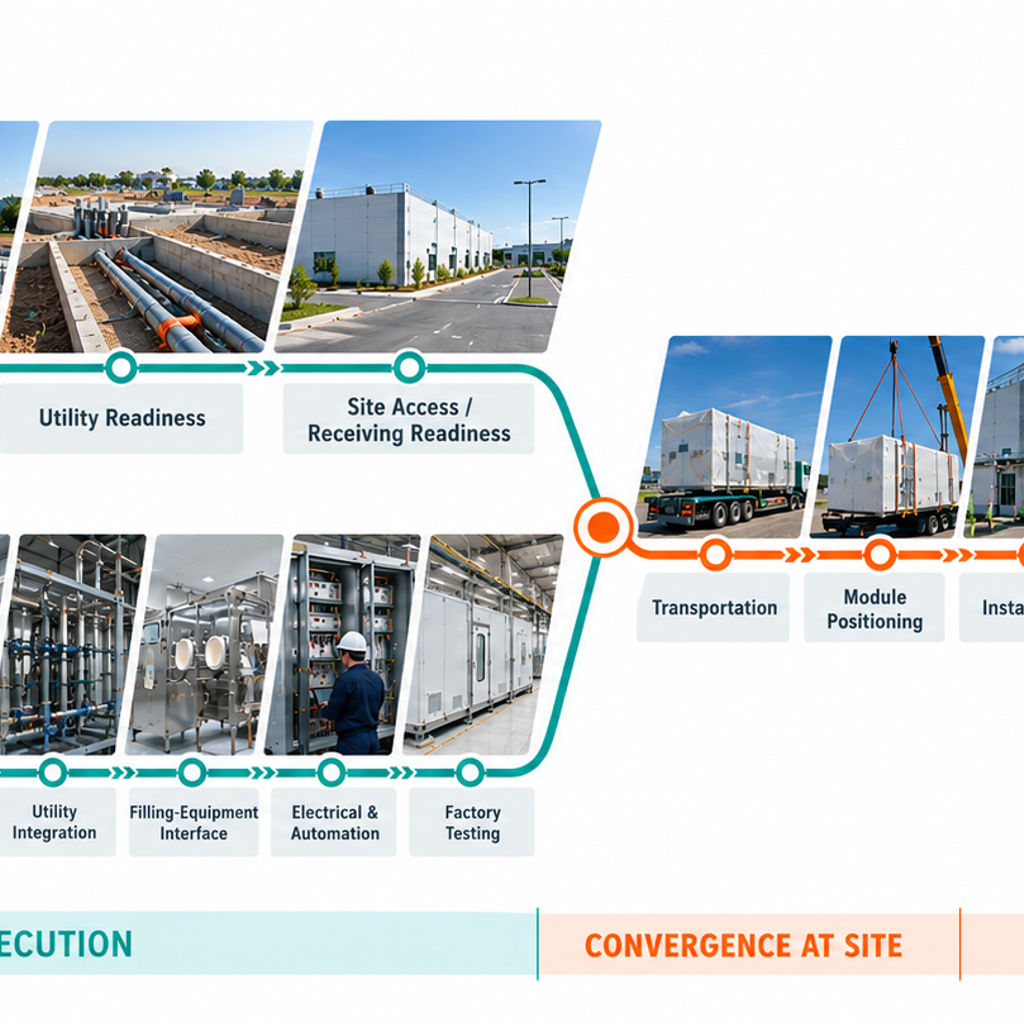
The key time-saving advantage of modular construction is parallel execution.
While site preparation, foundation work, and external infrastructure progress at the final location, the modules can be manufactured off-site in a controlled factory environment. Cleanroom panels, HVAC distribution, utility lines, electrical systems, automation provisions, and equipment interfaces can be integrated before the modules reach the site.
This reduces waiting time between project stages. Instead of starting facility fit-out only after the building is ready, site development and module fabrication move ahead together.
For pharmaceutical companies, this improves schedule control and reduces dependency on site conditions, weather delays, and large on-site coordination. Through Design & Engineering, the facility can be planned around product type, batch size, filling format, cleanroom classification, utilities, and future scalability before fabrication begins.
GMP Compliance Is Built Into the Design Stage
In modular fill-finish projects, speed must be supported by proper planning. The facility design should consider material and personnel movement, cleanroom zoning, HVAC requirements, process utilities, equipment access, environmental monitoring, cleaning approach, and validation needs before manufacturing begins.

Traditional vs Modular: Why Off-Site Manufacturing Improves Predictability
| Area | Traditional Construction | Modular Construction |
| Project Environment | Work happens mostly at site, where weather, access issues, labour availability, and site conditions can affect progress. | Major fabrication happens off-site in a controlled factory environment, making execution more predictable. |
| Schedule Dependency | Activities often move step by step, so delays in civil work, cleanroom installation, HVAC, or utilities can affect the next phase. | Site work and module manufacturing can progress in parallel, reducing dependency on one activity finishing before another begins. |
| Quality Control | Quality checks are spread across different site stages and may depend on multiple contractors working together. | Defined inspection points, supervision, and factory-level checks help maintain better consistency before the module reaches site. |
| Installation Risk | More work is completed at the final site, increasing the chance of coordination gaps, rework, and commissioning delays. | Pre-integrated cleanrooms, utilities, HVAC interfaces, and equipment provisions reduce high-risk site work and support faster hook-up. |
Factory Acceptance Testing Reduces Surprises During Commissioning
One of the key advantages of modular fill-finish delivery is that testing can begin before shipment.
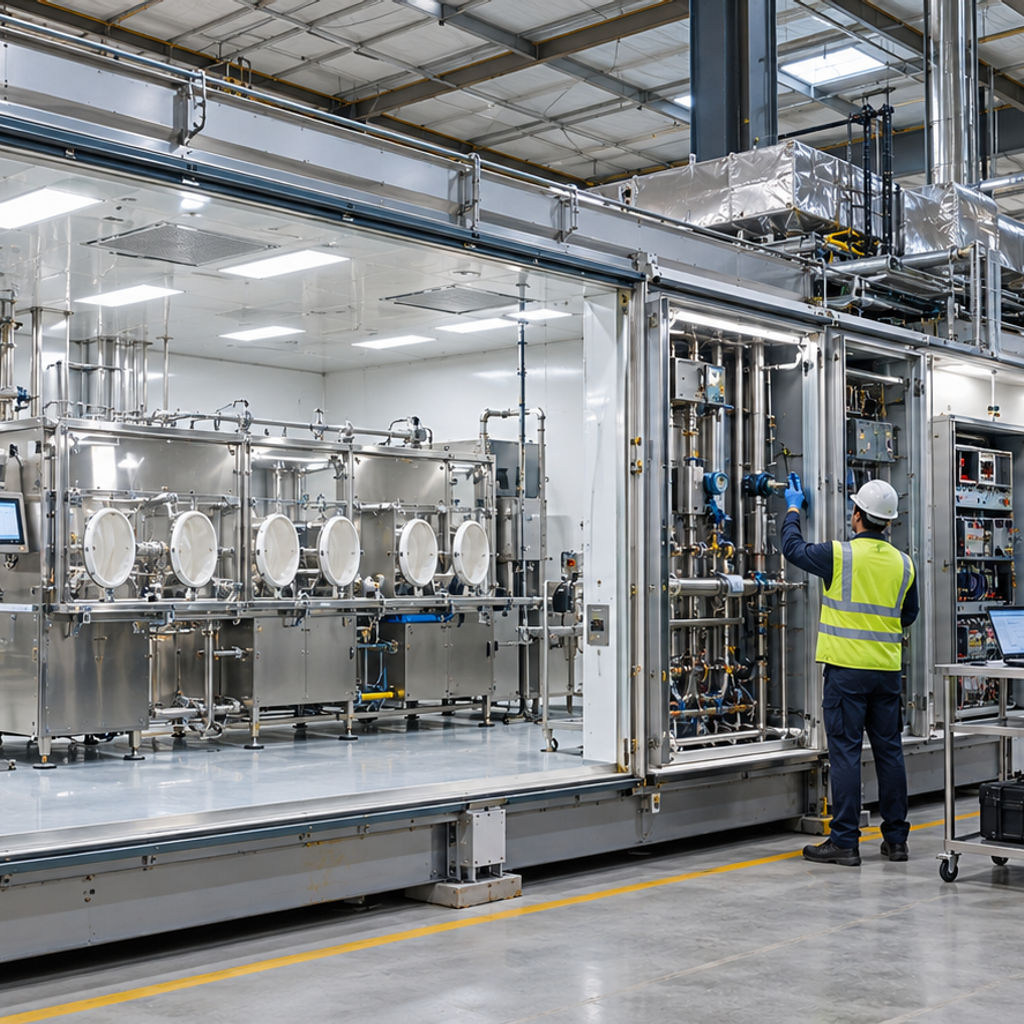
Through Factory Acceptance Testing, key systems, equipment, and interfaces are reviewed while the modules are still at the manufacturing facility. This may include checks for utility routing, electrical connections, control systems, HVAC interfaces, equipment installation, and basic operational readiness.
FAT does not replace final commissioning or validation, but it helps identify and correct issues before transportation. This reduces rework, avoids site-stage delays, and gives the project team better confidence before installation begins.
By integrating Validation & FAT into the modular project lifecycle, MMF helps bring engineering, quality, and execution teams into alignment before the facility reaches the site.
Faster Installation and Hook-Up at Site
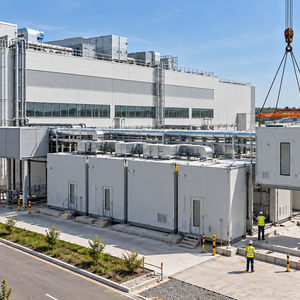
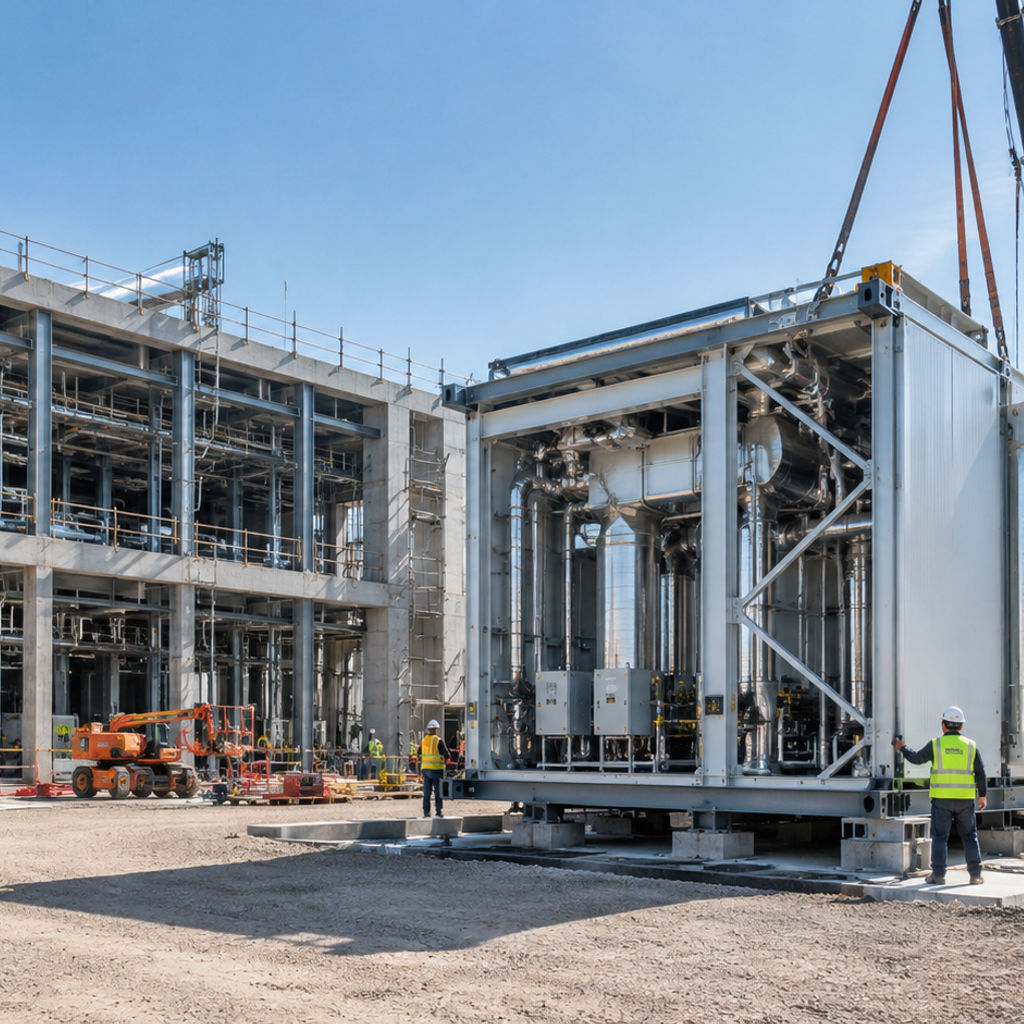
Once the modules reach the site, the focus shifts from large-scale construction to planned installation, positioning, interconnection, and hook-up.
Pre-fabricated modules are placed, aligned, and integrated with site utilities and services. This may include utility hook-up, HVAC integration, electrical connections, automation interface checks, and final commissioning support.
With proper planning, Installation & Hook-Up follows a defined sequence of placement, connection, checking, and commissioning support, helping reduce uncertainty at the site stage. This supports faster readiness, reduces site workload, and helps minimize disruption to ongoing pharmaceutical operations.
Supporting Validation and Commissioning Readiness
A fill-finish facility is not GMP-ready just because physical installation is complete. It must still go through commissioning, qualification, and validation before operation.
Modular construction supports this stage by carrying forward structured records from off-site integration, inspection, and testing. This helps with installation checks, system verification, utility readiness, HVAC balancing, cleanroom performance testing, environmental monitoring setup, and validation documentation.
The advantage is not that validation is avoided. It is that validation planning can begin earlier and move forward through a more organized project delivery sequence.
Why Modular Fill-Finish Facilities Support Scalable Growth
Pharmaceutical pipelines are changing. Companies may need smaller, faster, and more flexible manufacturing environments for biologics, vaccines, sterile injectables, clinical batches, or regional supply requirements.
A modular fill-finish facility can support this need because it can be planned around defined capacity and future expansion. Modules can be configured for specific process requirements while allowing the infrastructure to remain adaptable.
For CDMOs, modularity can support faster client onboarding and capacity addition. For vaccine manufacturers, it can help respond to urgent production needs. For biotech companies, it can provide a more practical route to GMP manufacturing without waiting for long conventional construction cycles.
This makes modular delivery a strong option for organizations that need Scalable Pharmaceutical Infrastructure with better control over project timelines.
Why Choose a Modular Mobile Facility?
Modular Mobile Facility (MMF) helps pharmaceutical companies save time in fill-finish facility delivery by reducing site dependency and improving project predictability.
- Parallel project execution: Site preparation and off-site module manufacturing can progress at the same time, helping reduce the overall project timeline.
- Early design clarity: Through Design & Engineering, the facility is planned around product type, filling format, cleanroom classification, utility needs, and future scalability before fabrication begins.
- Controlled off-site manufacturing: Cleanroom systems, HVAC distribution, utility lines, electrical provisions, and equipment interfaces are integrated in a controlled factory environment.
- Factory-level checks before shipment: Factory Acceptance Testing helps identify and resolve issues before the modules reach the site, reducing rework during installation.
- Faster site installation: Pre-integrated modules reduce construction-heavy site work and support quicker installation, hook-up, and commissioning readiness.
- Validation and commissioning support: MMF supports the project through validation support and commissioning, helping pharmaceutical manufacturers move faster from concept to GMP-ready facility.
Frequently Asked Questions
1. What is a modular fill-finish facility?
A modular fill-finish facility is a pharmaceutical manufacturing facility built using pre-engineered modules that are manufactured off-site and installed at the project location. It can include cleanrooms, HVAC systems, process utilities, filling area infrastructure, electrical systems, automation provisions, and equipment interfaces designed for sterile pharmaceutical manufacturing.
2. How does a modular fill-finish facility reduce time to market?
It reduces time to market by allowing site preparation and module manufacturing to happen in parallel. Cleanrooms, utilities, HVAC systems, and equipment interfaces can be integrated off-site while civil and infrastructure work continues at the final location. This shortens the overall project schedule and reduces delays during installation and commissioning.
3. Are modular fill-finish facilities suitable for GMP manufacturing?
Yes, modular fill-finish facilities can be designed for GMP manufacturing when they are engineered with proper cleanroom zoning, HVAC systems, pressure cascades, personnel flow, material flow, process utilities, commissioning, and validation requirements. GMP compliance depends on the quality of design, execution, documentation, and qualification.
4. What role does FAT play in modular pharmaceutical facilities?
Factory Acceptance Testing allows key systems, equipment, and interfaces to be checked before the modules are shipped to site. This helps identify and resolve issues earlier, reducing rework during installation and commissioning. FAT supports better project predictability and faster movement toward GMP readiness.
5. Can modular fill-finish facilities support vaccines and biologics?
Yes, modular fill-finish facilities can be designed for sterile products such as vaccines, biologics, injectables, vials, cartridges, ampoules, and prefilled syringes. The facility design must be based on the product requirements, aseptic process needs, cleanroom classification, equipment strategy, and regulatory expectations.
6. Is modular construction only suitable for new facilities?
No. Modular pharmaceutical facilities can be used for greenfield projects, facility extensions, capacity expansion, and specialized manufacturing areas. They are useful when companies need faster deployment, controlled execution, and scalable infrastructure without relying entirely on conventional on-site construction.
7. What is included in MMF’s modular facility delivery approach?
MMF supports modular facility delivery through design and engineering, off-site modular manufacturing, FAT, transportation, installation, hook-up, validation support, and commissioning. This integrated model helps pharmaceutical companies manage project timelines, technical interfaces, and GMP readiness more effectively.
8. Why is modular delivery useful for sterile fill-finish projects?
Sterile fill-finish facilities require strong control over cleanrooms, HVAC, utilities, contamination control, personnel flow, and validation. Modular delivery helps bring these elements together earlier in the project, allowing better coordination, factory-level checks, reduced site dependency, and faster commissioning readiness.
Technical Reference
European Commission — EU GMP Annex 1: Manufacture of Sterile Medicinal Products
US FDA — FDA Aseptic Processing Guidance
ISO 14644-1:2015 — Classification of Air Cleanliness by Particle Concentration
EU GMP Annex 15 — Qualification and Validation