Existing pharmaceutical plants are often expected to support more products, higher output, new technologies, and changing market requirements without interrupting ongoing production. For plant heads, engineering teams, CDMOs, biotech companies, and facility owners, this creates a practical challenge: how do you add GMP manufacturing capacity without turning a running plant into a complex construction zone?
Traditional brownfield expansion can work well in many cases, but it often comes with constraints. Construction activity near operating GMP areas may affect personnel flow, material movement, contamination control, shutdown planning, HVAC interfaces, utility tie-ins, and validation timelines. When production continuity and speed are both important, modular expansion becomes a strong engineering option.
Modular expansion for existing pharma plants allows critical facility areas to be designed, manufactured, assembled, and tested off-site before being transported, installed, and connected to the existing site. The approach is not simply about adding space faster. It is about creating a controlled, GMP-ready manufacturing environment with better project predictability and reduced disruption to live operations.
What Does Modular Expansion Mean for an Existing Pharma Plant?
Modular expansion refers to the use of pre-engineered and prefabricated facility modules to extend an existing pharmaceutical manufacturing site. These modules can include cleanrooms, process rooms, technical areas, HVAC systems, electrical provisions, process utilities, automation interfaces, equipment spaces, and controlled personnel or material movement routes.
In pharmaceutical manufacturing, a Modular Pharmaceutical Facility cannot be treated as a temporary structure or a basic building shell. It must function as part of the GMP environment. That means it needs to support cleanroom classification, pressure cascades, HEPA filtration, environmental control, utility integration, process flow, cleaning requirements, maintenance access, commissioning, and validation.
For existing plants, modular expansion may be used to add a dedicated production block, sterile processing suite, formulation area, biotech manufacturing zone, packaging support area, laboratory extension, or utility-supported manufacturing space. The right application depends on the product, process, regulatory expectations, site layout, and future capacity plan.
Use Modular Expansion When Capacity Is Needed Without Extending Brownfield Timelines
One of the strongest reasons to use modular expansion is the need for additional capacity within a shorter project window. Pharmaceutical manufacturers may need to respond to new product launches, increased market demand, contract manufacturing requirements, regional supply strategies, or portfolio expansion.
In a conventional construction sequence, design, civil work, cleanroom installation, utility routing, equipment placement, commissioning, and qualification usually happen in a largely linear manner. This can extend timelines, especially when the work has to be coordinated around an operating facility.
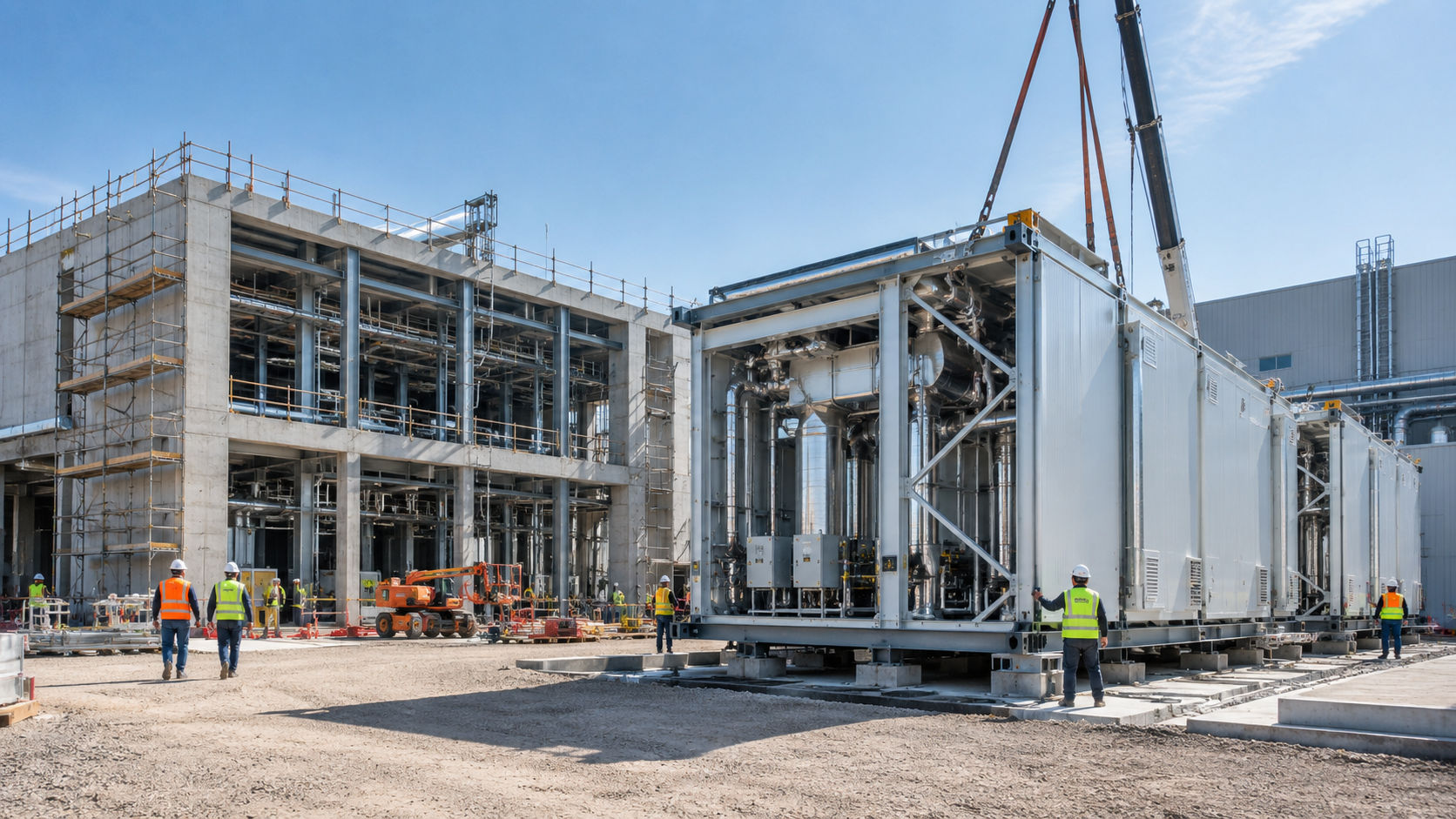
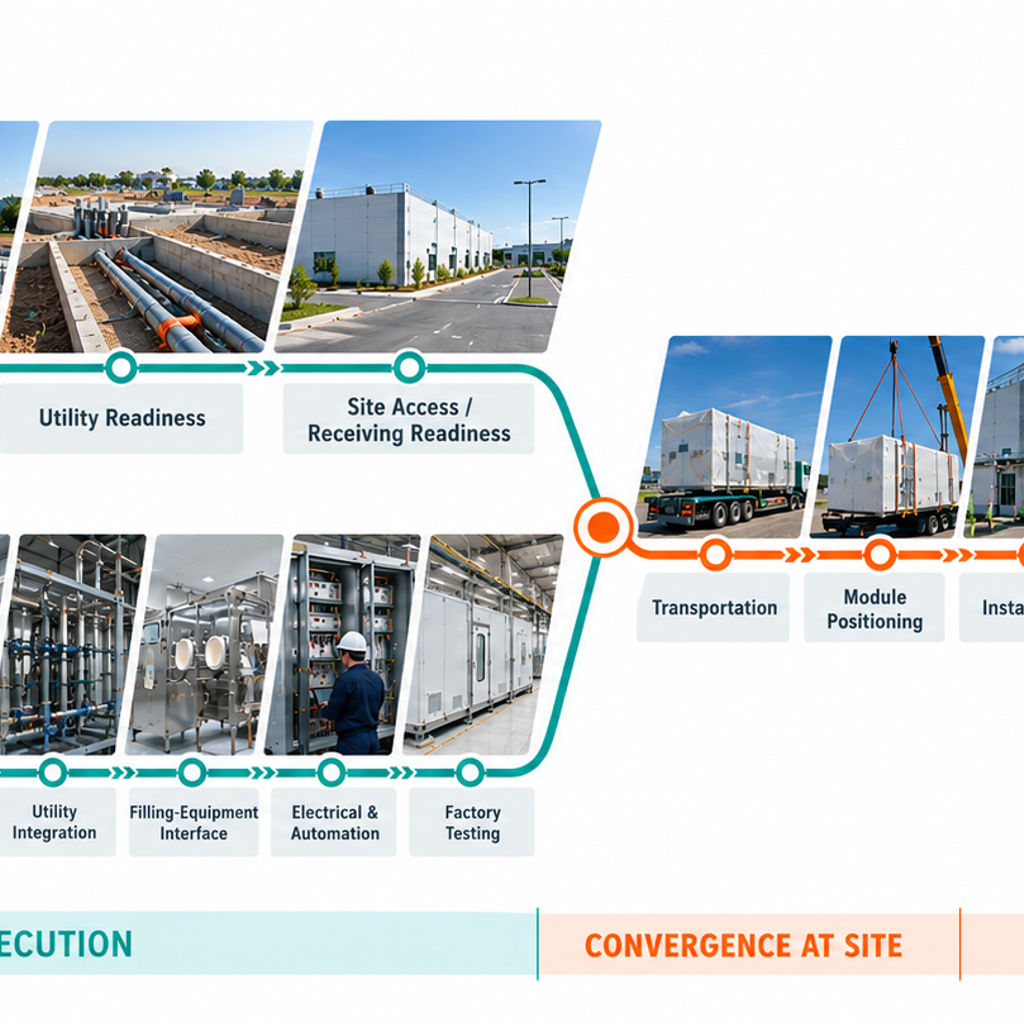
Modular construction allows a more parallel approach. While the existing site is being prepared for foundations, access, utility tie-ins, and receiving areas, the modular pharmaceutical facility can be fabricated through Off-site Modular Manufacturing in a controlled environment. Cleanroom panels, HVAC components, utility services, electrical systems, and equipment provisions can be coordinated before the module arrives on site.
This makes modular expansion useful when production readiness is time-sensitive and every delay affects manufacturing availability, revenue planning, or market access.
Use Modular Expansion When the Existing Plant Must Stay Operational
Expanding a live pharmaceutical facility requires more control than a general industrial expansion. In GMP environments, construction work can introduce risks related to dust, traffic movement, cleaning access, pest control, temporary partitions, pressure control, and cross-contamination.
When the existing plant must continue operating during the expansion, modular construction can reduce the intensity and duration of on-site activity. Since a significant portion of fabrication, fit-out, and pre-testing happens away from the plant, the site team has fewer construction interfaces to manage near active GMP areas.
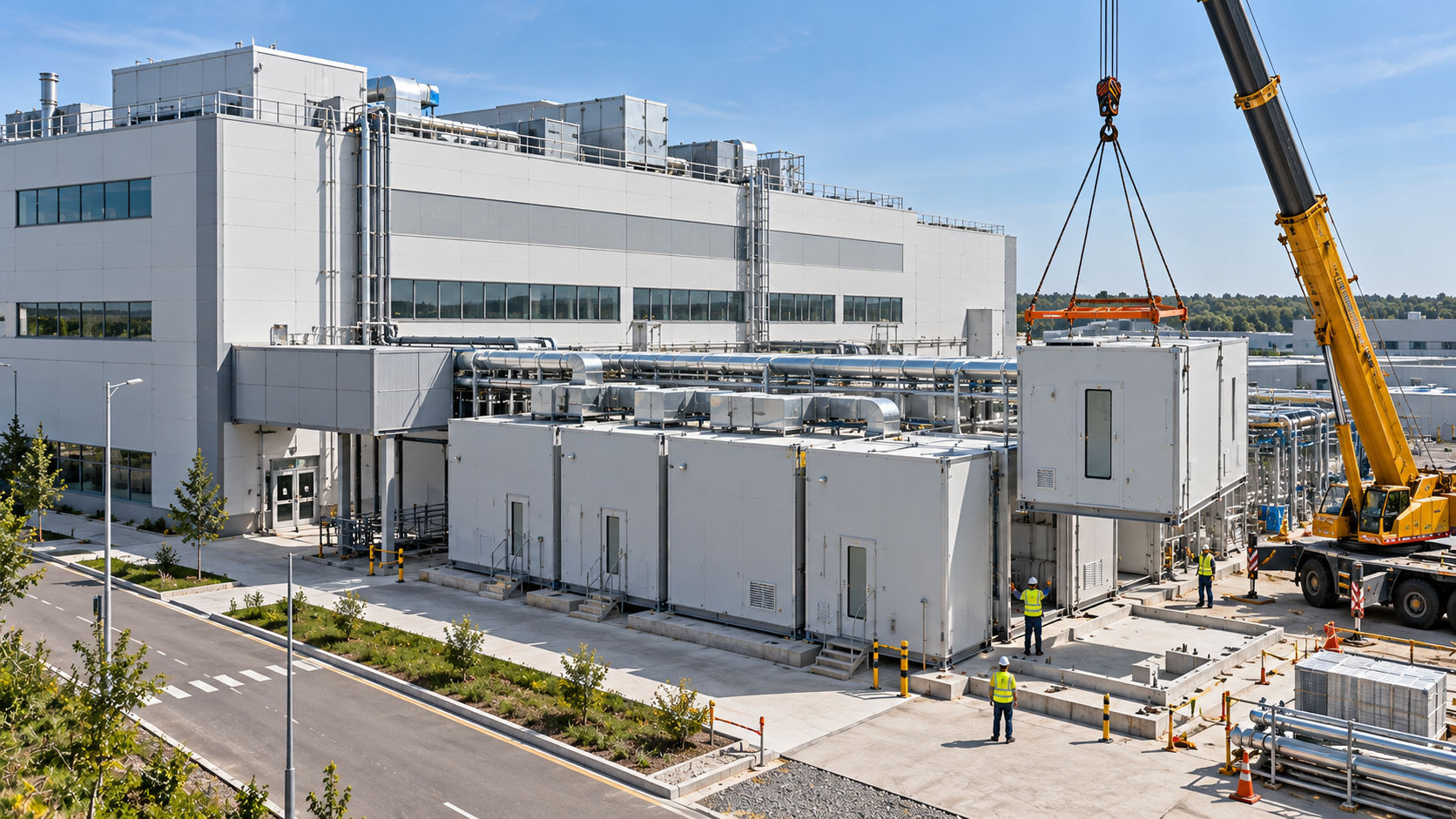
This is especially relevant for facilities with limited shutdown windows or continuous manufacturing commitments. Modular expansion can help project teams plan the most disruptive activities around defined Installation & Hook-up windows rather than prolonged construction phases.
For plant heads and project managers, this can improve control over production continuity, site safety, and GMP discipline during the expansion period.
Use Modular Expansion When Cleanroom Segregation Is Required
Many existing pharma plants require expansion because the current layout no longer supports the desired level of segregation. This may be due to new product categories, sterile manufacturing requirements, biotech processes, containment needs, dedicated formulation areas, or a need to separate personnel and material flows more clearly.
In such cases, the expansion is not only about adding rooms. It is about creating a properly controlled GMP envelope.
A modular cleanroom can be designed around defined cleanroom classifications, airlocks, HEPA filtration, HVAC zoning, pressure cascades, personnel entry routes, material transfer, waste movement, and cleaning requirements. These decisions are easier to control when they are built into the Design & Engineering stage rather than adjusted during late-stage construction.
For sterile and aseptic areas, this becomes even more important. Airflow direction, pressure relationships, environmental monitoring, and contamination control must be planned as part of the facility concept. Modular expansion can help create a clearly defined controlled environment with fewer modifications inside the existing plant.
Use Modular Expansion When Site Space Is Limited or Difficult to Modify
Existing pharmaceutical sites often have physical constraints. The available area may be restricted by current buildings, utility yards, warehouses, access roads, service corridors, or structural limitations. Internal expansion may also be difficult if existing rooms are already occupied or if the current layout does not support new flows.
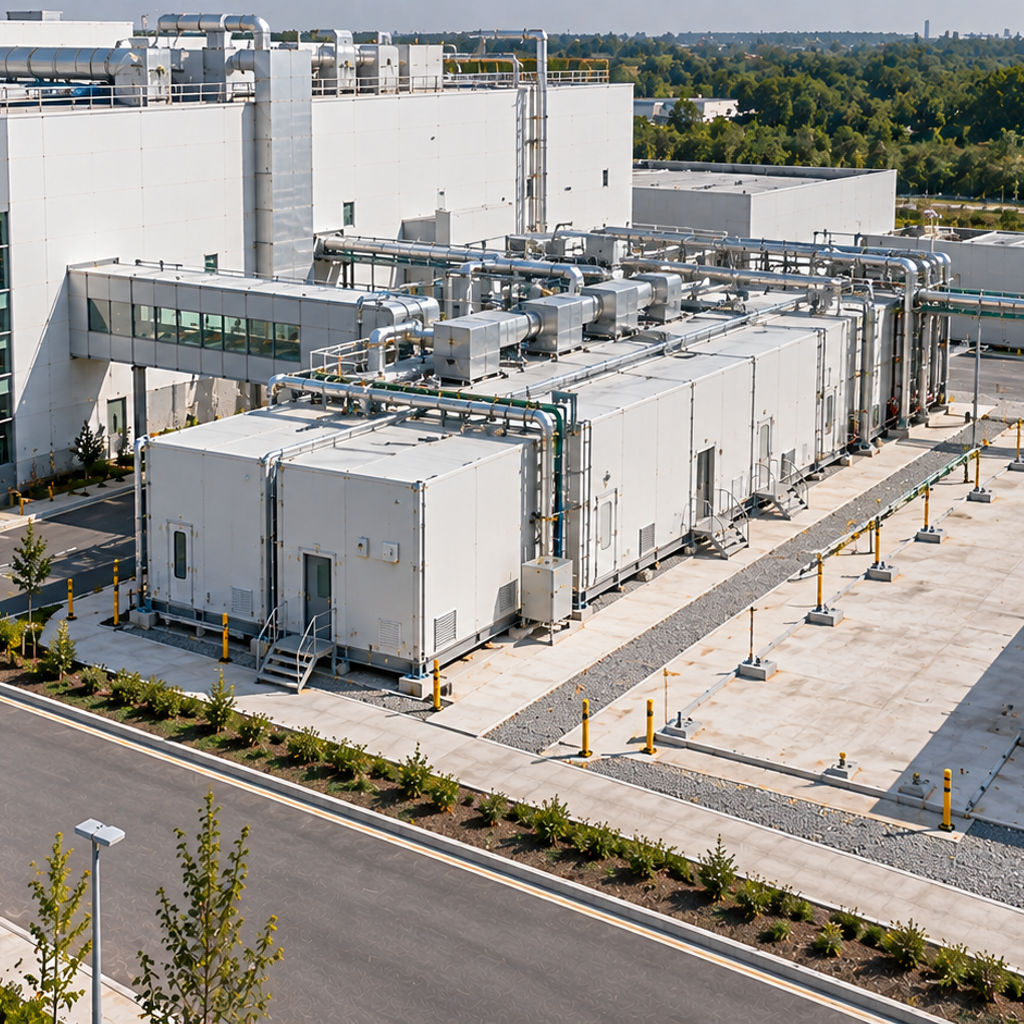
Modular expansion can be suitable when the plant needs a compact, engineered facility addition that fits within a defined site footprint. Modules can be designed around available space, installation access, transport routes, equipment loads, structural requirements, and future connection points.
Some modular units may be placed adjacent to the existing plant. Others may be connected through clean corridors, technical interfaces, or controlled hook-up zones. In all cases, site evaluation is essential. Module dimensions, lifting strategy, transportation route, foundation design, and utility connection points must be aligned before the project moves into detailed execution.
When these factors are addressed early, modular expansion can reduce late-stage design changes and improve installation readiness.
Use Modular Expansion When Utility Integration Is Clearly Defined
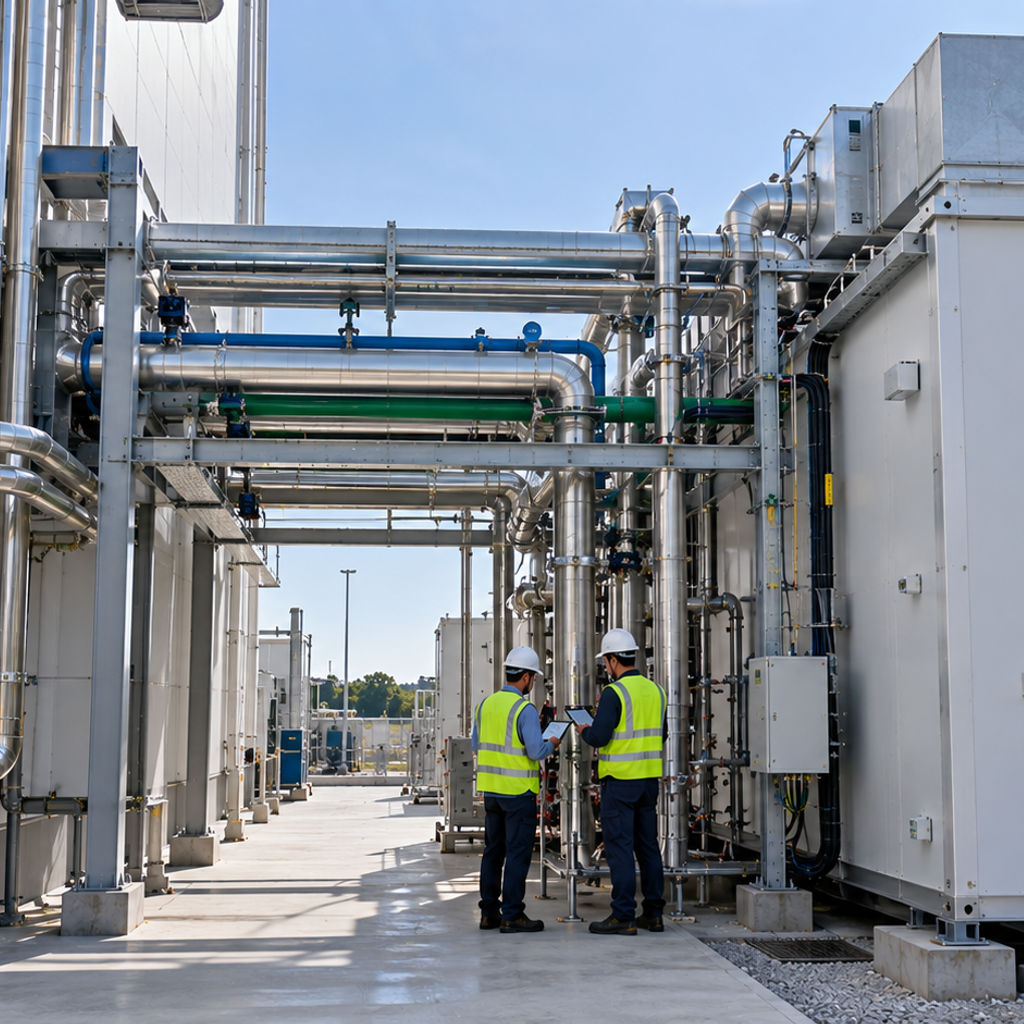
A modular manufacturing facility must connect successfully with the plant’s existing utility backbone. This may include HVAC, electrical power, purified water, WFI, clean steam, compressed air, nitrogen, chilled water, hot water, drainage, process exhaust, EMS, BMS, fire safety systems, and automation networks.
Before choosing modular expansion, the project team must assess whether the existing plant has enough utility capacity to support the new area. If the current system is undersized, the project may require utility upgrades, separate utility skids, or independent utility systems.
This step is critical because modular construction can accelerate facility delivery, but it cannot solve an undefined utility strategy. Process loads, diversity factors, pressure requirements, temperature and humidity control, maintenance access, tie-in points, and redundancy requirements must be clarified early.
When utility integration is properly planned, modular construction becomes more effective. It allows piping, electrical systems, technical spaces, and service routes to be coordinated inside the module before site installation, reducing the risk of rework during hook-up and Commissioning.
Use Modular Expansion When URS and Design Decisions Are Mature
Modular expansion works best when the project team has clarity on user requirements. Since modules are manufactured off-site, early decisions have a major impact on quality, cost, and schedule.
The URS should define the intended use of the facility, product type, process flow, equipment requirements, cleanroom classification, HVAC expectations, personnel and material movement, utility loads, automation needs, regulatory expectations, and future expansion plans.
A clear URS supports design freeze. This is important because late changes in modular projects can affect fabrication, transportation, equipment integration, utility routing, and validation documentation.
For pharmaceutical companies, modular expansion is most effective when engineering, quality, validation, operations, and regulatory teams are aligned before off-site manufacturing begins. This ensures the facility is not only faster to build, but also suitable for long-term GMP operation.
Use Modular Expansion When Future Scalability Matters
Pharmaceutical demand can change quickly. A product may move from development to commercial scale, a CDMO may need to support multiple clients, or a manufacturer may want to expand in phases instead of committing to one large facility from the beginning.
Modular expansion supports this type of phased planning. A facility can be designed with future expansion corridors, utility provisions, cleanroom extensions, technical interfaces, and additional module connections in mind.
This is especially relevant for biotech companies, vaccine manufacturers, CDMOs, and manufacturers managing multiple dosage forms or product portfolios. Modular infrastructure can support staged investment while keeping future growth visible from the beginning.
However, scalability must be planned from the first phase. The initial module should not block future access, utility routing, maintenance movement, or expansion areas. A good modular expansion strategy considers both immediate production needs and long-term pharmaceutical infrastructure planning.
Use Modular Expansion When FAT Can Reduce Site Risk
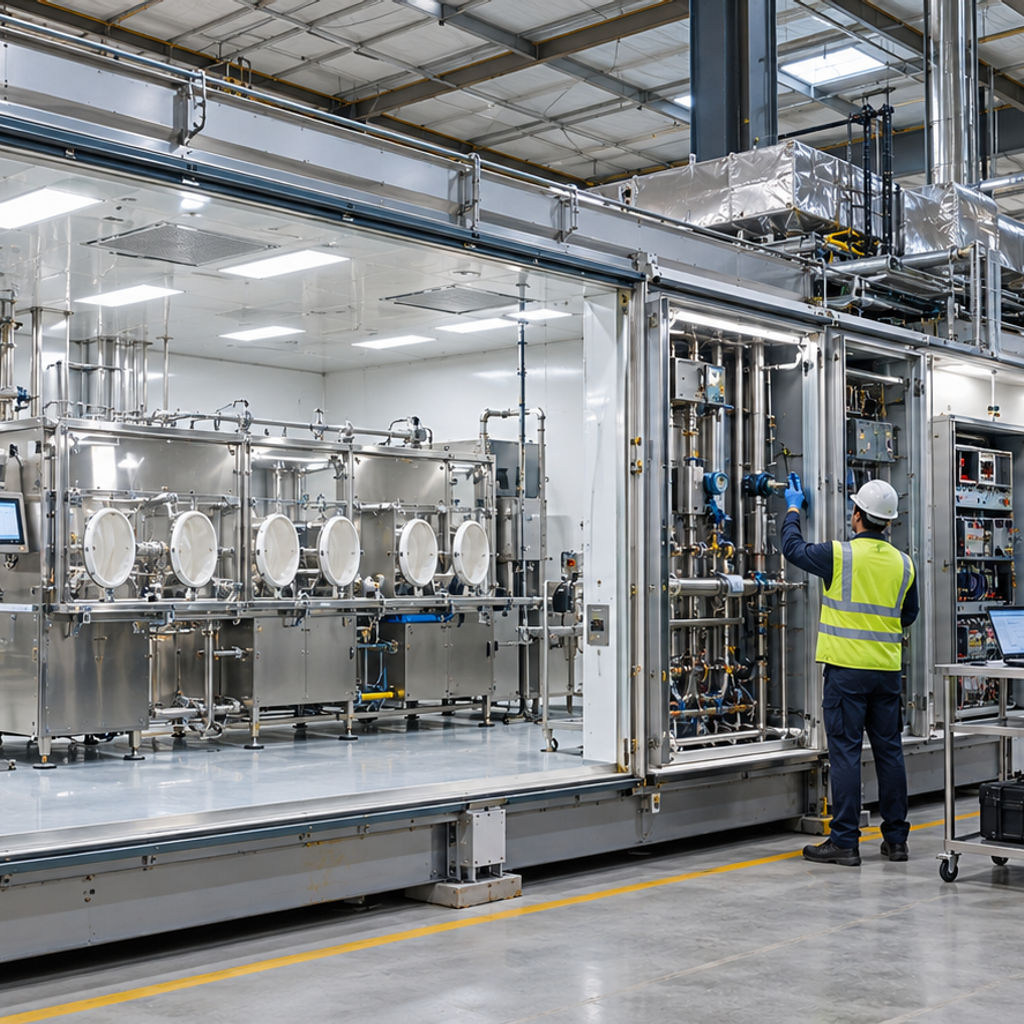
Factory Acceptance Testing is one of the key advantages of modular execution. Since the module is built in a controlled off-site environment, many systems can be inspected and tested before transportation.
FAT may include checks related to room finishes, equipment installation, HVAC components, control panels, electrical systems, utility routing, automation interfaces, documentation, and functional performance depending on the project scope.
For existing pharma plants, this is valuable because issues identified in the factory are generally easier to correct before the module reaches the live site. Once the module arrives, the project can move more efficiently into installation, hook-up, Site Acceptance Testing, commissioning, qualification, and Validation Support.
FAT also gives project teams better visibility before shipment. It helps reduce installation deviations, improves commissioning readiness, and supports a more structured handover process.
Use Modular Expansion When Validation Planning Starts Early
A GMP Modular Facility still needs to meet the same GMP expectations as a conventionally built facility. The construction method may be different, but the requirements for qualification, validation, documentation, and quality oversight remain.
For an existing plant, expansion may also trigger change control, regulatory review, variation assessment, or post-approval impact evaluation depending on the product, market, process, and approved facility registration.
This means validation planning should begin early. The project should define the design qualification approach, commissioning strategy, qualification scope, documentation structure, and handover requirements before execution reaches the site.
DQ, IQ, OQ, and PQ expectations must be aligned with the facility’s intended use. HVAC performance, cleanroom classification, pressure cascade verification, utility qualification, equipment integration, environmental monitoring readiness, and process interfaces should all be part of the validation strategy.
When validation is planned from the beginning, modular expansion becomes a controlled GMP delivery method rather than only a faster construction route.
When Modular Expansion May Not Be the Right Fit
Modular expansion is useful, but it is not automatically the right answer for every existing pharma plant. It may not be suitable if the project requirements are still unclear, the process is frequently changing, or the regulatory pathway has not been assessed.
It may also become difficult if the site has poor access for module transportation, limited lifting space, unresolved structural constraints, insufficient utility capacity, or no clear plan for installation and hook-up. In such cases, modular construction may still be possible, but the project will need deeper engineering evaluation before the approach is finalized.
The key question is whether modular expansion reduces project risk in the specific site context. If the plant has clear requirements, defined utilities, practical logistics, mature design inputs, and a structured validation plan, modular execution can offer significant advantages. If these inputs are missing, the first step should be feasibility and engineering assessment.
How MMF Approaches Modular Expansion for Existing Pharma Plants
Modular Mobile Facility approaches expansion as an integrated pharmaceutical engineering project, not as a standalone prefabrication exercise. The process begins with Design & Engineering, where the facility concept, cleanroom layout, process flow, HVAC strategy, utility integration, equipment placement, and GMP requirements are developed around the client’s manufacturing needs.
The project then moves into Off-site Modular Manufacturing, where the facility modules are fabricated in a controlled environment. Cleanroom systems, technical utilities, equipment provisions, electrical systems, automation interfaces, and HVAC components can be coordinated before the module reaches site.
Factory Acceptance Testing supports early verification and helps reduce uncertainties during installation. Once the module is ready, MMF manages Transportation, Installation & Hook-up, Commissioning, and Validation Support to help the facility move toward operational readiness.
This delivery sequence — Design & Engineering, Off-site Modular Manufacturing, Factory Acceptance Testing, Transportation, Installation & Hook-up, Commissioning, and Validation Support — is especially valuable for existing pharma plants where project interfaces, live operations, and GMP readiness must be managed carefully.
Why Choose Modular Mobile Facility?
Modular Mobile Facility helps pharmaceutical manufacturers expand existing plants with engineered, GMP-focused modular infrastructure. For companies that need additional manufacturing capacity, cleanroom segregation, utility-supported process areas, or scalable facility extensions, MMF provides a structured route from concept to operational readiness.
With expertise across Design & Engineering, Off-site Modular Manufacturing, Factory Acceptance Testing, Transportation, Installation & Hook-up, Commissioning, and Validation Support, MMF helps reduce project interfaces and improve control over schedule, quality, and GMP compliance.
For plant heads, engineering teams, CDMOs, biotech companies, vaccine manufacturers, API manufacturers, and facility owners, MMF offers a practical way to expand pharmaceutical infrastructure without losing focus on production continuity, contamination control, utility integration, and long-term scalability.
Frequently Asked Questions
1. What is modular expansion for an existing pharma plant?
Modular expansion is the addition of prefabricated GMP facility modules to an existing pharmaceutical manufacturing site. These modules may include cleanrooms, process areas, HVAC systems, utilities, technical spaces, and equipment provisions. The modules are engineered and manufactured off-site, then transported, installed, hooked up, commissioned, and validated at the existing plant.
2. When should a pharmaceutical company use modular expansion?
A pharmaceutical company should consider modular expansion when it needs faster capacity addition, reduced disruption to ongoing operations, cleanroom segregation, scalable infrastructure, or controlled GMP space within an existing plant. It is especially useful when conventional brownfield construction may create long timelines, site congestion, or operational interruptions.
3. Can modular pharma facilities meet GMP requirements?
Yes, modular pharma facilities can meet GMP requirements when they are properly designed, constructed, documented, commissioned, qualified, and validated. A modular facility must support cleanroom classification, HVAC control, pressure cascades, personnel flow, material flow, process utilities, contamination control, and validation expectations like any conventional GMP facility.
4. How does modular expansion reduce disruption in existing plants?
Modular expansion reduces disruption by shifting a significant part of fabrication, installation, and testing to an off-site controlled environment. This limits construction activity near live GMP areas, reduces site congestion, and helps project teams plan installation and hook-up around defined shutdown or access windows.
5. Why is utility integration important in modular pharma expansion?
Utility integration is critical because the new modular facility must connect with existing plant services such as HVAC, purified water, WFI, clean steam, compressed air, chilled water, electrical systems, EMS, BMS, and drainage. If utilities are not assessed early, the project may face delays during installation, commissioning, or validation.
6. What is the role of FAT in modular pharmaceutical facilities?
Factory Acceptance Testing verifies key systems, equipment, and module components before shipment. FAT helps identify issues early, reduce site rework, improve commissioning readiness, and support documentation for qualification and validation. For existing plants, this reduces the risk of discovering major issues after the module reaches the operating site.
7. Does modular expansion require validation?
Yes, modular expansion requires commissioning, qualification, and validation based on the intended use of the facility. This may include DQ, IQ, OQ, PQ, cleanroom qualification, HVAC verification, utility qualification, equipment checks, environmental monitoring readiness, and documentation review as per GMP requirements.
8. Is modular expansion suitable for sterile manufacturing facilities?
Modular expansion can be suitable for sterile manufacturing when cleanroom classification, airlocks, pressure cascades, HEPA filtration, environmental monitoring, personnel flow, material flow, and contamination control are planned correctly. Sterile applications require early involvement of engineering, quality, validation, and regulatory teams to ensure GMP readiness.
9. Can modular expansion support future pharma plant scalability?
Yes, modular expansion can support future scalability when the facility is planned with additional modules, utility corridors, cleanroom extensions, technical interfaces, maintenance access, and equipment changes in mind. It is useful for CDMOs, biotech companies, vaccine manufacturers, and pharma manufacturers planning phased growth.
10. When is modular expansion not the right choice?
Modular expansion may not be the right choice if the project requirements are unclear, the URS is incomplete, the process is still changing, utilities are insufficient, site access is restricted, or the regulatory pathway is not defined. In such cases, feasibility assessment and engineering evaluation should be completed before selecting the modular route.
Technical Reference
European Commission — EudraLex Volume 4, Chapter 3: Premises and Equipment
2. European Commission — EudraLex Volume 4, Annex 15: Qualification and Validation
4. ASTM E2500-25 — Specification, Design and Verification of Pharmaceutical and Biopharmaceutical Manufacturing Systems and Equipment